sourcing
Private-Label Nutraceutical and Ayurvedic Products with Lakadong Turmeric: A Brand Builder''s Sourcing Guide
30 July 2026
The general private-label Ayurvedic sourcing process from India is well-documented. Our comprehensive private-label guide covers manufacturer types, MOQs, regulatory mapping, and IP protection for any herbal product category. This guide addresses a narrower and more specific question: what changes when the ingredient at the centre of your private-label product line is Lakadong turmeric from Meghalaya rather than a commodity botanical?
The answer is that nearly every commercial decision shifts. The sourcing economics change because Lakadong carries a premium. The brand positioning changes because a GI-tagged, single-origin ingredient supports a product narrative that commodity turmeric cannot. The formulation math changes because higher curcumin content alters inclusion rates. And the supply chain risk profile changes because Lakadong production is geographically concentrated in one region of northeast India.
This guide covers the brand-building and sourcing-strategy decisions specific to Lakadong turmeric private label. It does not repeat the general private-label process, the formulation science, or the certification definitions covered in our companion guides.
Why Lakadong Turmeric as a Private-Label Anchor Ingredient
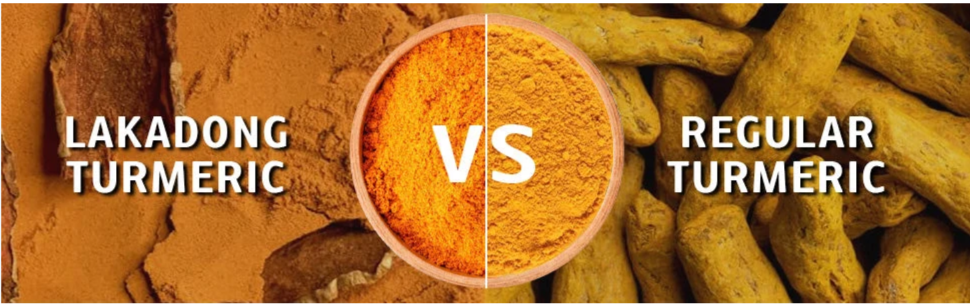
Most turmeric-based private-label products on international shelves source from commodity Indian turmeric varieties — primarily Alleppey, Salem, or Erode cultivars — purchased through trading companies with no verifiable origin story, no GI protection, and curcumin content typically in the 2 to 5 percent range. These products compete on price and shelf space, with limited ability to command a premium or build brand loyalty around the ingredient itself.
Lakadong turmeric offers a structurally different proposition for private-label brands:
Geographical Indication tag. The GI tag certifies origin in the Jaintia Hills region of Meghalaya, giving a private-label brand a verifiable, legally protected origin claim that commodity suppliers cannot replicate. For our detailed explanation of what the GI tag does and does not certify, see our certifications explained guide.
Curcumin content premium. Lakadong turmeric’s curcumin content reputation — in the range of 6 to 10 percent by dry weight, per government and trade sourcing literature — is materially higher than commodity varieties. This is a variety-level reputation, not a guaranteed batch specification; individual batches must be verified via HPLC testing per our curcumin content guide. But the reputation itself, when backed by batch-specific testing, supports a stronger product claim than commodity turmeric can sustain.
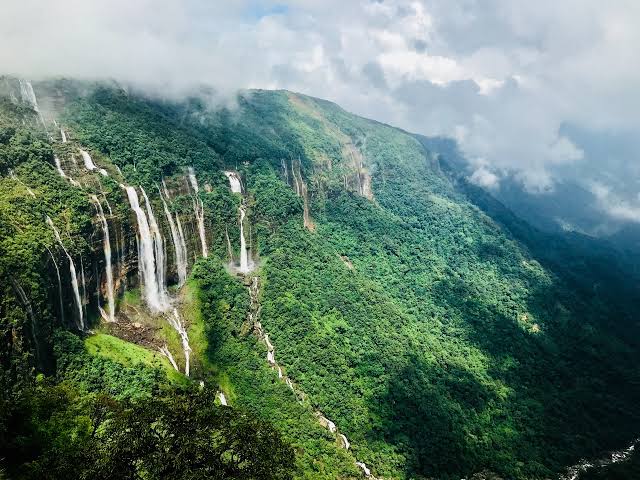
Origin narrative. Indigenous farming communities in the Jaintia Hills, northeast India, a biodiversity-rich region with a distinct agricultural heritage. This narrative resonates with the provenance-conscious consumer segments that premium private-label wellness brands target across the EU, USA, Japan, South Korea, and ANZ markets.
Supply constraint as positioning. Lakadong turmeric production is concentrated in a small geographic area, which limits total available volume and supports scarcity-based premium positioning — a brand can credibly describe a limited-origin ingredient in a way that is not possible with a commodity that any trading company can supply in container loads.
None of these differentiators work if the supply chain cannot verify them. A private-label brand claiming Lakadong origin without traceability documentation linking the batch to registered growers in the Jaintia Hills is making an unsubstantiated marketing claim, which is both a reputational risk and, in several markets, a regulatory one.
Which Private-Label Product Categories Suit Lakadong Turmeric
Not every turmeric product category benefits equally from a Lakadong positioning. The premium is justified where the origin story, curcumin content, or both contribute directly to the product’s value proposition.
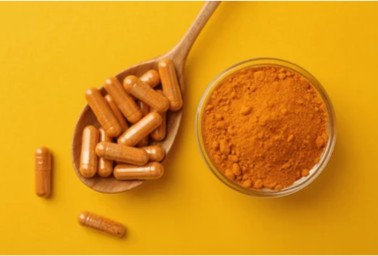
Curcumin-forward dietary supplements. Capsules and tablets where curcumin content is the primary selling point. The higher curcumin percentage supports a lower inclusion rate per capsule to reach a target dose, a genuine formulation advantage detailed in our formulating guide. The GI tag and origin story support premium retail pricing relative to generic curcumin supplements.
Single-origin turmeric powders. Direct-to-consumer and specialty food retail products positioned as single-origin, traceable, and premium. This is the simplest product category for a new private-label brand because it requires minimal processing beyond cleaning, drying, and grinding at the source, and the packaging and labelling are straightforward.
Golden milk and turmeric latte blends. A growing functional beverage category across all nine target markets. Lakadong origin and curcumin content both add differentiation on a retail shelf dominated by generic turmeric blends. Formulation considerations around solubility and shelf stability apply — see our formulating guide for detail.
Ayurvedic wellness formulations. Multi-ingredient formulations where Lakadong turmeric is the lead or hero ingredient. The GI-tagged origin supports authenticity claims that are increasingly important to consumers purchasing Ayurvedic-positioned products, particularly in the EU, USA, and ANZ markets where consumer scepticism about Ayurvedic provenance is rising.
Skincare and topical applications. A smaller but growing category. Curcumin’s properties are of interest for topical formulations, but the formulation science for skincare is substantially different from oral supplements and is outside the scope of this sourcing guide.
For most new private-label brands, starting with one or two of these categories rather than attempting a full product range reduces initial sourcing complexity, MOQ commitments, and regulatory burden.
Cost Structure: How the Lakadong Premium Affects Product Economics
Lakadong turmeric commands a price premium over commodity Indian turmeric. The premium varies by grade, certification status, season, and order volume, but typically ranges from 40 to 100 percent above standard Alleppey or Salem turmeric pricing.
This sounds like a significant cost disadvantage for private-label economics. In practice, it is smaller than it appears at the raw-material level, and is more than offset at the retail level:
Lower inclusion rate. A curcumin content of 6 to 10 percent versus 2 to 5 percent means roughly 40 to 60 percent less raw material is needed per capsule or per serving to reach the same target curcumin dose. This partially offsets the per-kilogram premium. The exact offset depends on the specific batch curcumin result and the target dose, which is why batch-specific HPLC testing, not variety-level averages, should drive formulation costing.
Retail price premium. A GI-tagged, single-origin, high-curcumin turmeric product can command a retail price premium substantially above the raw material cost premium. In competitive supplement categories where commodity curcumin products cluster at a similar price point, the origin story and verified curcumin content provide the differentiation needed to justify a higher shelf price without competing on volume.
Marketing cost reduction. A verifiable origin story and a GI tag provide built-in marketing content that reduces the brand-building cost relative to a commodity product that must build differentiation entirely through marketing spend.
The economic case for Lakadong private label is strongest when the brand is targeting a premium consumer segment and weakest when the brand is competing primarily on price. If the target retail price point does not support the raw material premium, commodity turmeric is the more appropriate sourcing choice.
Brand Positioning: Using Origin and Curcumin Content Without Overstepping
Private-label brands using Lakadong turmeric need to navigate several positioning boundaries:
GI tag usage. The GI tag certifies origin, not quality. A brand can state that its product contains GI-tagged Lakadong turmeric from Meghalaya as a factual claim, supported by supply chain documentation. The brand cannot imply that the GI tag certifies curcumin content, purity, or any quality parameter beyond geographic origin. Using the GI tag logo on packaging requires confirming the applicable usage rules with the GI registry.
Curcumin content claims. A brand can state a batch-verified curcumin content on its label if the claim is supported by HPLC testing of the specific lot used in production. A brand should not state a curcumin percentage based on the variety-level reputation alone. The distinction between variety reputation and batch-specific verification is critical — see our curcumin content guide for the verification framework.
Sourcing transparency. The strongest private-label brands in the single-origin ingredient space publish some level of supply chain transparency — naming the source region, describing the farming community, and providing traceability to the batch level. This is both a brand asset and a compliance safeguard, since it demonstrates the origin claim is substantiated rather than aspirational.
Health claims. Curcumin-related health claims are regulated differently in every target market. The ingredient’s origin does not change the claim substantiation requirements. Brands should confirm the permissible claim language in each destination market before finalising labelling and marketing materials.
Sourcing Structure: Raw Material, Semi-Finished, or Finished Product
The choice between sourcing raw Lakadong turmeric and sourcing a finished private-label product from India is covered in depth in our general private-label guide and our contract manufacturing guide. For Lakadong turmeric specifically, the decision has an additional dimension:
Raw material sourcing (recommended starting point). Purchase verified Lakadong turmeric powder or extract from a supplier in or near the Jaintia Hills, then formulate and encapsulate in the destination market through a domestic co-packer. This gives the brand direct control over formulation, labelling, regulatory compliance, and quality testing. It also simplifies import — raw botanical ingredients under HS codes 1211 and 1302 face a less complex import pathway than finished dosage forms under HS 3004. For MOQ and pricing guidance on raw Lakadong turmeric, see our MOQ, packaging, and pricing guide.
Finished product contract manufacturing in India. Outsource the entire production — formulation, encapsulation, packaging — to an Indian contract manufacturer holding AYUSH or FSSAI licensing and WHO-GMP certification. This reduces per-unit cost but increases import complexity, documentation burden, and the importance of manufacturer qualification. Our contract manufacturing guide covers the regulatory framework, certification requirements, and documentation package for this pathway in detail.
For most brands new to Lakadong turmeric, the raw material sourcing pathway is lower risk and faster to market. The origin story and curcumin content premium are properties of the raw material, not of the finished dosage form — they travel with the ingredient regardless of where the final product is manufactured.
Supply Chain Considerations Specific to Lakadong
Lakadong turmeric’s geographic concentration creates supply chain characteristics that differ from commodity turmeric sourcing:
Seasonality. Harvest in the Jaintia Hills follows a defined seasonal pattern. Post-harvest availability is highest in the months following harvest; availability and pricing tighten later in the season. Brands planning annual or multi-year private-label programmes should discuss forward contracts or scheduled call-off arrangements with suppliers.
Volume ceiling. Total annual Lakadong turmeric production is a fraction of India’s overall turmeric output. Brands planning large-volume private-label programmes should confirm available supply against their projected annual requirement before committing to a product launch that assumes unlimited scalability.
Processing infrastructure. Processing and packaging infrastructure in northeast India is developing but is not comparable to the major herbal manufacturing hubs in Uttarakhand, Himachal Pradesh, or Gujarat. Brands sourcing finished products rather than raw material may find that the contract manufacturing step happens outside Meghalaya even when the raw material originates there.
Traceability depth. The relatively small and defined producer community in the Jaintia Hills makes deep traceability — down to the farming cooperative or village level — more achievable than for commodity turmeric sourced through large trading networks. This is a brand asset worth investing in during supplier qualification.
How Ayris Global Supports Lakadong Private-Label Programmes
Ayris Global connects international brand owners, product developers, and contract buyers with verified Lakadong turmeric suppliers in and around the Jaintia Hills of Meghalaya. We support private-label programmes from supplier identification and qualification through sample coordination, batch documentation verification, and ongoing supply chain oversight.
Whether you are sourcing raw Lakadong turmeric powder for a single-origin retail product or building a multi-SKU supplement line with curcumin-forward positioning, we can match you with suppliers whose certifications, capacity, and documentation capability align with your target market requirements.
Buyers working through this point may also find Lakadong turmeric in Malaysia and Indonesia useful.
Contact our sourcing team at sourcing@ayrisglobal.in or on WhatsApp at +91 97292 56621 with your product concept, target market, and projected volume.
Frequently Asked Questions
What makes Lakadong turmeric a stronger private-label ingredient than commodity Indian turmeric?
Lakadong turmeric carries three differentiators that commodity turmeric cannot match: a Geographical Indication tag certifying origin in the Jaintia Hills of Meghalaya, a curcumin content reputation in the range of 6 to 10 percent compared to 2 to 5 percent for most commercial Indian turmeric varieties, and a verifiable origin story tied to indigenous farming communities in northeast India. These give a private-label brand a defensible narrative that commodity turmeric suppliers cannot replicate, which is the core requirement for premium shelf positioning in competitive supplement and wellness categories.
Which private-label product categories work best with Lakadong turmeric?
The strongest private-label categories for Lakadong turmeric are curcumin-forward dietary supplement capsules and tablets where the higher curcumin content supports a lower inclusion rate and a premium positioning claim, single-origin turmeric powders for the specialty food and direct-to-consumer wellness market, golden milk and turmeric latte blends where the origin story adds retail shelf differentiation, and Ayurvedic wellness formulations where the GI-tagged origin supports authenticity claims. Skincare and topical applications are a growing but smaller category.
How does the cost of Lakadong turmeric affect private-label product economics?
Lakadong turmeric commands a premium over commodity Indian turmeric, typically ranging from 40 to 100 percent above standard Alleppey or Salem turmeric depending on grade, certification status, and order volume. However, the higher curcumin content means less raw material is needed per capsule or per serving to reach a target curcumin dose, which partially offsets the per-kilogram cost premium. The net cost impact on a finished private-label product is smaller than the raw material price gap suggests, while the retail price premium a GI-tagged single-origin product can command is substantially larger.
Can a private-label brand use the Lakadong turmeric GI tag on its own product packaging?
A GI tag is an origin certification, not a brand licence. A private-label brand can state that its product contains GI-tagged Lakadong turmeric from Meghalaya as long as the claim is accurate and the supply chain documentation supports it, but the brand does not own or license the GI tag itself. The GI tag belongs to the registered producer community. Buyers should request traceability documentation from the supplier linking each batch to registered growers or a registered producer group in the Jaintia Hills, and should not use the GI tag logo on packaging without confirming the applicable usage rules with the GI registry.
Should a new private-label brand start with raw Lakadong turmeric ingredient sourcing or finished product contract manufacturing from India?
Most new private-label brands building a Lakadong turmeric product line should start with raw ingredient sourcing and formulate or encapsulate in their home market or through a domestic co-packer, because this gives the brand direct control over formulation, labelling, and regulatory compliance in the destination market. Finished product contract manufacturing from India adds complexity around import classification, product registration, and documentation requirements that are substantially higher than raw ingredient import. Brands should move to Indian contract manufacturing only after volumes justify the setup cost and the destination market regulatory pathway is confirmed.
Related reading: Private Label Ayurvedic Products: How to Source from India Successfully — the complete general private-label sourcing framework Herbal Capsule and Dosage-Form Contract Manufacturing from India — finished product contract manufacturing process and documentation Lakadong Turmeric MOQ, Packaging, and Pricing Tiers — sourcing volumes and cost guidance for raw Lakadong turmeric
Ayris Global connects international buyers across the EU, UK, USA, UAE, Japan, South Korea, Australia, Southeast Asia, and Latin America with verified Indian producers of botanical extracts, herbal powders, and Ayurvedic ingredients, including Lakadong turmeric from Meghalaya. We operate on a commission-only model — no retainer, no markup on goods. Contact our sourcing team to discuss your Lakadong turmeric private-label programme.