sourcing
Lakadong Turmeric in Malaysia and Indonesia: JAKIM Halal Certification and Curcumin-Led Positioning Against Regional Turmeric
11 August 2026
Our Southeast Asia market entry guide covers Indonesia’s approaching halal compliance deadline in detail, and our market opportunity by region guide notes that Lakadong turmeric faces its strongest regional competition in Southeast Asia and that halal certification is critical in Malaysia and Indonesia specifically. Neither goes further than that on Malaysia. This guide fills that gap: what Malaysia’s JAKIM halal certification system actually requires, how it differs from both Indonesia’s regime and the GCC framework covered in our UAE and GCC halal certification guide, and how Lakadong turmeric’s curcumin profile realistically positions against Indonesian and Thai regional turmeric once the certification question is settled.
Three Separate Halal Regimes, Not One Southeast Asian Standard
A supplier who has already built halal certification for the UAE and GCC market, or who has confirmed Indonesia’s Halal Product Assurance Law requirements, should not assume either covers Malaysia. Three genuinely separate certification authorities are in play across Ayris Global’s target markets that touch on halal requirements:
The GCC framework - ESMA in the UAE, the SFDA in Saudi Arabia, and the GSO 2055-1 standard more broadly - is covered in our dedicated halal certification guide for UAE and GCC buyers.
Indonesia’s Halal Product Assurance Law, administered through its own national halal authority structure, with a phased mandatory compliance timeline that reaches food, beverage, and cosmetic categories in October 2026, is covered in our Southeast Asia market entry guide.
Malaysia’s JAKIM system, the Department of Islamic Development Malaysia, is the subject of this section, and it has not received dedicated treatment elsewhere in this series.
None of these three recognises the others’ certificates automatically. An Indian manufacturer holding a GCC-recognised halal certificate, or one that satisfies Indonesia’s requirements, still needs to separately confirm JAKIM recognition status before assuming Malaysian market access.
How JAKIM Certification Actually Works
JAKIM administers the Malaysia Halal Certification Scheme and maintains the Halal Malaysia logo, which functions as the primary consumer-facing halal assurance mark in the Malaysian market. For a foreign manufacturer, there are two realistic paths to Malaysian halal status.
Direct JAKIM certification involves the manufacturer applying through Malaysia’s halal certification system, typically working through or in coordination with a Malaysian-based importer or representative, submitting product formulation, raw material, and process documentation, and undergoing a facility audit conducted by or on behalf of JAKIM. This path mirrors the general shape of halal certification processes elsewhere - documentation review, raw material verification, facility audit, and certificate issuance - but the specific standard, audit criteria, and approving authority are Malaysia’s own.
Recognition of an existing foreign certification is available where the manufacturer’s current certifying body appears on JAKIM’s list of recognised foreign halal certification bodies, maintained under Malaysia’s mutual recognition arrangements with foreign halal authorities. Where recognition exists, a Malaysian importer can generally register the product for Halal Malaysia certification without a full separate JAKIM facility audit, substantially shortening the path to market. This is the more commercially attractive route for an Indian manufacturer that has already invested in halal certification through a body with JAKIM recognition, and it is the first thing worth checking before assuming a ground-up JAKIM application is necessary.
The practical first step for any Indian Lakadong turmeric supplier considering Malaysia is confirming whether their existing halal certifying body - whichever one they used for GCC or other markets - currently appears on JAKIM’s recognised foreign body list. This list is maintained and updated by JAKIM directly, and recognition status for a specific certifying body should be confirmed with JAKIM or a Malaysian regulatory consultant rather than assumed from general reputation, since recognition is a formal listing decision, not a matter of a certifying body’s overall standing.
Where the existing certifier is not recognised, the manufacturer faces a choice between pursuing certification through a JAKIM-recognised body from the outset, or attempting a direct JAKIM application - a decision that should account for both timeline and the manufacturer’s existing relationship with its current certifier.
Sourcing Lakadong turmeric for Malaysia or Indonesia? Ayris Global helps suppliers confirm JAKIM recognition status for their existing halal certification and coordinates the separate Indonesian halal compliance track where both markets are in scope. Request samples
Where JAKIM and Indonesia’s Halal Framework Diverge in Practice
Beyond the different administering authorities, the practical divergence that matters most for a Lakadong turmeric supplier is timeline pressure. Indonesia’s Halal Product Assurance Law carries an approaching mandatory compliance deadline for food and beverage categories, creating a time-sensitive action item that we cover in detail in our Southeast Asia guide. Malaysia’s JAKIM system does not carry an equivalent newly-imposed deadline in the same way - it is a longer-established, more mature certification regime, and the urgency for a supplier is less about a looming legal deadline and more about the straightforward commercial reality that most B2B and retail-facing halal product transactions in Malaysia expect Halal Malaysia certification or JAKIM recognition as a standing market-access requirement, not a newly emerging one.
This means the sequencing logic differs between the two markets. For Indonesia, the practical urgency is driven by the deadline itself. For Malaysia, the practical urgency is driven by the fact that halal certification is already an established, expected baseline for market entry, and a supplier without it is not racing a deadline so much as simply not yet qualified to compete for most of the addressable market.
Curcumin Content as the Differentiator Once Halal Status Is Settled
Halal certification, wherever it is sourced from, addresses market access. It does not address why a Malaysian or Indonesian buyer would choose Lakadong turmeric over the regional turmeric supply from Indonesia and Thailand that both markets already have established relationships with. Our market opportunity by region guide already frames Southeast Asia as the market where Lakadong faces the strongest regional competition; this section goes further on what the actual competitive argument looks like once a buyer has a halal-qualified supplier in front of them.
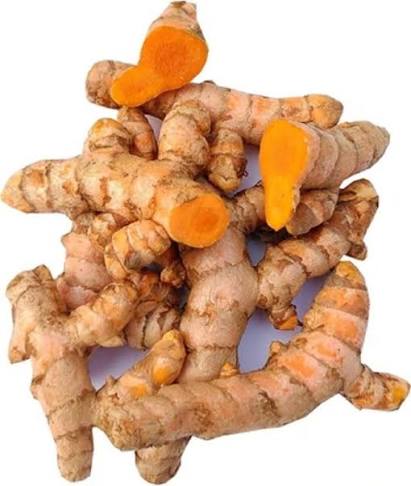
Lakadong turmeric’s trade reputation places it in a 6 to 10 percent curcumin range, a meaningfully higher starting point than commodity regional turmeric varieties typically offer. For nutraceutical formulators and functional food brands in Malaysia and Indonesia building products around a specified curcumin content - rather than simply sourcing turmeric as a generic spice ingredient - this potency difference is the actual basis for a premium positioning argument, not the geographical indication story that resonates more strongly in Western markets.
The honest limitation of this argument is important to state plainly: curcumin content alone does not offset the freight cost and proximity advantage that Indonesian and Thai turmeric hold in these two specific markets. A Malaysian or Indonesian buyer sourcing turmeric as a lower-cost, higher-volume commodity ingredient is not the right target for Lakadong turmeric, and pursuing that buyer segment on a curcumin-content argument alone is likely to lose on price regardless of the potency data presented. The buyer segment where Lakadong turmeric has a genuine competitive case is the nutraceutical and functional food formulator who has already decided to specify and pay for a defined curcumin potency, where Lakadong’s batch-verified data gives it a real basis to compete against other curcumin-forward options, including standardised extract products, on analytical grounds rather than price.
Practical positioning guidance: lead commercial conversations in Malaysia and Indonesia with batch-specific curcumin data and halal certification or recognition status together, not the GI-tag origin narrative that performs better in EU, USA, and UAE conversations covered elsewhere in this series. A Southeast Asian formulator evaluating turmeric on specification is a different buyer than a Western retail brand evaluating it on provenance story, and the sales approach should reflect that difference.
A Practical First-Order Checklist for Malaysia and Indonesia
- Confirm whether your existing halal certifying body appears on JAKIM’s recognised foreign body list before assuming a full direct JAKIM application is necessary for Malaysia.
- Treat Malaysia’s JAKIM certification and Indonesia’s Halal Product Assurance Law compliance as two entirely separate tracks, each requiring its own verification, even where the same manufacturing facility is involved.
- Do not assume GCC halal certification transfers to either Malaysian or Indonesian recognition. Confirm each market’s recognition status independently.
- Lead commercial conversations with batch-verified curcumin data, not the GI-tag origin story, since Malaysian and Indonesian nutraceutical and functional food buyers respond more to analytical specification than provenance narrative.
- Target the specification-driven nutraceutical and functional food buyer segment specifically, rather than the commodity-volume turmeric buyer segment where Indonesian and Thai regional supply holds a durable cost and proximity advantage.
- Track Indonesia’s approaching compliance deadline separately from Malaysia’s ongoing baseline requirement, since the urgency driver differs between the two markets even though both fall under the same halal certification umbrella commercially.
How Ayris Global Supports Malaysia and Indonesia Market Entry
Ayris Global helps suppliers confirm JAKIM recognition status for their existing halal certification, coordinates the separate documentation track Indonesia’s Halal Product Assurance Law requires, and positions Lakadong turmeric’s curcumin content data appropriately for nutraceutical and functional food buyers in both markets. We operate on a commission-only model - no retainer, no markup on goods.
Contact our sourcing team at sourcing@ayrisglobal.in or visit our For Buyers page to discuss Lakadong turmeric sourcing for Malaysia or Indonesia.
Frequently Asked Questions
Is JAKIM halal certification the same process as the halal certification Ayris Global covers for UAE and GCC buyers?
No. JAKIM operates its own certification scheme and approved-body recognition list entirely separate from the ESMA, SFDA, and GSO frameworks governing UAE and GCC halal certification. A certificate recognised in the UAE is not automatically accepted in Malaysia, and manufacturers should confirm recognition with each authority independently.
Can an Indian manufacturer’s existing halal certification be recognised in Malaysia without a separate JAKIM audit?
Sometimes, depending on whether the manufacturer’s certifying body appears on JAKIM’s recognised foreign body list under Malaysia’s mutual recognition arrangements. Where recognised, registration for the Halal Malaysia logo can generally proceed without a full separate facility audit. Where not recognised, the manufacturer generally needs certification through a body Malaysia does recognise.
Does Lakadong turmeric’s curcumin content give it a meaningful competitive advantage against Indonesian and Thai turmeric in Southeast Asia?
It can, for buyers who value potency and pay a premium for it, but it does not offset the cost and logistics advantage regional turmeric holds. The realistic position is a premium, curcumin-verified alternative for formulators who specify potency, not a volume replacement for price-driven regional sourcing.
Which matters more for Lakadong turmeric in Malaysia specifically - JAKIM certification or curcumin content data?
Both are required for different reasons. JAKIM certification or recognition is generally a precondition for market access given Malaysia’s market composition. Curcumin content data is what justifies the premium once halal status is settled. Strong data without a halal pathway, or vice versa, leaves a real commercial gap.
Is Indonesia’s halal certification requirement the same as Malaysia’s JAKIM system?
No. Indonesia’s Halal Product Assurance Law operates under a different national authority than JAKIM, with its own certification bodies, recognition arrangements, and phased compliance deadlines. Certification recognised in Malaysia is not automatically accepted in Indonesia, and suppliers should treat the two as separate tracks.
Further Reading: Halal Certification for Indian Herbal Ingredients: UAE and GCC · Southeast Asia Market Entry Guide for Indian Herbal Ingredient Suppliers · Lakadong Turmeric Market Opportunity by Region
Ayris Global connects international buyers across the EU, UK, USA, UAE, Japan, South Korea, Australia, Southeast Asia, and Latin America with verified Indian producers of botanical extracts, herbal powders, and Ayurvedic ingredients, including Lakadong turmeric from Meghalaya. We operate on a commission-only model - no retainer, no markup on goods. Contact our sourcing team to discuss Lakadong turmeric sourcing for Malaysia or Indonesia.