sourcing
Lakadong Turmeric Curcumin Content: What GCC Buyers Should Actually Ask For
16 July 2026

Lakadong turmeric’s reputation for high curcumin content is one of the main reasons GCC buyers seek it out, and it is also the single easiest claim for a supplier to overstate. This guide sets out exactly what to ask for, and why the distinction between “this variety is known for high curcumin” and “this specific batch tested at X% curcumin” is the difference between marketing and a verifiable specification.
Quick answer: GCC buyers should ask for a batch-specific Certificate of Analysis showing curcumin content tested via HPLC (not colorimetric or titration methods), referencing the exact lot number of the shipment being purchased, issued or verified by an accredited independent laboratory - and should treat any curcumin figure not tied to that specific batch as a variety-level reputation, not a guaranteed spec.
Why Does This Distinction Matter So Much for Lakadong Turmeric?
Government and trade sourcing literature commonly places Lakadong turmeric’s curcumin content in the 6-10% range, with some commercial suppliers advertising figures of 9-10% or higher in their marketing material. That range is real, well-documented at the variety level, and part of why Lakadong turmeric commands a premium price over conventional Indian turmeric, which typically tests closer to 2-5%. But a variety-level range describes the crop’s general reputation across many harvests, farms, and years - not the specific bag or container a buyer is being asked to pay for today.
Curcumin content is not a fixed trait like a botanical name. It moves with harvest timing, seasonal rainfall and soil conditions, how the rhizomes were dried, how long the material has been stored, and how it was processed into powder if applicable. Two batches from the same growing region, harvested in different years or processed differently, can show meaningfully different curcumin results. Treating the variety’s reputation as an assumed spec for a specific shipment is where buyers get exposed - either paying a premium price for material that does not test at the premium level, or building a downstream product formulation around a number that the actual batch cannot support.
Why Marketing Inflation Is a Real Risk Here
Because curcumin percentage is the primary commercial differentiator buyers use to justify Lakadong turmeric’s price premium, there is a direct financial incentive for suppliers to quote figures at the high end of the known range, or above it, without batch-specific evidence behind the number. This is not necessarily deliberate misrepresentation in every case - a supplier may genuinely believe their product tests in that range based on historical batches or informal testing - but from a buyer’s perspective, an unverified figure carries the same risk regardless of whether the overstatement is intentional or simply unverified. The only defence is requiring the number to be demonstrated on the specific batch being sold, every time, rather than accepted as a standing claim about the supplier’s product line.
What Is HPLC Testing, and Why Does the Test Method Matter?
High-Performance Liquid Chromatography (HPLC) separates and quantifies the individual curcuminoid compounds in a sample with high specificity, and it is the test method generally accepted as accurate for curcumin content determination in regulated food, nutraceutical, and pharmaceutical markets. Older or lower-cost alternative methods - colorimetric assays or titration-based methods in particular - are less specific: they can respond to other compounds present in the sample alongside curcumin, and in practice tend to report higher curcumin percentages than HPLC testing on the same material.
This matters directly for Lakadong turmeric because a supplier under commercial pressure to substantiate a high curcumin claim has an incentive to use, or to cite, a less specific test method that produces a more favourable number. A Certificate of Analysis that states a curcumin percentage without naming the test method should prompt an immediate, specific question: was this tested via HPLC, and if not, what method was used and why. A supplier confident in their result will generally answer this without hesitation.
What Should a Lot-Specific Certificate of Analysis Actually Contain?
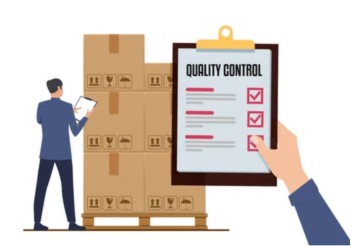
For curcumin content specifically, a usable Certificate of Analysis should show:
- The curcumin percentage result - a specific figure, not a range presented as a guarantee.
- The test method - explicitly named as HPLC.
- The batch or lot number - matching the physical shipment and its packaging labels, not a generic product code disconnected from the specific goods.
- Testing laboratory name and accreditation status - ideally referencing ISO 17025 accreditation or an equivalent recognised standard.
- Date of testing - a result more than 12 months old should prompt a request for retesting, since curcumin content in stored material can degrade over time.
A Certificate of Analysis missing the batch number is effectively a marketing data sheet. It may accurately describe the supplier’s typical product, but it provides no evidence about the specific shipment being offered - which is the entire point of requiring one.
In-House Testing vs Independent Laboratory Verification
Suppliers commonly provide an in-house Certificate of Analysis generated by their own quality control laboratory. This is a reasonable starting point for lower-risk, non-regulated applications, provided the in-house lab holds recognised accreditation and the buyer has some basis for trusting its results.
For nutraceutical, pharmaceutical, or other regulated end-uses - and for any first order from a new supplier regardless of end-use - commissioning an independent, accredited third-party laboratory to test the sample or an early batch is the more defensible approach. Independent testing removes the structural conflict of interest in a supplier testing their own material and reporting the result that supports their asking price. Once a supplier’s in-house results have been cross-checked against independent testing on two or three occasions and found reliable, buyers can reasonably reduce - though rarely eliminate entirely - how often they commission independent re-testing on subsequent orders.
What Should a Buyer Ask For, Specifically?
A precise request to a supplier should sound like this: “Please provide a Certificate of Analysis for lot number [X], showing curcumin content tested via HPLC, issued by [named laboratory], including that laboratory’s accreditation reference and the date of testing.” This framing does three things a vaguer request does not: it names the batch, names the required method, and asks for the credentials that let the buyer judge whether to trust the result without independent verification.
Buyers should be specifically cautious of responses that offer a curcumin percentage with no method named, that cite “our lab” without accreditation information, or that provide a CoA referencing a different or unspecified lot number than the one being shipped.
How Does Mission Golden Spice Relate to Testing Infrastructure?
The Government of Meghalaya and the Government of India launched Mission Golden Spice in July 2026, an INR 175.45 crore (Indian Rupees) programme reported to reach roughly 17,500 farming households in Jaintia Hills, intended to strengthen the Lakadong turmeric value chain including its processing and quality infrastructure. For buyers, a government-backed investment of this scale is relevant context for the testing conversation specifically: it suggests the region’s testing and quality-verification infrastructure is likely to formalise and improve over the coming years, which is a reasonable factor in evaluating a supplier’s current and future capability to produce accredited, batch-specific results. It does not, on its own, substitute for verifying any individual supplier’s current testing practice and accreditation today.
How Does This Differ from Our Supplier Checklist and Authenticity Guides?
Our 15-point supplier checklist for GCC buyers covers curcumin testing as one item within a broader supplier evaluation framework. Our guide to verifying authentic Lakadong turmeric addresses whether the product’s origin claim itself is genuine. This guide goes deeper specifically on the curcumin question: not whether the turmeric is really from West Jaintia Hills, but what percentage curcumin the actual batch you are buying contains, and exactly what documentation proves it. A buyer should expect to satisfy all three lines of diligence - supplier reliability, origin authenticity, and curcumin verification - before confirming a first order, and none of the three substitutes for the others.
A related question is covered in ESG and sustainability due diligence for Lakadong turmeric.
How Does Curcumin Testing Fit into the Wider Documentation Package?
Curcumin testing is one part of a complete Certificate of Analysis that should also cover moisture content, microbiological limits, heavy metals, and pesticide residues. For a full walkthrough of what a complete quality documentation package for an Indian herbal ingredient shipment should contain, see our CoA, MSDS, and phytosanitary certificate guide and our quality testing guide for Indian herbal ingredient suppliers.
How Ayris Can Support Curcumin Verification
Ayris Global works with verified Indian producers and exporters and supports buyers in specifying HPLC-based curcumin testing requirements, reviewing supplier Certificates of Analysis for batch-specific accuracy, and coordinating independent laboratory verification before an order is confirmed. We operate on a commission-only model with no retainer and no markup on goods.
Frequently Asked Questions
What curcumin percentage does Lakadong turmeric actually have?
Government and trade sourcing literature commonly cites Lakadong turmeric as containing approximately 6-10% curcumin at the variety level, with some commercial suppliers marketing figures of 9-10% or higher. This is a reputation for the variety as a whole, not a guarantee for any specific shipment - actual curcumin content in a given batch depends on harvest timing, growing conditions, and processing, and must be confirmed through HPLC testing on that specific batch rather than assumed from the variety’s general reputation.
Why shouldn’t I rely on a supplier’s stated curcumin percentage?
A supplier’s stated percentage is often a variety-level or marketing figure rather than a batch-specific lab result, and even where it reflects a genuine past test, curcumin content varies from harvest to harvest and batch to batch due to soil conditions, rainfall, harvest timing, and post-harvest processing. Relying on a stated figure without a matching batch-specific Certificate of Analysis means you have no verification that the shipment you actually receive meets that number.
What is the difference between HPLC testing and other curcumin test methods?
HPLC (High-Performance Liquid Chromatography) separates and quantifies curcuminoids with high specificity and is the test method generally accepted as accurate for curcumin content in regulated markets. Older or lower-cost methods such as colorimetric assays or titration are less specific - they can be influenced by other compounds in the sample and tend to overstate curcumin content compared to HPLC. Buyers should confirm the test method named on any Certificate of Analysis is HPLC, not a colorimetric or titration-based result presented without that distinction being made clear.
What exactly should a Certificate of Analysis show for curcumin content?
A usable Certificate of Analysis should show the curcumin percentage result, the test method used (HPLC), the specific batch or lot number the result applies to, the name and accreditation status of the testing laboratory, and the date of testing. A CoA without a batch number is a generic data sheet, not evidence about the shipment being offered, and a CoA that does not name HPLC as the method should prompt a direct question about what method was actually used.
Should I use an independent lab instead of the supplier’s in-house test?
For nutraceutical, pharmaceutical, or other regulated end-uses, commissioning an independent, accredited third-party laboratory to test a sample or early batch is the more reliable approach, since it removes any incentive the supplier’s own lab may have to report a favourable result. For lower-risk, non-regulated applications, a supplier’s in-house HPLC result from an accredited lab is a reasonable starting point, provided the buyer has verified the lab’s accreditation and can request independent verification at any time.
Ayris Global connects international buyers across the EU, UK, USA, UAE, Japan, South Korea, Australia, Southeast Asia, and Latin America with verified Indian producers of botanical extracts, herbal powders, and Ayurvedic ingredients. We operate on a commission-only model - no retainer, no markup on goods. Request a curcumin-verified sample from our sourcing team before your next Lakadong turmeric order.