sourcing
Lakadong Turmeric Market Opportunity by Region: Where the Ingredient Fits Across Nine Global Markets
31 July 2026
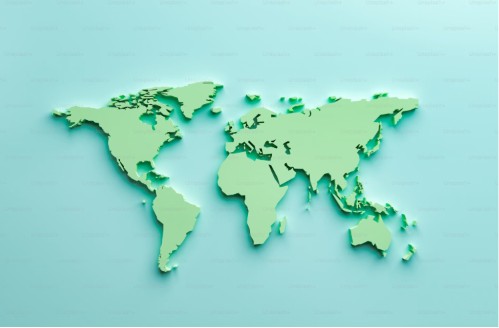
Every guide in our Lakadong turmeric series addresses a specific aspect of sourcing, quality, certification, formulation, or pricing. This guide steps back from those operational details and asks the strategic question: across the nine global markets Ayris Global sources for, where does Lakadong turmeric actually fit, what kind of buyer wants it in each region, and how does its competitive position differ from market to market?
Quick answer: Lakadong turmeric has traction in all nine markets, but the opportunity type, buyer profile, and competitive landscape vary significantly by region. The EU, USA, and UAE show the most developed demand. Japan and South Korea are high-value but complex. The UK, ANZ, Southeast Asia, and Latin America each present emerging or niche opportunities. No single market should be over-weighted, and the strongest sourcing strategy treats these nine markets as a portfolio.
What Makes This Different From Our Other Market Guides
Our quality specifications by market guide covers the regulatory testing requirements for each region. Our UAE demand guide goes deep on one market’s buyer segments and demand signals. This guide is neither a regulatory reference nor a single-market deep dive — it is a strategic overview of where the ingredient fits commercially across all nine regions, intended to help suppliers and buyers prioritise markets and understand how their positioning should shift region by region.
EU: Regulatory Rigour, Premium Positioning
Opportunity type: Nutraceutical formulation, functional food and beverage, organic and specialty retail.
The EU is the most demanding regulatory environment for Lakadong turmeric imports, with the strictest default pesticide MRLs among the nine markets and detailed contaminant testing requirements. It is also one of the strongest markets for premium, traceable, single-origin botanical ingredients. EU buyers in the nutraceutical and functional food sectors are accustomed to paying a premium for verified origin and documented quality, and the provenance narrative around Lakadong turmeric resonates with the sustainability and traceability values that drive purchasing decisions in this market.
A related question is covered in ESG due diligence for turmeric buyers.
Competitive landscape: Lakadong competes here primarily against standardised curcumin extract products and branded bioavailability-enhanced complexes rather than against other whole turmeric origins. The GI tag and the single-origin story differentiate it from generic curcumin extracts; the curcumin content premium differentiates it from commodity turmeric powders.
Market fit: Strong for brands positioning around origin transparency, Ayurvedic heritage, or high-curcumin content. Weak for price-sensitive commodity turmeric procurement.
UK: Post-Brexit Alignment With Emerging Divergence
Opportunity type: Dietary supplement formulation, private-label wellness retail, functional food.
The UK market currently mirrors the EU in most regulatory requirements but operates its own import pathway under the post-Brexit BTOM framework. For buyers and suppliers, this means a separate documentation and compliance process from EU shipments even though the underlying quality specifications remain largely aligned. See our UK BTOM import guide for current requirements.
Competitive landscape: Similar to the EU, with the added factor that UK wellness retail is heavily concentrated in a small number of major health food chains and online platforms, making distribution access a more significant barrier than in the fragmented EU market.
Market fit: Moderate to strong, particularly for brands already serving the EU that can extend into the UK with incremental documentation effort.
USA: Dietary Supplement Scale, NDI Complexity
Opportunity type: Dietary supplement manufacturing, functional food and beverage, branded ingredient partnerships.
The USA is the largest single-country dietary supplement market among the nine regions. Lakadong turmeric’s curcumin content premium is directly relevant to supplement formulators who want a whole-herb ingredient rather than a standardised extract, and the GI-tagged origin story supports brand differentiation in a crowded turmeric supplement category. The regulatory pathway is more permissive than the EU for most contaminant parameters but introduces its own complexity through NDI notification requirements for ingredients without a history of pre-DSHEA use, and FDA Prior Notice requirements for imported food and supplement shipments.
Competitive landscape: The US market is saturated with curcumin supplement products. Lakadong turmeric’s competitive position rests on the single-origin narrative and verifiable curcumin content rather than on curcumin content alone, since numerous standardised extract products can deliver higher curcumin per capsule at lower cost.
Market fit: Strong for brands targeting the whole-herb, single-origin, and Ayurvedic-heritage segments. Less competitive in the mass-market curcumin supplement space where standardised extracts dominate on potency per capsule.
UAE and GCC: Curcumin-Driven Niche, CEPA Advantage
Opportunity type: Nutraceutical formulation, premium private-label, functional food and beverage.
UAE demand for Lakadong turmeric is real but specialised, concentrated among nutraceutical formulators, functional food brands, and premium private-label retailers rather than mass-market spice importers. Our detailed UAE demand guide covers this market in depth. The India-UAE CEPA provides preferential tariff treatment that modestly improves the landed cost position, but the commercial case for Lakadong in the GCC rests on curcumin content and origin, not on price.
Competitive landscape: Lakadong competes against curcumin extracts and other internationally marketed high-curcumin origins. India’s established trade relationship, shipping lane familiarity, and CEPA framework provide logistical advantages over competing non-Indian origins.
Market fit: Strong for the nutraceutical and premium segments. Halal certification and Arabic-language labelling requirements apply to retail-facing products.
Japan: High Value, High Barrier
Opportunity type: Health functional foods, supplements classified under FOSHU or Foods with Function Claims (FFC), premium retail.
Japan represents a high-value opportunity for Lakadong turmeric given the country’s established consumer interest in curcumin-based wellness products and its willingness to pay a premium for verified, traceable ingredients. However, market entry is complex: Japan’s Food Sanitation Act imposes specific contaminant limits, and functional food claims require scientific substantiation under either the FOSHU or FFC framework. Documentation requirements are among the most detailed of the nine markets.
Competitive landscape: Japan has its own domestic turmeric supply from Okinawa, and Southeast Asian turmeric varieties with established Japanese import channels. Lakadong turmeric enters this market as a competitor from a less familiar origin, and the GI tag’s value depends on whether the buyer is marketing origin provenance to Japanese consumers.
Market fit: High value but high effort. Best suited for suppliers with existing Japan trade experience or buyers willing to invest in the documentation and regulatory pathway before expecting returns.
South Korea: Regulated Premium, MFDS Rigour
Opportunity type: Health functional food formulation, curcumin-based supplements, premium ingredient supply.
South Korea’s MFDS regulates health functional foods with specific ingredient approval requirements and notably strict cadmium limits. The market values high-curcumin ingredients for supplement formulation, and Korean consumers are receptive to premium, origin-verified botanical ingredients. Entry requires MFDS-aligned documentation and testing, and the functional ingredient approval process is more structured than in many other markets.
For more on this, see Lakadong turmeric market entry in Japan and South Korea.
Competitive landscape: Korean buyers have access to Southeast Asian turmeric supply chains and domestic turmeric production. Lakadong turmeric’s differentiation rests on curcumin content and GI-backed origin rather than on price or logistical proximity.
Market fit: Strong for the health functional food segment, provided the supplier can deliver documentation to MFDS standards.
Australia and New Zealand: TGA Framework, Growing Demand
Opportunity type: Listed medicines (Australia), dietary supplements, premium retail, functional food.
Australia’s TGA classifies many herbal supplements as Listed Medicines requiring ARTG listing, creating a more regulated pathway than the EU or US for supplement-category products. New Zealand operates its own Dietary Supplements Regulations. Both markets show growing consumer interest in curcumin and turmeric-based products, and the provenance narrative resonates with ANZ consumers who value traceability and ethical sourcing.
Competitive landscape: ANZ buyers have established supply chains from other South and Southeast Asian turmeric origins. Lakadong turmeric enters as a premium, differentiated option rather than a volume replacement for existing supply.
Market fit: Moderate, with the strongest opportunities in the premium retail and TGA-compliant supplement segments.
Southeast Asia: Regional Competition, Growing Nutraceutical Demand
Opportunity type: Nutraceutical formulation, private-label supplements, functional food ingredients.
Southeast Asian markets — particularly Singapore, Malaysia, Thailand, and the Philippines — have growing domestic nutraceutical and functional food industries that source curcumin-based ingredients. However, these markets also have strong regional turmeric supply from Indonesia, Thailand, and other Southeast Asian origins, creating direct competition on both price and proximity.
Competitive landscape: Lakadong turmeric faces the strongest regional competition in Southeast Asia. Its competitive advantage is limited to the GI-backed origin and curcumin content premium, which must be weighed against lower freight costs and established supply relationships that regional competitors offer. Halal certification is critical for Malaysia and Indonesia.
Market fit: Niche, strongest in Singapore and higher-end nutraceutical formulation segments where origin and curcumin content matter more than price.
Latin America: Emerging, Fragmented
Opportunity type: Nutraceutical formulation, premium retail, early-stage functional food.
Latin American markets — primarily Brazil and Mexico — show emerging interest in curcumin-based supplements and functional foods, but the market is earlier-stage than the other eight regions for Lakadong turmeric specifically. Regulatory frameworks vary by country (ANVISA in Brazil, COFEPRIS in Mexico), and documentation requirements must be confirmed per destination.
Competitive landscape: Indian turmeric generally has established export channels to Latin America, but Lakadong turmeric as a differentiated ingredient is largely unknown in these markets. This is both a risk — no established demand — and an opportunity for early market entry before competitors establish supply.
Market fit: Early-stage. Best approached by suppliers who already export other Indian herbal ingredients to LatAm and can introduce Lakadong as part of an existing product portfolio.
How to Use This Guide
This market map is a starting point for market prioritisation, not a substitute for the operational detail covered in our per-topic guides. For any market you choose to enter, the next steps are:
- Confirm quality specifications and testing requirements per our quality specifications by market guide
- Verify certification requirements per our certifications explained guide
- Understand MOQ and pricing per our MOQ, packaging, and pricing guide
- For private-label applications, see our private-label guide
- For formulation-stage sourcing, see our formulating guide
How Ayris Global Supports Multi-Market Entry
Ayris Global works with Lakadong turmeric suppliers and buyers across all nine of the markets mapped in this guide. We help prioritise markets based on the buyer’s existing regulatory capability and trade relationships, match documentation and certification to each destination, and coordinate supplier introductions from verified producers in the Jaintia Hills of Meghalaya.
Contact our sourcing team at sourcing@ayrisglobal.in or on WhatsApp at +91 97292 56621 to discuss your target market portfolio.
Frequently Asked Questions
Which global markets have the strongest demand for Lakadong turmeric?
The EU, USA, and UAE currently show the most developed demand signals for Lakadong turmeric, driven by nutraceutical formulation, functional food development, and premium private-label retail respectively. Japan and South Korea represent high-value opportunities with more complex market entry requirements. Australia and New Zealand, the UK, Southeast Asia, and Latin America each show emerging or niche demand in specific buyer segments. No single market dominates — the strongest sourcing strategy treats these nine markets as a portfolio of opportunities with different maturity levels and buyer profiles.
Is Lakadong turmeric positioned as a premium ingredient or a commodity in international markets?
Lakadong turmeric is positioned as a premium, single-origin, high-curcumin ingredient in every international market where it has meaningful traction. It does not compete with commodity Indian turmeric on price and should not be marketed as a volume-driven commodity alternative. Its competitive advantages — Geographical Indication tag, curcumin content reputation in the 6 to 10 percent range, traceable origin story from the Jaintia Hills of Meghalaya — support premium positioning across nutraceutical, functional food, and private-label categories in all nine markets.
Does Lakadong turmeric face different competitive pressures in Asian versus Western markets?
Yes. In Western markets such as the EU, UK, USA, and ANZ, Lakadong turmeric competes primarily against standardised curcumin extracts and branded curcumin complexes that emphasise bioavailability over origin. In Asian markets such as Japan, South Korea, and Southeast Asia, it faces additional competition from regional high-curcumin turmeric varieties and established local turmeric supply chains. The GI tag and Indian origin story carry different weight in each context — Western markets tend to value the single-origin narrative more strongly, while Asian markets place greater emphasis on curcumin content verification and regulatory compliance documentation.
Should a supplier or buyer target all nine markets simultaneously with Lakadong turmeric?
No. Each market has different regulatory requirements, documentation expectations, and buyer qualification processes. A supplier or buyer new to Lakadong turmeric export should start with one or two markets where they have existing trade relationships or regulatory familiarity, build a track record and documentation capability, and then expand to additional markets. Attempting to service all nine markets simultaneously without market-specific documentation and compliance infrastructure is a common cause of shipment delays and customs rejections.
How does the India-UAE CEPA affect Lakadong turmeric’s competitiveness in the GCC?
The India-UAE Comprehensive Economic Partnership Agreement provides preferential tariff treatment for qualifying Indian goods entering the UAE, which can reduce the landed cost of Lakadong turmeric relative to competing origins that do not benefit from preferential access. The tariff advantage is meaningful but secondary to the product’s premium positioning — buyers purchasing Lakadong turmeric for its curcumin content and origin story are making a quality-driven decision, not a price-driven one, so the CEPA benefit supplements rather than drives the commercial case.
Related reading: Lakadong Turmeric Quality Specifications by Market — testing requirements per destination Is Lakadong Turmeric in Demand in the UAE? — deep-dive on one market Lakadong Turmeric Certifications Explained — GI, organic, GMP, and export documentation
Ayris Global connects international buyers across the EU, UK, USA, UAE, Japan, South Korea, Australia, Southeast Asia, and Latin America with verified Indian producers of botanical extracts, herbal powders, and Ayurvedic ingredients, including Lakadong turmeric from Meghalaya. We operate on a commission-only model — no retainer, no markup on goods. Contact our sourcing team to discuss market entry for Lakadong turmeric in your target region.