certifications
Lakadong Turmeric Quality Specifications by Market: EU, USA, Japan, and Beyond
20 July 2026
Quick answer: Lakadong turmeric does not have one universal quality specification — it has nine, one for each destination market covered in this guide. The active compound target (curcumin, typically referenced in the 6-10% range) stays consistent, but the heavy metal limits, pesticide MRLs, microbial counts, and aflatoxin thresholds a batch must pass are set independently by each market’s regulator. This guide lays out what to specify for each of the nine markets Ayris Global sources for, so buyers request the right test panel the first time.
Why Does a Single Turmeric Variety Need Nine Different Specifications?
Lakadong turmeric, grown in the Jaintia Hills of Meghalaya, is a single variety with a consistent reputation for high curcumin content. But “quality” for an import shipment is not defined by the plant — it is defined by the regulatory framework of the country the shipment is entering. The EU, USA, Japan, Korea, ANZ, UK, UAE/GCC, SEA, and LatAm each maintain their own limits for contaminants and their own documentation expectations, developed independently and not harmonised with one another.
Our article on selling Lakadong turmeric into Japan and Korea goes further.
This means the same physical batch of Lakadong turmeric can be fully compliant for one destination and non-compliant for another, even though nothing about the turmeric itself has changed. A batch that clears Japan’s Food Sanitation Act heavy metal limits may still fail the EU’s default pesticide MRL if it was never screened at that sensitivity. Buyers who copy a specification from one market to a purchase order for a different market are the most common source of avoidable rejections at customs.
This guide is a companion to our curcumin content and HPLC testing guide for GCC buyers, which goes deep on one parameter for one market. Here, the scope is wider and shallower by design: what to specify, market by market, across the full set of regions Lakadong turmeric moves into.
The Comparison Table: What to Specify by Market
| Market | Curcumin Target | Heavy Metal Framework | Pesticide MRL Framework | Microbial Standard | Aflatoxin Limit |
|---|---|---|---|---|---|
| EU | Agreed contractually, HPLC-verified (typically 6-10%) | EC Regulation 1881/2006 | EC Reg. 396/2005 (default 0.01 mg/kg) | USP <61>/<62> reference | 10 ug/kg total, 5 ug/kg B1 (EC 1881/2006) |
| UK | Same as EU (UK REACH-aligned, post-Brexit divergence possible) | UK retained EU limits framework | UK retained MRL framework | USP <61>/<62> reference | UK retained EC 1881/2006 limits |
| USA | Agreed contractually, HPLC-verified | USP <2232> (PDE-based) | USP <561> / FDA multi-residue method | USP <61>/<62> | FDA action levels for aflatoxin |
| UAE/GCC | Agreed contractually, HPLC-verified | GCC Standardization Organization limits | GCC-aligned MRLs | Halal-certifier-aligned microbial panel | GCC Standardization Organization limits |
| Japan | Agreed contractually, HPLC-verified | Food Sanitation Act (lead, cadmium, arsenic) | MHLW positive list system | Japan-specific microbial standards | Japan-specific aflatoxin limits |
| Korea | Agreed contractually, HPLC-verified | MFDS limits (cadmium notably strict) | MFDS MRL database | MFDS Health Functional Food Act standards | MFDS aflatoxin limits |
| ANZ | Agreed contractually, HPLC-verified | FSANZ Food Standards Code | FSANZ MRL schedule | FSANZ microbial standards | FSANZ aflatoxin limits |
| SEA | Agreed contractually, HPLC-verified | Varies: HSA (Singapore), NPRA (Malaysia), Thai FDA | Varies by national authority | Varies by national authority | Varies by national authority |
| LatAm | Agreed contractually, HPLC-verified | Varies: ANVISA (Brazil), COFEPRIS (Mexico) | Varies by national authority | Varies by national authority | Varies by national authority |
For SEA and LatAm shipments in particular, buyers sourcing into multiple countries within the region should identify the single most stringent applicable national requirement across their target countries and specify to that level, rather than negotiating a separate specification per country.
What Does “Agreed Contractually” Mean for Curcumin Content?
No market listed above imposes a legal minimum curcumin percentage on raw turmeric imports. The 6-10% figure commonly associated with Lakadong turmeric is a variety-level reputation, not a regulatory floor. This means the curcumin specification for any given order exists only because the buyer and supplier put it in writing — typically as part of a purchase contract or, for ongoing relationships, a quality agreement.
Because there is no regulator checking curcumin percentage at the border the way there is for heavy metals or pesticides, this is the parameter most exposed to a supplier simply not delivering what was promised. Every purchase order should reference an explicit curcumin percentage or range and require HPLC testing against a lot-specific Certificate of Analysis before shipment, not after a dispute arises on arrival.
How Should a Buyer Sourcing Multiple Markets Approach the Specification?
Buyers exporting Lakadong turmeric into more than one of the nine markets face a practical choice: negotiate a separate specification for each shipment destination, or set a single internal specification at the strictest applicable level across all target markets and apply it uniformly.
The second approach is generally more efficient for buyers running multi-market supply chains. In practice, this typically means specifying to the EU’s pesticide MRL framework (the most demanding of the nine for that parameter), the USP <2232> PDE-based approach for heavy metals (which requires knowing the finished product’s expected daily dose to calculate compliance), and the tightest aflatoxin limit among the buyer’s actual destination markets. A single conservative specification reduces the administrative burden of tracking nine different documentation sets and reduces the risk of a batch being cleared for one market and then redirected to a stricter one without retesting.
The tradeoff is cost: testing to the strictest applicable standard across all parameters is more expensive per batch than testing to the minimum requirement for a single, less demanding market. Buyers should weigh this against the operational cost of maintaining multiple parallel specifications and the risk of a documentation error routing an under-tested batch to the wrong market.
Where Does This Fit Alongside Our Other Lakadong Guides?
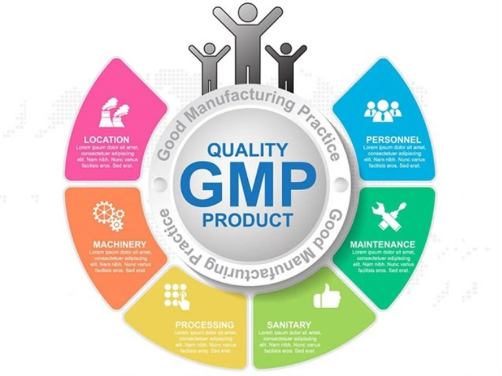
This guide answers “what specification applies in which market.” It does not replace supplier authenticity verification, which addresses whether the turmeric is genuinely from West Jaintia Hills, or the curcumin-specific HPLC testing guide, which goes deep on verifying one parameter for GCC buyers specifically. For the certifications that sit alongside these quality specifications — GI tag, organic status, GMP, and export documentation — see our companion guide on Lakadong turmeric certifications.
For the underlying testing methods referenced throughout this table — what HPLC, ICP-MS, and LC-MS/MS actually measure and how to read a Certificate of Analysis — see our general quality testing guide for Indian herbal ingredient suppliers.
How Ayris Global Supports Multi-Market Specification
Ayris Global works with buyers across all nine of the markets covered in this guide to translate a single sourcing requirement into the correct market-specific — or conservatively unified — specification before a purchase order is placed. We help buyers avoid the common failure mode of specifying a curcumin percentage without a matching contaminant and microbial panel appropriate to their actual destination market.
To discuss a specification for your target market or markets, contact our sourcing team at sourcing@ayrisglobal.in or on WhatsApp at +91 97292 56621.
Frequently Asked Questions
Does Lakadong turmeric need a different specification for each export market?
Yes. While the turmeric itself does not change, the regulatory limits it must be tested against do. Heavy metal limits, pesticide MRLs, microbial counts, and aflatoxin thresholds are set independently by each destination market’s regulatory body, so a Certificate of Analysis that satisfies one market’s limits will not automatically satisfy another’s. Buyers should specify the destination market by name when requesting a CoA, not assume a single global specification applies.
Which market has the strictest pesticide residue requirement for Lakadong turmeric?
The EU’s default maximum residue limit (MRL) of 0.01 mg/kg under Regulation (EC) No 396/2005, which applies to any pesticide-commodity combination without a specific listed limit, is generally the most demanding threshold among the nine markets covered here. It requires LC-MS/MS or GC-MS/MS testing capable of detecting at or below 10 parts per billion, a sensitivity level not all suppliers’ in-house laboratories can reliably reach.
Is the 6-10% curcumin figure for Lakadong turmeric the same specification requirement in every market?
No. The 6-10% range is a variety-level reputation, not a regulatory specification. No destination market mandates a minimum curcumin percentage by law for raw turmeric imports; the percentage becomes a specification only when the buyer and supplier agree on one contractually, and it should always be verified batch by batch using HPLC testing rather than assumed from the variety’s general reputation.
Do organic-certified Lakadong turmeric shipments need different testing than conventional shipments?
Organic certification addresses production method compliance — absence of prohibited synthetic inputs, verified through the certifying body’s inspection and transaction certificate chain — and does not replace the standard quality testing panel. An EU Organic or USDA NOP certified batch of Lakadong turmeric still requires its own heavy metal, pesticide residue, microbial, and identity testing against the destination market’s limits; organic status and quality specification compliance are assessed separately.
What should a buyer do if a supplier cannot test to the specification level required by the buyer’s market?
Buyers should request that the supplier route testing through a NABL-accredited third-party laboratory capable of the required sensitivity and panel, rather than relying on an in-house laboratory that cannot demonstrate accreditation for the specific parameters and detection limits needed. If no laboratory in the supplier’s network can meet the requirement, this is a material sourcing risk that should be resolved before a first order is placed, not after a shipment is tested and found non-compliant at the destination port.
Ayris Global connects international buyers across the EU, UK, USA, UAE, Japan, South Korea, Australia, Southeast Asia, and Latin America with verified Indian producers of botanical extracts, herbal powders, and Ayurvedic ingredients, including Lakadong turmeric from Meghalaya. We operate on a commission-only model — no retainer, no markup on goods. Contact our sourcing team to specify your market’s testing requirements before your next order.