sourcing
Turmeric Contaminant Baseline Variance by Origin: What Buyers Should Actually Specify
26 August 2026
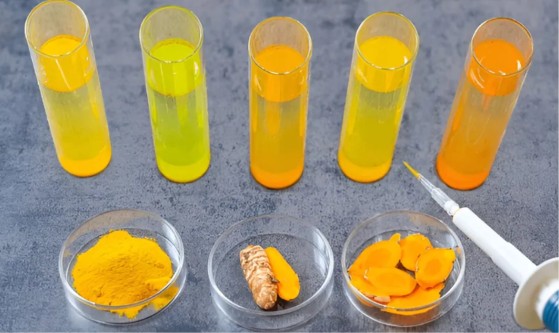
Quick answer: Curcumin content and heavy metal or pesticide contaminant load in Indian turmeric are driven by two different variables, and buyers who fold them into a single “origin quality” judgment miss the distinction. Curcumin variance tracks trading structure, auction-mandi aggregation versus cooperative sourcing. Contaminant baseline, cadmium above all, tracks the soil chemistry and agricultural input history of the specific growing region, which does not follow trading structure at all. This guide sets out what to actually specify for contaminant testing by origin, separate from the curcumin tolerance and contract clauses already covered elsewhere on this site.
Why Contaminant Risk Is Not the Same Question as Curcumin Variance
Our guides on turmeric quality agreement clauses by trading structure and supplier audit priorities by trading structure both establish that auction-mandi origins like Erode, Salem, and Nizamabad carry wider curcumin variance from multi-farm aggregation, while cooperative origins like Lakadong can generally support tighter curcumin tolerance bands from a more uniform growing base. That is a real and useful distinction, but it answers a question about active compound consistency, not about contaminant safety.
Heavy metal uptake, cadmium in particular, is governed by an entirely different mechanism: what is actually present in the soil the rhizome grew in, and what agricultural inputs, historically and currently, have been applied to that soil. A cooperative with excellent farmer-level documentation and a tight curcumin band can still be operating in a region with elevated background soil cadmium. An auction-mandi origin with wide curcumin variance from aggregation can still be drawing from soil with a clean contaminant profile. Trading structure tells a buyer about documentation and consistency mechanics. It tells a buyer almost nothing about what is actually in the soil.
This distinction matters commercially because a buyer who assumes a cooperative’s tighter curcumin band also implies a cleaner contaminant profile is making an inference the underlying mechanism does not support. Specification-setting for contaminants needs its own origin-specific evidence base, separate from whatever a buyer has already concluded about trading structure and active compound consistency.
What Actually Drives Contaminant Baseline by Origin
Soil parent geology and cadmium. Cadmium occurs naturally in soil at variable background concentrations depending on the parent rock the soil weathered from, and turmeric, as a rhizome crop grown in direct soil contact, accumulates cadmium more readily than many other spice crops. Regions with naturally cadmium-richer parent geology, or with a history of phosphate fertilizer use (phosphate rock is a known cadmium carrier), can show elevated baseline cadmium in turmeric independent of current farming practices.
Historical agricultural input use. Long-cultivated agricultural regions with decades of conventional fertilizer and pesticide application history can carry residual soil contamination that predates any individual farmer’s current practices. This is a regional and historical factor, not a current-crop-cycle factor, and it does not resolve quickly even where current practices shift toward organic or reduced-input methods.
Proximity to industrial or high-traffic zones. Lead contamination in particular can be elevated in growing areas near industrial activity, mining operations, or high-traffic roadways, through atmospheric deposition and soil accumulation over time, independent of the farming method used on the specific plot.
Water source. Irrigation water quality, where groundwater or surface water carries elevated background metal content specific to a regional aquifer or watershed, is a further origin-specific variable that does not track trading structure, farmer documentation quality, or organic certification status.
None of these four factors is something a buyer can infer from a supplier’s GMP certificate, Form 25-D license, or curcumin specification. They require origin-specific contaminant testing history, not general supplier qualification documentation.
What This Means for Specification-Setting, Origin by Origin
A buyer building a specification for a specific Indian turmeric origin should treat contaminant testing intensity as a separate line item from curcumin tolerance, set according to the following logic rather than assumed from trading structure or certification status.
Where an origin has a documented history of elevated cadmium or lead readings, whether from published agricultural survey data, prior batch testing history with the buyer’s own supply chain, or industry-known regional patterns, the specification should require batch-by-batch heavy metal testing as a standing condition of every shipment, not a periodic or new-supplier-only check. This is a cost the buyer absorbs on every order, not a one-time qualification hurdle.
Where an origin has no available contaminant history, the specification should require the supplier to produce a documented multi-batch testing history, several consecutive Certificates of Analysis across different production runs, before the buyer accepts a single reference CoA as representative. A single batch result establishes what one batch contained. It does not establish what the origin typically produces, and a specification built on that single data point is exposed to normal batch-to-batch variance being mistaken for a stable baseline.
Regardless of origin history, the destination market’s regulatory limit remains the enforceable floor, as covered in our quality specifications by market guide. Origin-specific risk assessment determines testing intensity and pre-qualification scrutiny. It does not change the regulatory limit itself, which is set by the importing country, not the growing region.
A Comparison Framework: Contaminant Risk Signal vs. Trading Structure Signal
| Signal | What it tells a buyer | What it does not tell a buyer |
|---|---|---|
| Trading structure (auction-mandi vs. cooperative) | Curcumin consistency, traceability documentation depth, volume-capacity risk | Soil contaminant baseline, heavy metal uptake risk |
| Organic certification | Absence of prohibited synthetic inputs in current cultivation | Background soil contamination predating current farming method |
| Origin-specific contaminant testing history | Actual heavy metal and pesticide residue baseline for that growing region | Curcumin content, documentation discipline, volume reliability |
| GMP and licensing documentation | Facility-level manufacturing quality systems | Field-level soil and input history |
The practical takeaway from this table is that no single document or certification substitutes for origin-specific contaminant testing history. A buyer needs all four signals, not a subset assumed to cover the others.
Why This Does Not Replace the Market-Specific Specification Guide
This guide addresses which origins warrant heightened contaminant testing scrutiny and why. It does not restate which regulatory limit applies in which destination market, that remains the scope of our quality specifications by market guide, nor does it restate curcumin tolerance banding by trading structure, covered in our quality agreement clauses guide. The three guides answer three different questions: what limit applies where, what curcumin consistency to expect by trading structure, and what contaminant testing intensity to require by origin-specific risk history.
How Ayris Global Supports Origin-Specific Contaminant Risk Assessment
Ayris Global tracks contaminant testing history across the turmeric origins in our supplier network, separate from the trading-structure and documentation assessment we apply during standard supplier qualification. For buyers building a long-term specification for a specific origin, we can help identify where heightened testing intensity is warranted based on that origin’s actual track record, rather than a general assumption drawn from certification status alone. We operate on a commission-only model, no retainer, no markup on goods.
Frequently Asked Questions
Does the contaminant risk in Indian turmeric vary by growing origin, separate from curcumin content?
Yes. Curcumin content and its variance are driven by trading structure. Contaminant baseline, cadmium in particular, is driven by soil chemistry and agricultural input history in the specific growing region, a separate variable that does not track trading structure at all.
Which contaminant is most sensitive to growing origin in turmeric specifically?
Cadmium uptake is the parameter most consistently linked to origin-specific soil chemistry. Turmeric accumulates cadmium from soil more readily than many other spice crops, and soil cadmium varies by region depending on parent rock geology and historical fertilizer input use.
Should a buyer request a different heavy metal specification for different turmeric origins?
The regulatory limit does not change by origin, it changes by destination market. What should change by origin is testing intensity: an origin with a documented history of elevated readings warrants batch-by-batch testing as a standing requirement, not a periodic check.
Does organic certification reduce heavy metal risk that varies by origin?
No. Organic certification addresses absence of prohibited synthetic inputs in current cultivation. It does not address background soil contamination that predates and exists independently of the current farming method.
How should a buyer build origin-specific contaminant baselines into a specification if published regional data is limited?
Require a documented multi-batch testing history from the specific supplier and growing area before finalizing a specification, rather than accepting a single reference Certificate of Analysis as representative of the origin generally.
Further Reading: Lakadong Turmeric Quality Specifications by Market | Quality Agreement Clauses for Turmeric Suppliers: What Changes by Trading Structure | Auditing a Turmeric Supplier: What Changes by Trading Structure
Ayris Global connects international buyers across the EU, UK, USA, UAE, Japan, South Korea, Australia, Southeast Asia, and Latin America with verified Indian producers of turmeric and other botanical ingredients across multiple growing origins. We operate on a commission-only model, no retainer, no markup on goods. Contact our sourcing team to discuss contaminant testing requirements for your target origin.