sourcing
Auditing a Turmeric Supplier: What Changes by Trading Structure, Auction-Mandi vs Cooperative Origins
20 August 2026
A supplier qualification checklist for turmeric looks the same on paper no matter which Indian origin it is applied to: verify the manufacturing license, confirm GMP certification, review a batch-specific Certificate of Analysis, commission a facility audit. Our companion guide on qualifying and auditing an Indian Ayurvedic ingredient supplier sets out that checklist in full, and it applies to turmeric suppliers exactly as it does to Ashwagandha, Boswellia, or Moringa suppliers. What that generic checklist does not tell a buyer is where, within that checklist, the actual risk concentrates for a given turmeric origin. That depends heavily on how the origin trades, covered in our turmeric trading structure guide comparing auction-mandi origins against cooperative-sourced origins like Lakadong.
Our article on contract manufacturing readiness for turmeric goes further.
Quick answer: The audit checklist itself does not change by origin. What changes is where scrutiny should concentrate. For auction-mandi origins, Erode, Salem, and largely Nizamabad, the audit priority is traceability reconciliation: confirming that an exporter’s origin or single-source claim is actually supportable given that mandi-sourced material is aggregated and blended across many independent farmers. For cooperative-sourced origins, Lakadong being the clearest example, the audit priority is volume-capacity verification: confirming that a cooperative’s committed export volume does not exceed what its actual farmer membership could have aggregated that season.
Why the Same Checklist Produces Different Priorities by Origin
The eight-step qualification process, licensing, GMP, Certificate of Analysis, ingredient traceability, organic and Halal certification, Free Sale Certificate and CoPP, facility audit, and sample evaluation, exists to confirm a supplier is who they say they are and produces what they claim to produce. None of those eight steps is origin-specific in its requirements. But two structural facts about how turmeric actually moves from farm to exporter, set out in our trading structure guide, mean that the same checklist surfaces different risks depending on which structure a given origin uses.
A related question is covered in sourcing organic turmeric from India.
Auction-mandi trading, dominant in Erode, Salem, and largely Nizamabad, aggregates lots from many independent farmers through open auction, then blends and re-grades that material before it reaches an exporter’s warehouse. This structure produces excellent price transparency and order flexibility, but it structurally weakens farm-level traceability, since the material a buyer eventually receives has passed through multiple hands and lots before consolidation.
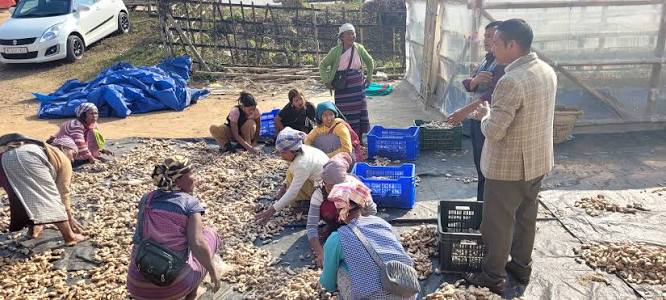
Cooperative and farmer-group aggregation, dominant in Lakadong and increasingly present in Sangli, moves material through a smaller number of defined farmer memberships. This structure produces stronger chain-of-custody documentation by default, since a cooperative’s membership is comparatively stable and its aggregation process is more centrally managed. But it introduces a different constraint: the cooperative’s total exportable volume is hard-bounded by what its actual members harvested that season, and that ceiling is not always visible to a buyer relying on a supplier’s stated capacity alone.
Auditing an Auction-Mandi Turmeric Supplier: Where to Focus
A buyer applying the standard qualification checklist to an Erode, Salem, or Nizamabad-sourced exporter should treat the generic steps, licensing, GMP, and Certificate of Analysis review, as the baseline they already are, and add specific attention to two points the generic checklist does not fully surface for this trading structure.
Reconcile any single-origin or GI-adjacent claim against actual blending practice. An exporter sourcing through mandi auction is, by the nature of that structure, combining lots from multiple independent farmers and mandi purchases. If a specification sheet or marketing material implies a narrower single-source origin claim than the trading structure actually supports, that is a document-versus-practice mismatch worth raising directly with the supplier before proceeding, following the same principle our qualification guide applies to any documentation inconsistency.
Ask how a specific export lot maps back to mandi purchase records. This is the traceability question this trading structure makes hardest to answer well, and a supplier who can produce lot-level purchase and blending records, even if farm-level traceability is not available, demonstrates meaningfully stronger documentation discipline than one who cannot account for how a shipped lot was assembled at all.
Do not expect, or pay a premium for, farm-level traceability from this structure. Buyers whose market or brand position genuinely requires documented farm-level origin should recognize that an auction-mandi-sourced supplier is structurally not the right fit for that requirement, regardless of how complete their licensing and GMP documentation is, and should consider a cooperative-sourced origin instead, accepting the volume and price-transparency tradeoffs that come with it.
Auditing a Cooperative-Sourced Turmeric Supplier: Where to Focus
A buyer applying the same checklist to a Lakadong or increasingly Sangli-sourced exporter should carry the generic steps forward unchanged, and add specific attention to the constraint this trading structure introduces that auction-mandi sourcing does not.
Verify the cooperative’s actual seasonal aggregation volume, not just the exporter’s quoted capacity. Because a cooperative’s exportable supply is bounded by what its member farmers genuinely harvested that season, a buyer evaluating a large order, or an order that approaches what would represent a meaningful share of a cooperative’s typical output, should ask directly for the cooperative’s total seasonal aggregation figure and how much of it is already committed elsewhere. An exporter who cannot or will not provide a plausible answer to this question, while readily quoting a large available volume, is showing the clearest version of this trading structure’s characteristic risk.
Treat strong traceability documentation as a starting point, not a substitute for volume verification. Cooperative structures generally produce better farm-level chain-of-custody paperwork than mandi trading does, and it is easy for that documentation strength to create a false sense that the supplier relationship overall carries lower risk. Good traceability paperwork answers a different question, where the material came from, than volume-capacity verification does, whether the quoted quantity is actually available from that stated source.
Confirm GI-tag references separately from cooperative capacity. Lakadong’s West Jaintia Hills Geographical Indication status and Sangli’s 2018 GI registration are legal origin protections, not volume or manufacturing quality certifications. A supplier’s GI-tag reference should be verified as one input into an origin claim, alongside, not instead of, the cooperative capacity check described above and the standard licensing and GMP review that applies to every origin.
A Combined View: Checklist Constant, Priority Variable
| Trading structure | Representative origins | Checklist steps unchanged | Priority addition for this structure |
|---|---|---|---|
| Auction-mandi | Erode, Salem, Nizamabad | Licensing, GMP, COA, facility audit | Reconcile origin claims against lot-blending practice; confirm lot-to-mandi-purchase traceability |
| Cooperative / farmer-group | Lakadong, increasingly Sangli | Licensing, GMP, COA, facility audit | Verify cooperative’s actual seasonal aggregation volume against quoted export capacity |
This table is not a substitute for either the full eight-step checklist in our qualification guide or the structural detail in our trading structure guide; it is the bridge between the two, showing a buyer which parts of an already-complete audit process deserve the closest attention for the specific origin under evaluation.
What This Means for a First-Time Turmeric Sourcing Relationship
A buyer conducting first-time supplier due diligence on a turmeric exporter should still complete the full generic qualification checklist without shortcuts, regardless of origin. Where the origin-specific priorities above earn their place is in how a limited audit budget or a facility visit itinerary gets allocated: an auditor visiting an Erode-based exporter should plan extra time reviewing lot-blending and purchase-aggregation records, while an auditor visiting a Lakadong-based exporter should plan extra time verifying cooperative membership and seasonal volume figures against the export commitment being discussed. Neither adjustment removes any step from the base checklist; both simply direct scrutiny toward the failure mode each trading structure is most prone to.
How Ayris Can Support Origin-Specific Supplier Due Diligence
Ayris Global works directly with both auction-trading exporters in Tamil Nadu and Telangana and cooperative and farmer-group aggregators in Meghalaya and Maharashtra, and can help a buyer direct audit and due diligence effort toward the risk that actually matters for a specific origin, rather than applying a generic checklist without structural context. We operate on a commission-only model, no retainer, no markup on goods.
Frequently Asked Questions
Does the standard supplier audit checklist change depending on the turmeric origin?
No, not in its structure. The core qualification checklist, licensing, GMP certification, Certificate of Analysis review, and facility audit, applies the same way regardless of which Indian origin a turmeric supplier draws from. What changes by origin is where the practical risk concentrates and which parts of that checklist deserve the most scrutiny, driven by whether the supplier sources through an auction-mandi system or a cooperative aggregation model.
What is the main audit risk when sourcing turmeric from an auction-mandi origin like Erode or Salem?
The main risk is traceability reconciliation, not documentation completeness. Because mandi-sourced turmeric is aggregated across many independent farmers and blended during grading, an exporter’s origin claim, GI-tag reference, or single-origin representation should be checked against the exporter’s own lot-blending and aggregation records, rather than assumed from a regional trade name.
What is the main audit risk when sourcing turmeric from a cooperative origin like Lakadong?
The main risk is volume-capacity mismatch, not traceability. Cooperative aggregation structures generally produce stronger farm-level chain-of-custody documentation than open mandi trading, but a cooperative’s total exportable volume is bounded by its member farmers’ actual seasonal harvest. An audit should verify that the export volume an exporter is committing to does not exceed what the named cooperative could plausibly have aggregated that season.
Should a buyer request different documentation for auction-sourced versus cooperative-sourced turmeric suppliers?
The baseline documentation set is the same for both. Auction-sourced suppliers should additionally be asked to show how a specific export lot maps back to mandi purchase records. Cooperative-sourced suppliers should additionally be asked for the cooperative’s total seasonal aggregation volume and current commitment level against other buyers.
Is a GI-tag claim, such as Lakadong or Sangli, itself a substitute for supplier audit diligence?
No. A Geographical Indication tag protects a regional origin name legally, but it does not certify the specific exporter’s manufacturing license, GMP standing, testing discipline, or the volume integrity of a specific shipment. It should be verified as one input into an origin claim, not a document that replaces the standard supplier qualification checklist.
Further Reading: How to Qualify and Audit an Indian Ayurvedic Ingredient Supplier | Turmeric Trading Structure Across Origins: Mandi and Auction Markets vs Direct-Farm and Cooperative Sourcing | Indian Turmeric Origins Compared: Erode, Salem, Nizamabad, Alleppey, Sangli and Lakadong
Ayris Global connects international buyers across the EU, UK, USA, UAE, Japan, South Korea, Australia, Southeast Asia, and Latin America with verified Indian producers of turmeric and other botanical ingredients across multiple growing origins and trading structures. We operate on a commission-only model, no retainer, no markup on goods. Contact our sourcing team to discuss supplier due diligence for your target origin.