sourcing
Quality Agreement Clauses for Turmeric Suppliers: What Changes by Trading Structure
23 August 2026

A buyer who takes a standard herbal ingredient quality agreement template, changes the ingredient name to turmeric, and sends it to a supplier has covered the generic ground, specification lock, batch documentation, non-conformance procedure, but has missed the two clauses that actually matter most for turmeric, because they depend on how the supplier’s turmeric reaches them in the first place. A supplier sourcing through an open auction mandi and a supplier sourcing through a farmer cooperative fail in structurally different ways, and a quality agreement that does not distinguish between them is protecting against the wrong risk for at least one of them.
Our general quality agreement guide covers the full framework any herbal ingredient supply relationship needs. This guide covers what to add or adjust specifically for turmeric, depending on whether the supplier’s trading structure is auction-mandi or cooperative, following the same origin-trading-structure distinction set out in our trading structure guide and applied to audit priorities in our supplier audit guide.
Buyers working through this point may also find turmeric MOQ and packaging economics by trading structure useful.
Quick answer: For auction-mandi-sourced turmeric (Erode, Salem, largely Nizamabad), add a blending disclosure clause and set a wider curcumin tolerance band that reflects genuine multi-farm aggregation variance. For cooperative-sourced turmeric (Lakadong, increasingly Sangli), add a capacity-commitment and non-substitution clause, and negotiate a tighter curcumin tolerance band the more uniform sourcing base can usually support. The base contract framework, specification lock, batch documentation, non-conformance escalation, stays the same either way.
Why the Generic Quality Agreement Template Is Incomplete for Turmeric
The standard quality agreement framework exists to hold a supplier to a fixed specification over time, and it does that job the same way regardless of ingredient. What it does not address, because it is written to apply across any herbal ingredient category, is a risk that is specific to how a given commodity actually moves from field to export lot. For most standardized extracts, that mechanism is simple enough that the generic framework covers it fully. For turmeric, where two structurally different trading models dominate different origins, the generic framework leaves a gap at exactly the point where the two structures diverge.
A related question is covered in traceability standards for turmeric by trading structure.
The gap matters because a quality agreement is meant to be an audit-trail document as much as a working contract. A clause that does not exist cannot be enforced when the specific failure mode it should have covered actually occurs, and by the time a buyer discovers the gap, it is usually because a batch has already failed against an expectation the contract never actually stated.
Drafting or reviewing a turmeric quality agreement for a new supplier relationship? Ayris Global can advise on which clauses matter for your supplier’s specific trading structure before you sign. Contact our sourcing team
Auction-Mandi Suppliers: The Clauses to Add
Erode, Salem, and largely Nizamabad move turmeric through open auction mandis, where lots from many independent farmers are combined and re-graded before reaching an exporter’s warehouse. Two additions to the standard quality agreement framework address the risk this creates.
Blending disclosure clause. Require the supplier to state, for each shipped batch, whether the material represents an aggregation of multiple mandi lots or independent farmer sellers, and approximately how many distinct lots contributed. This does not require farm-level traceability, which the mandi structure cannot realistically provide, but it does prevent a specification sheet from implying a narrower single-origin claim than the trading structure actually supports. Pair this with a requirement that any single-origin or GI-adjacent claim on the specification be explicitly reconciled against the disclosed blending practice before the agreement is signed.
Wider, honestly-set curcumin tolerance band. Material aggregated across many independent farms and growing micro-conditions carries more natural batch-to-batch curcumin variance than material from a smaller, more uniform growing base, even after grading brings individual lots into a nominal target range. Setting an unrealistically tight tolerance band against this trading structure produces a quality agreement that generates frequent, low-value non-conformance disputes over variance the supplier cannot practically control. Negotiate a tolerance band that reflects genuine mandi-aggregation variance, and use the non-conformance process for genuine outliers rather than routine batch-to-batch drift within an honestly-set range.
Lot-to-mandi-purchase mapping on request. Extend the standard batch documentation schedule to specify that, on request, the supplier can produce records showing how a specific shipped lot maps back to the mandi purchases that fed into it. This is the traceability floor this trading structure can realistically support, and stating it explicitly in the agreement gives a buyer contractual standing to request it rather than relying on the supplier’s voluntary cooperation.
Cooperative-Sourced Suppliers: The Clauses to Add
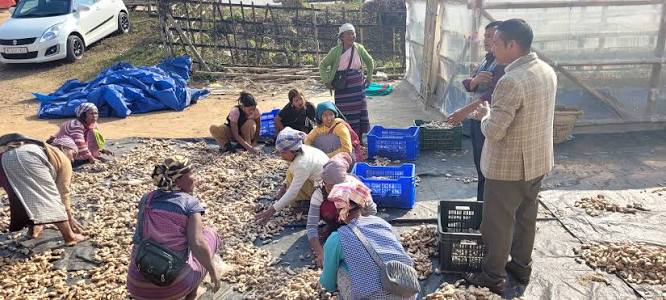
Lakadong, and increasingly Sangli, move turmeric through farmer cooperatives and self-help groups that aggregate a defined and comparatively stable member base. The risk here is different in kind from the mandi model, and the clauses should be too.
Capacity-commitment and non-substitution clause. Require the supplier to confirm, before accepting a purchase order, that the committed volume does not exceed the cooperative’s remaining uncommitted seasonal aggregation, and require disclosure if any portion of an order would be filled with material sourced from outside the named cooperative’s membership. This is the single most important addition for a cooperative-sourced quality agreement, because the trading structure’s characteristic failure mode is not a blending ambiguity, it is an exporter over-committing volume against a fixed harvest and quietly substituting outside material to make up the shortfall.
Tighter curcumin tolerance band, negotiated rather than assumed. A cooperative’s more uniform member growing base can generally support a tighter curcumin tolerance band than a mandi-aggregated lot, and a buyer should negotiate for this rather than defaulting to the wider band appropriate to the other trading structure. A supplier resisting a reasonably tight band despite a defined, uniform sourcing base is worth questioning before signing, not after the first specification dispute.
Seasonal aggregation disclosure as a standing reporting obligation. Rather than a one-time capacity confirmation at order placement, build in a standing obligation for the supplier to report the cooperative’s total seasonal aggregation figure and current commitment level against other buyers at a defined interval, particularly ahead of an order that would represent a meaningful share of the cooperative’s typical output. This converts the audit-stage capacity check described in our supplier audit guide into an ongoing contractual obligation rather than a single point-in-time confirmation that can go stale within a season.
What Stays the Same Either Way
The core structure of the quality agreement, product specification lock for identity and physical parameters, the standard batch documentation schedule for Certificate of Analysis and market-specific certificates, and the three-stage non-conformance and dispute resolution process, does not need to be rebuilt by trading structure. What changes within stage one of non-conformance investigation is the specific root-cause question asked: for a mandi-sourced supplier, request the lot-blend records for the failing batch; for a cooperative-sourced supplier, request confirmation the batch was drawn entirely from the named cooperative’s membership. The escalation path from there, corrective action, then arbitration if unresolved, runs the same regardless of origin.
Comparing the Two Sets of Additions
| Element | Auction-Mandi Suppliers (Erode, Salem, Nizamabad) | Cooperative Suppliers (Lakadong, increasingly Sangli) |
|---|---|---|
| Key added clause | Blending disclosure | Capacity commitment and non-substitution |
| Curcumin tolerance approach | Wider, reflecting genuine multi-farm variance | Tighter, negotiated against a uniform sourcing base |
| Traceability documentation | Lot-to-mandi-purchase mapping on request | Standing seasonal aggregation and commitment reporting |
| Non-conformance root-cause focus | Lot-blend records for the failing batch | Confirmation of no outside-material substitution |
| Base framework | Same specification lock, batch documentation, three-stage dispute process | Same specification lock, batch documentation, three-stage dispute process |
Negotiating These Clauses in Practice
A supplier who has not been asked for a blending disclosure or capacity-commitment clause before is not necessarily being evasive when they push back on adding one, but their response is informative. A mandi-sourced exporter who readily agrees to disclose approximate lot counts per batch is demonstrating documentation discipline the trading structure does not automatically produce on its own. A cooperative-sourced exporter who readily confirms seasonal aggregation figures and commits to a non-substitution obligation is demonstrating the same. Resistance to either addition, particularly from a supplier otherwise presenting strong general documentation, is worth treating as a signal to investigate further before finalizing the agreement, not as an acceptable negotiating outcome to concede on.
How Ayris Can Support Your Quality Agreement
Ayris Global works with both auction-trading exporters in Tamil Nadu and Telangana and cooperative and farmer-group aggregators in Meghalaya and Maharashtra, and can advise on which quality agreement clauses matter most for a specific supplier’s trading structure before an agreement is finalized. We operate on a commission-only model, no retainer, no markup on goods.
Frequently Asked Questions
Does a turmeric quality agreement need different clauses depending on the origin trading structure?
Yes. The general framework, specification lock, batch documentation, non-conformance procedure, applies to any herbal ingredient. For turmeric specifically, the clauses need to be adapted depending on whether the supplier sources through an auction-mandi system or a cooperative aggregation model, because the two structures create different risks around blending, curcumin consistency, and available volume.
What is a blending disclosure clause and why does a mandi-sourced turmeric supplier need one?
It requires the supplier to state, for each shipped batch, whether the material was aggregated from multiple mandi lots or independent farmer sellers, and roughly how many distinct lots contributed. Mandi-sourced turmeric is combined and re-graded across many independent farmers, so a single-origin or narrow regional claim needs this disclosure to remain verifiable batch by batch.
Why would a cooperative-sourced turmeric quality agreement need a capacity-commitment clause?
A cooperative’s exportable volume is bounded by what its member farmers actually harvested that season. The clause requires the supplier to confirm committed volume does not exceed remaining uncommitted seasonal aggregation, and to disclose any substitution with outside material. Without it, a buyer has no contractual basis to challenge an over-committed cooperative quietly substituting non-member material.
Should curcumin tolerance bands be the same for auction-sourced and cooperative-sourced turmeric?
No. Auction-mandi material carries more natural batch-to-batch variance from multi-farm aggregation, so its tolerance band should be set realistically wider. A cooperative’s more uniform growing base can generally support a tighter band, and a buyer should negotiate for it rather than accepting a wider default.
Does the standard non-conformance and dispute resolution process need to change by trading structure?
The core three-stage process does not need to change structurally. What changes is the root-cause investigation within stage one: request lot-blend records for a mandi-sourced supplier, and confirmation of no outside-material substitution for a cooperative-sourced supplier.
Further Reading: Quality Agreements for Indian Herbal Ingredient Supply: What to Include and Why It Matters | Turmeric Trading Structure Across Origins: Mandi and Auction Markets vs Direct-Farm and Cooperative Sourcing | Auditing a Turmeric Supplier: What Changes by Trading Structure
Ayris Global connects international buyers across the EU, UK, USA, UAE, Japan, South Korea, Australia, Southeast Asia, and Latin America with verified Indian producers of turmeric and other botanical ingredients across multiple growing origins and trading structures. We operate on a commission-only model, no retainer, no markup on goods. Contact our sourcing team to discuss your quality agreement for a specific origin.