sourcing
Turmeric Harvest Calendar and Supply Continuity Across Indian Origins: Planning Around India's Single Annual Crop
18 August 2026
A buyer who assumes turmeric is available fresh from India whenever an order is placed is making an assumption that does not match how the crop actually grows. Turmeric is planted once a year and harvested once a year, almost everywhere in India. Every quote received outside the narrow post-harvest window is, by definition, drawn from stored inventory - and how well that inventory holds up, and for how long, differs meaningfully by origin.
Buyers working through this point may also find turmeric product forms by origin useful.
This guide sets out when each of India’s major turmeric origins actually harvests, how long usable stock typically lasts afterward, and what that means for planning a container-scale order or an annual supply contract rather than a one-off spot purchase.
Quick answer: Turmeric across India follows a single annual crop cycle - planted roughly April to July, harvested roughly January to March depending on the specific origin and local rainfall - rather than a continuous or multi-harvest pattern. Larger commodity origins such as Erode, Salem, and Nizamabad carry stored stock through most of the year on the strength of production volume and warehousing infrastructure. Smaller-production origins such as Lakadong have a shorter effective supply window, and orders placed later in the crop year anywhere should be accompanied by current batch testing rather than reliance on the original at-harvest specification.
Why Turmeric Is a Single-Harvest Crop, Not a Continuous One
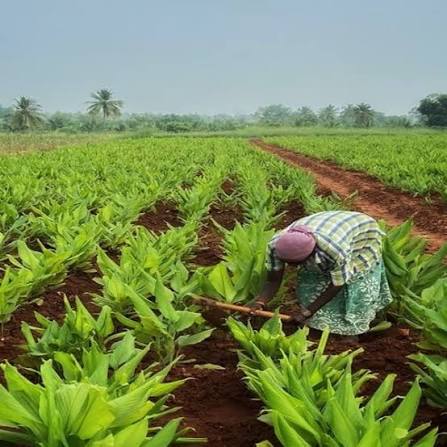
Turmeric (Curcuma longa) is a rhizome crop with a growth cycle of roughly seven to ten months from planting to maturity, tied closely to India’s monsoon pattern. Rhizomes are typically planted between April and July, depending on the specific region’s onset of pre-monsoon or monsoon rainfall, and the crop is lifted between January and March of the following year once the leaves die back and the rhizomes mature underground. This single planting-to-harvest cycle repeats once annually across essentially every major Indian turmeric-growing region - there is no origin in this comparison that runs a second harvest within the same calendar year.
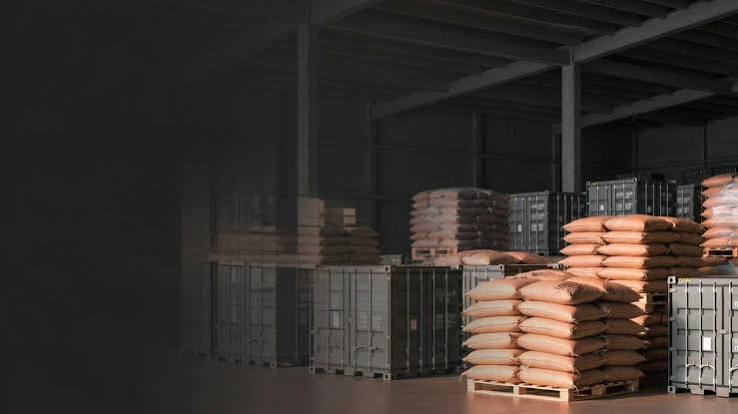
This matters because it means “availability” and “freshness” are two different claims. A supplier can offer turmeric powder in any month of the year, but only during and shortly after the harvest window is that material coming directly from the current crop. Every other month, a buyer is purchasing from stock that was graded, dried, and stored following the prior harvest - which is a completely normal and standard trade practice, but one that carries storage-dependent quality implications a buyer should account for.
Planning a container-scale or annual-contract turmeric order and need the timing to line up with a specific origin’s fresh crop? Ayris Global coordinates order timing against actual harvest and stock-position data across verified Indian producers. Get in touch
Harvest Windows by Origin
| Origin | State | Typical planting window | Typical harvest window | Crop cycle length |
|---|---|---|---|---|
| Erode / Salem | Tamil Nadu | May - July | January - March | ~8-9 months |
| Nizamabad | Telangana | June - July | February - April | ~8 months |
| Alleppey | Kerala | April - May | December - February | ~9-10 months |
| Sangli | Maharashtra | May - June | January - March | ~8-9 months |
| Lakadong | Meghalaya | April - May | December - February | ~9-10 months |
These windows are regional approximations, not fixed dates - actual planting and harvest timing shifts year to year with monsoon onset and local weather, and a buyer working against a specific harvest should confirm current-season timing with the supplier rather than treating this table as a fixed calendar. What holds consistently across all five rows is the single-cycle structure: one planting season, one harvest season, once per year, everywhere.
Why Post-Harvest Supply Continuity Differs by Origin
Every origin’s usable supply window extends beyond the harvest month itself, since graded and dried turmeric is a stable stored commodity, not a perishable one requiring immediate sale. How far that window extends, and how reliably quality holds across it, depends on three factors that differ meaningfully between origins.
Production volume. Erode, Salem, and Nizamabad harvest at a scale that supports large warehoused stockpiles capable of supplying trade demand across most of the calendar year. Lakadong’s production, while expanding under the Mission Golden Spice value-chain programme launched in July 2026, remains a fraction of the volume produced across the Tamil Nadu and Telangana commodity origins, which means its total stored stock is exhausted, or drawn down to thinner reserves, earlier in the off-season than the larger origins.
Warehousing and storage infrastructure. Established trading hubs with decades of commercial turmeric handling, particularly Erode’s position as one of Asia’s largest turmeric trading and auction centers, have warehousing and climate-controlled storage capacity built specifically for holding graded stock across an extended trading calendar. Smaller or more recently commercialized origins may have less developed dedicated storage infrastructure, which can affect how consistently quality holds through the later months of the off-season even where volume is not the limiting factor.
Trading model. High-liquidity auction-and-mandi origins like Erode see continuous stock turnover through the year as traders buy, hold, and resell against ongoing demand, which tends to keep the freshest available layers of stock moving into the market steadily. Origins with a more direct cooperative or farmer-group sourcing structure, covered in more depth in our companion guide on turmeric trading structures across origins, may see stock move in fewer, larger releases rather than continuous turnover, which changes how a buyer should time a purchase relative to those release points.
What This Means for Off-Season Orders
An order placed outside an origin’s harvest-and-immediate-post-harvest window is not a problem in itself - most turmeric trade happens exactly this way, since no single buyer’s order calendar can align with every supplier’s harvest timing. What changes with distance from harvest is the diligence a buyer should apply:
Request current batch testing, not the original at-harvest Certificate of Analysis. Curcuminoid content and moisture levels shift gradually during storage, and a CoA issued at the time of harvest reflects the batch’s condition then, not necessarily its condition eight or ten months later when an off-season order actually ships. Our guide on Lakadong turmeric shelf life and storage covers the underlying degradation mechanics in more depth; the same physics applies to stored stock from any origin, not Lakadong specifically.
Ask directly how deep into the crop year the quoted stock sits. A supplier quoting turmeric in month ten of the crop cycle is offering a materially different product, in terms of remaining shelf life and freshness, than one quoting in month two, even if both cite the same nominal specification. This is a fair and reasonable question to ask any supplier regardless of origin.
Expect origin-specific limits on how late in the year fresh-adjacent stock remains available. A buyer wanting close-to-harvest freshness from Lakadong should generally plan the purchase for the months immediately following its December-to-February harvest window, since its comparatively smaller production base narrows the practical window for near-fresh material more than it does for the larger commodity origins.
Planning an Annual Supply Contract Around Harvest Timing
Buyers moving from spot purchases to an annual or multi-shipment supply agreement should build harvest timing into the contract structure rather than treating it as a background fact.
Single-origin annual contracts work best when the buyer’s order calendar can accommodate at least one bulk purchase shortly after that origin’s harvest, sized to cover the buyer’s full-year requirement, with the understanding that later shipments in the contract year will be drawn from progressively older stored stock and should carry updated testing at time of shipment.
Multi-origin diversification is the more resilient structure for buyers who genuinely need continuous, year-round supply with minimal single-origin dependency. Because harvest windows across the five origins in this comparison are broadly similar in timing (with Alleppey and Lakadong harvesting slightly earlier than Erode, Salem, Nizamabad, and Sangli), staggering origins does not create dramatically different calendar coverage the way it might with crops grown in genuinely different hemispheres or seasons - but it does provide a hedge against a poor harvest year or storage-quality problem concentrated in any single origin, since monsoon and regional weather conditions do not move identically across every growing region in the same year.
Contract terms should specify testing cadence relative to harvest date, not just shipment date. A supply agreement that requires updated Certificate of Analysis testing at defined intervals following the origin’s harvest - rather than relying solely on the CoA issued at initial contract signing - gives a buyer a documented basis for tracking quality drift across the life of the contract.
How Ayris Can Support Harvest-Timed Sourcing
Ayris Global tracks current harvest and stock-position status across verified Indian turmeric producers in Tamil Nadu, Telangana, Kerala, Maharashtra, and Meghalaya, and can help buyers time container-scale or annual-contract orders against actual crop timing rather than a generic calendar assumption. We operate on a commission-only model - no retainer, no markup on goods.
Frequently Asked Questions
Is Indian turmeric harvested year-round or only at certain times of year?
Turmeric is an annual crop almost everywhere in India, planted in a single window between roughly April and July and harvested once, seven to ten months later, between roughly January and March depending on the region and local rainfall pattern. There is no origin that harvests turmeric continuously through the year. What buyers experience as year-round availability comes entirely from stored inventory carried forward from that single annual harvest, not from staggered or repeated harvests within the same origin.
Which Indian turmeric origins have the longest supply continuity after harvest?
Origins with the largest production volume and the deepest trading and warehousing infrastructure hold usable stock furthest into the off-season. Erode, Salem, and Nizamabad, given their scale and established storage capacity, typically carry graded stock through most of the calendar year with comparatively modest quality drift. Smaller-production origins such as Lakadong carry a shorter effective supply window before stock is exhausted or quality has drifted enough that a buyer should request fresh-crop confirmation rather than assume continuity matches the larger commodity origins.
What happens if I place an order during the off-season for a specific origin?
An off-season order is filled from stored inventory rather than freshly harvested material, which is standard practice and not itself a quality problem, provided the supplier can confirm storage conditions and current batch testing rather than relying on the original at-harvest Certificate of Analysis. The later in the crop year an order is placed, the more important it becomes to request current testing on the specific lot being shipped, since natural moisture loss and gradual curcuminoid degradation during storage can shift a batch’s specification from what it tested at harvest.
Should a buyer plan an annual supply contract around a single origin’s harvest, or diversify across origins with different harvest timing?
For buyers needing genuinely continuous, year-round supply with minimal reliance on any single origin’s stored inventory, diversifying purchase timing across two or more origins with staggered harvest windows reduces dependency on one region’s storage quality and crop outcome in a given year. For buyers who need a specific origin’s curcumin profile or GI-tag positioning and cannot substitute origins, the more practical approach is timing bulk purchases to shortly after that origin’s harvest and planning inventory and storage capacity to bridge the rest of the year, rather than expecting the origin itself to supply continuously.
Does a poor monsoon or weak harvest year affect all Indian turmeric origins equally?
No. Monsoon and weather conditions vary by region, so a weak harvest year in one origin does not necessarily coincide with a weak year elsewhere, and this is one of the practical arguments for multi-origin sourcing relationships rather than single-origin dependency. A buyer with an existing relationship in more than one origin has a natural hedge against a localized poor crop year that a single-origin buyer does not.
Further Reading: Indian Turmeric Origins Compared: Erode, Salem, Nizamabad, Alleppey, Sangli and Lakadong | Turmeric Pricing Benchmarks Compared Across Indian Origins | Lakadong Turmeric Shelf Life and Storage: Maintaining Quality After Import
Ayris Global connects international buyers across the EU, UK, USA, UAE, Japan, South Korea, Australia, Southeast Asia, and Latin America with verified Indian producers of turmeric and other botanical ingredients across multiple growing origins. We operate on a commission-only model - no retainer, no markup on goods. Contact our sourcing team to plan your next order around actual harvest and stock timing.