sourcing
How to Test Lakadong Turmeric Quality Before You Buy: A Global Buyer's Checklist
24 July 2026
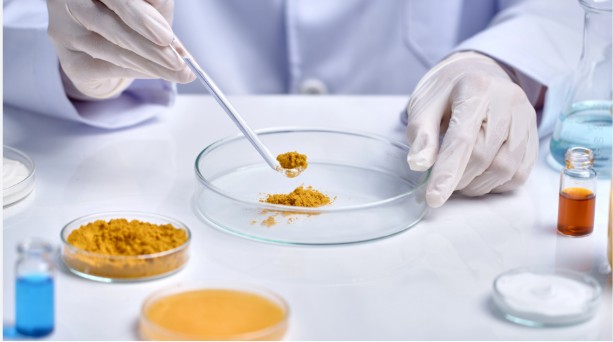
Testing Lakadong turmeric before you buy is not optional diligence - it is the only way to confirm that a premium, GI-tagged product actually delivers the quality its reputation implies. This checklist walks any global buyer, regardless of destination market, through the testing panel to request, the methods behind each test, and how to read the resulting Certificate of Analysis.
Quick answer: Testing Lakadong turmeric quality before purchase means requesting a batch-specific Certificate of Analysis covering HPLC-verified curcumin content, moisture, microbial counts and pathogen absence, heavy metals by ICP-MS, pesticide residues, and aflatoxin levels - all referenced to the exact lot number of the goods you intend to buy, ideally cross-checked by an independent laboratory rather than accepted on the supplier’s word alone.
Why Does Testing Matter More for Lakadong Turmeric Than Commodity Turmeric?
Lakadong turmeric commands a price premium over conventional Indian turmeric because of its GI-tagged origin and its reputation for a comparatively high curcumin profile. A reputation, however, is not a test result. Every claim underpinning that premium - origin, curcumin content, purity - is a claim that a structured testing panel either substantiates or exposes as unverified. Buyers who skip testing and rely on variety reputation alone are effectively paying a premium price for an unverified specification.
This checklist is deliberately global in framing: the testing panel below applies whether you are importing into the EU, the USA, Japan, Korea, Australia, Southeast Asia, Latin America, the UK, or the UAE/GCC. For the specific regulatory limits that differ by destination market, see our companion guide on Lakadong turmeric quality specifications by market; this article focuses on the testing process itself - what to test, how, and how to evaluate the result - rather than the market-by-market limit tables.
Step 1: Confirm Identity Before Anything Else
Before assessing potency or purity, confirm the sample is genuinely turmeric of the claimed variety and origin. HPLC-based chemical fingerprinting is the standard method: the chromatogram should show the three characteristic curcuminoid peaks (curcumin, demethoxycurcumin, bisdemethoxycurcumin) in a profile consistent with authentic turmeric, not a synthetic colorant substitute or an unrelated adulterant. For buyers who want the full origin-verification process - distinct from lab identity testing - see our guide to verifying authentic Lakadong turmeric before you buy, which covers traceability to West Jaintia Hills specifically.
Step 2: Verify Curcumin Content by HPLC, Not by Claim
Curcumin content should always be confirmed by High-Performance Liquid Chromatography (HPLC) against the specific batch offered, never accepted as a general variety-level figure. Lakadong turmeric’s reputation places it in a 6-10% curcumin range in trade and government sourcing literature, but that figure describes the variety generally - not any individual shipment. Request a Certificate of Analysis where the curcumin assay result is explicitly tied to the lot number of the goods you are buying, tested by HPLC rather than a less selective method like UV spectrophotometry. GCC buyers wanting the deeper mechanics of this specific test - including what a compliant chromatogram should show and how curcuminoid ratios are reported - should see our dedicated guide on Lakadong turmeric curcumin content and HPLC testing; the testing method itself does not vary by destination market, only the commercial context.
Step 3: Screen for Moisture and Microbial Load
Moisture content affects both shelf stability and effective potency per unit weight - excess moisture dilutes the active compound concentration and increases microbial growth risk during storage and transit. Alongside moisture, request Total Aerobic Plate Count (TAPC) and Total Yeast and Mould Count (TYMC), typically referenced against USP General Chapters <61>/<62> limits, plus confirmed absence testing for Salmonella and E. coli at minimum. A COA reporting only a curcumin figure with no microbial data is an incomplete document regardless of how attractive the curcumin number looks. Testing at import is only half the picture - moisture and microbial load also determine how well a batch holds up in storage afterward, covered in our companion guide on Lakadong turmeric shelf life and storage after import.
Step 4: Require Heavy Metal Testing by ICP-MS
Heavy metal contamination - lead, cadmium, mercury, arsenic - arises from soil conditions and irrigation water quality and is a genuine risk category for turmeric grown anywhere, Lakadong included. ICP-MS (Inductively Coupled Plasma Mass Spectrometry) is the reference method capable of the trace-level sensitivity current regulatory frameworks require; older ICP-OES methods may not reach sufficient sensitivity for stricter markets. Request results reported against a named regulatory framework - not simply a number with no stated limit for comparison.
Step 5: Screen Pesticide Residues Regardless of Destination
Pesticide residue testing by LC-MS/MS (and GC-MS/MS for volatile compound classes) should be part of every Lakadong turmeric testing panel, even for buyers in markets without a strict enforced MRL, because contamination risk is a property of cultivation and processing conditions rather than the importing country’s regulatory posture. Turmeric is among the botanical categories most frequently flagged for pesticide residues in international border testing, which makes this a non-negotiable step rather than an optional add-on for high-regulation markets only.
Step 6: Check Aflatoxin Levels
Aflatoxins (B1, B2, G1, G2) are fungal contaminants linked to storage and handling conditions in humid growing regions, and turmeric is a recognised risk category. Request aflatoxin testing as a standard line item on the panel, with results reported against a stated limit rather than a bare pass/fail assertion with no comparison threshold shown.
Step 7: Read the Certificate of Analysis Correctly
A compliant COA should show, for every parameter: the method used, the result obtained, and the specification limit the result is judged against - not a result in isolation. Confirm the testing laboratory’s accreditation covers the specific parameters listed (accreditation is typically parameter-specific, not lab-wide), confirm the batch or lot number on the COA matches the batch being offered, and check that the test date is reasonably close to the manufacture date. For a full technical walkthrough of COA interpretation across all herbal ingredient categories - not turmeric-specific - see our quality testing guide for Indian herbal ingredient suppliers.
Step 8: Decide Whether In-House Testing Is Enough
In-house supplier testing is a reasonable starting point, but independent third-party verification is the only way to confirm a supplier’s in-house results are reliable before committing to volume. For a first order, a new supplier relationship, or a regulated end-use, commission independent testing on the actual sample or an early batch rather than relying solely on supplier-issued paperwork. This decision point sits inside the broader supplier evaluation process covered in our 15-point supplier checklist for GCC buyers, much of which applies to buyers in any market, not GCC buyers alone.
What Certifications Complement - But Don’t Replace - Testing?
GI tag, organic, and GMP certifications each answer a different question than a testing panel does: origin, production method, and facility standards respectively - none of them confirms the composition of the specific batch in front of you. See our Lakadong turmeric certifications guide for how these certifications relate to, and do not substitute for, the testing checklist above.
How Ayris Can Support Testing Verification
Ayris Global works with verified Indian producers and independent NABL-accredited laboratories to confirm Lakadong turmeric batches meet the testing panel outlined here before any shipment is confirmed. We operate on a commission-only model with no retainer and no markup on goods.
Frequently Asked Questions
What is the minimum testing panel for Lakadong turmeric before purchase?
At minimum, a batch-specific Certificate of Analysis should cover HPLC-verified curcumin content, moisture content, total aerobic plate count and yeast/mould count, pathogen absence testing (Salmonella and E. coli at minimum), heavy metals by ICP-MS, and aflatoxin levels. Buyers in regulated markets should add pesticide residue screening by LC-MS/MS or GC-MS/MS regardless of destination, since contamination risk is a property of the growing and processing conditions, not the import market.
Can I rely on a supplier’s in-house test results instead of independent lab testing?
In-house results are a reasonable starting point for low-risk applications and repeat orders from a supplier with a proven track record, but for a first order, a new supplier relationship, or any regulated end-use (nutraceutical, pharmaceutical, or infant/clinical nutrition), independent third-party testing on the actual sample or an early batch is the only way to confirm the in-house laboratory”s results are trustworthy before scaling volume.
How long does Lakadong turmeric quality testing typically take?
A standard panel covering identity, curcumin assay, microbials, heavy metals, and aflatoxins through a NABL-accredited or equivalent independent laboratory typically takes 5 to 10 working days, with pesticide residue screening by LC-MS/MS sometimes adding a few additional days depending on the panel size and laboratory backlog. Buyers should build this lead time into their sample-to-order timeline rather than treating testing as instantaneous.
Does a high curcumin percentage on paper guarantee a good-quality batch?
No. A curcumin percentage on a specification sheet only becomes meaningful once it is verified against the actual shipped batch by HPLC testing referencing the same lot number. A batch can carry an attractive curcumin figure on marketing material while failing on moisture, microbial counts, heavy metals, or pesticide residues - all of which are independent parameters that a curcumin figure alone says nothing about.
What testing standard should a buyer request if their destination market isn’t covered by a specific regulation?
Where no destination-specific regulatory limit applies, the safest practice is to request testing against the strictest limits in active use among comparable major markets - typically the EU”s pesticide MRL framework and USP heavy metal and microbial standards - rather than accepting an untested or loosely specified panel simply because no local regulator enforces a limit.
Ayris Global connects international buyers across the EU, UK, USA, UAE, Japan, South Korea, Australia, Southeast Asia, and Latin America with verified Indian producers of botanical extracts, herbal powders, and Ayurvedic ingredients, including Lakadong turmeric from Meghalaya. We operate on a commission-only model - no retainer, no markup on goods. Contact our sourcing team to arrange independent testing before your next order.