sourcing
How to Choose a Reliable Lakadong Turmeric Supplier: 15 Checks for GCC Buyers
13 July 2026

Choosing a Lakadong turmeric supplier involves more diligence than a standard commodity turmeric purchase, because the variety’s premium, GI-tagged positioning means buyers are paying for origin and quality claims that must be independently verified rather than taken on trust. This checklist gives GCC buyers 15 concrete checks to run before committing to a supplier relationship.
Our article on the Lakadong turmeric supplier guide for the GCC goes further.
Quick answer: A reliable Lakadong turmeric supplier should have verifiable export credentials (IEC, FSSAI), a documented traceability chain to West Jaintia Hills, willingness to provide a batch-specific sample and HPLC-tested Certificate of Analysis, consistent packaging and labelling practices, and a track record of export documentation to the GCC or comparable markets - buyers should verify each of these before placing a first order.
Why Does Lakadong Turmeric Require Extra Supplier Diligence?
Lakadong turmeric’s commercial value rests on two claims - GI-tagged single-region origin and a comparatively high curcumin profile - that are easy for a supplier to state and harder for a buyer to verify without a structured checklist. Because the variety commands a price premium over conventional Indian turmeric, buyers who skip verification risk paying premium pricing for a product that cannot substantiate the claims it is being sold on.
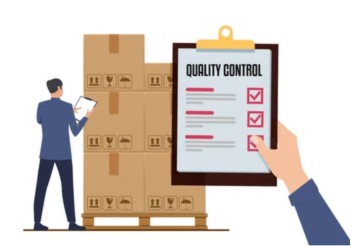
The 15-Point Supplier Evaluation Checklist
1. Business registration and export credentials. Confirm the supplier holds a valid Importer Exporter Code (IEC) and FSSAI license, and that the registered entity name matches the name on quotations and invoices.
2. Traceability to West Jaintia Hills. Ask the supplier to explain, in writing, how their supply connects back to the West Jaintia Hills growing region - whether through direct farmer or FPO relationships or a documented aggregation chain.
3. GI-tag substantiation. Request any documentation the supplier holds referencing the Geographical Indication status of the turmeric they are supplying, rather than accepting “Lakadong” as a marketing label alone.
4. Batch-specific sample availability. Confirm the supplier can provide a physical sample tied to a specific, identified batch or lot number - not a generic house sample disconnected from shippable stock.
5. HPLC-tested Certificate of Analysis. Require a Certificate of Analysis showing curcumin content tested via HPLC, referenced to the same batch number as the sample or shipment.
6. Independent lab verification option. Assess whether the supplier is comfortable with an independent third-party laboratory testing a portion of the sample, rather than resisting outside verification. For guidance on what a full quality testing programme should cover, see our quality testing guide for Indian herbal ingredient suppliers.
7. Moisture and microbiological data. Confirm the Certificate of Analysis also covers moisture content and microbiological limits (total plate count, yeast and mould, E. coli, Salmonella), not curcumin alone.
8. Heavy metal and pesticide residue testing. Verify the supplier tests for heavy metals (lead, arsenic, cadmium, mercury) and pesticide residues against the regulatory standard applicable to the UAE or the buyer’s onward destination market.
9. Packaging and labelling consistency. Review the supplier’s standard packaging specification (bag material, size, palletisation) and confirm their labelling practice includes batch number, net weight, and country of origin.
10. Export documentation track record. Ask for evidence of prior export shipments - ideally to the UAE, GCC, or a comparably regulated market - and review the completeness of documentation from a past shipment where possible.
11. MOQ flexibility for a trial order. Confirm the supplier is willing to accommodate a trial order sized below their standard MOQ, framed explicitly as a qualification step ahead of a larger recurring commitment.
12. Pricing transparency and specification-linked quotes. Require that pricing quotes are tied to a specific written specification (grade, curcumin minimum, format, packaging, Incoterm) rather than a single undifferentiated price, and treat unusually low pricing with no clear explanation as a reason for added scrutiny.
13. Communication responsiveness and documentation turnaround. Assess how quickly and completely the supplier responds to documentation requests during the evaluation phase - this is often predictive of how they will perform once an order is placed.
14. References or verifiable trade history. Where possible, request references from other international buyers, or review any available trade data suggesting an established export history.
15. Willingness to formalise a written specification and quality agreement. Confirm the supplier is willing to sign off on a written specification and, for ongoing relationships, a quality agreement defining testing responsibilities, non-conformance handling, and documentation standards. See our quality agreements guide for Indian herbal ingredient supply for what such an agreement should cover.
FPO/Cooperative vs Processor/Exporter vs Trading Company
As covered in our guide on sourcing Lakadong turmeric from India for the UAE market, suppliers generally fall into three categories with different diligence emphasis: FPOs and cooperatives require closer traceability verification but offer strong origin credibility; processors and exporters typically offer the most balanced combination of traceability and documentation capability; and trading companies require buyers to request the trader’s own upstream supporting documentation to confirm origin claims.
How Should a Buyer Sequence the Evaluation Process?
A structured sequence: shortlist two to three candidate suppliers, run all 15 checks against each, request samples tied to specific batches, commission independent testing on the strongest candidate(s), lock a written specification with the selected supplier, and place a trial order sized as a qualification step before committing to standing or annual volumes. For a broader view of supplier evaluation practice across herbal ingredient categories generally, see our guide to evaluating Indian herbal ingredient suppliers and our supplier qualification and audit guide.
What Are the Clearest Red Flags?
The clearest red flags are: no verifiable IEC or FSSAI registration; inability or reluctance to provide a batch-specific Certificate of Analysis; no credible explanation of traceability back to West Jaintia Hills; resistance to independent testing; and pricing well below comparable quotes with no clear justification. Any one of these should prompt additional scrutiny before an order is confirmed; more than one should be treated as a reason to move to a different candidate supplier.
How Ayris Can Support Supplier Evaluation
Ayris Global works with verified Indian producers and exporters, including speciality and GI-tagged categories such as Lakadong turmeric, and supports buyers through supplier shortlisting, sample coordination, and documentation verification. We operate on a commission-only model with no retainer and no markup on goods.
Frequently Asked Questions
What is the single most important check when evaluating a Lakadong turmeric supplier?
The single most important check is whether the supplier can provide a batch-specific Certificate of Analysis with HPLC-tested curcumin content, tied to the exact lot number of the goods being shipped - not a generic variety-level claim. A supplier unable or unwilling to provide this should be treated as high-risk regardless of how competitive their pricing is.
Should I trust a supplier’s in-house Certificate of Analysis?
An in-house Certificate of Analysis is a reasonable starting point for lower-risk applications, but for nutraceutical, pharmaceutical, or other regulated end-uses, buyers should commission independent third-party laboratory testing on the sample or an early batch. This establishes whether the supplier’s in-house results are reliable enough to depend on for subsequent orders without re-testing every shipment.
How many suppliers should I evaluate before placing a first order?
A reasonable practice is to shortlist two to three candidate suppliers, request samples tied to specific batches from each, and commission independent testing on the strongest sample or samples before committing to a trial order. Evaluating multiple suppliers in parallel also gives buyers a comparison point for pricing, documentation quality, and responsiveness.
What red flags suggest a Lakadong turmeric supplier should be avoided?
Red flags include an inability or reluctance to provide a batch-specific Certificate of Analysis, no verifiable IEC or FSSAI registration, no traceability explanation connecting the product to the West Jaintia Hills growing region, pricing significantly below other quotes with no explanation, and resistance to providing a pre-shipment sample tied to an identified batch.
Is a farmer producer organisation (FPO) or a processor/exporter a better supplier choice?
It depends on the buyer’s priorities. FPOs and cooperatives sit closest to the growing region and can offer strong origin traceability but may have less export documentation experience and more batch-to-batch variability. Processors and exporters typically offer more consistent processing and stronger documentation capability, making them the more common choice for first-time international buyers who need a dependable, repeatable export process.
Ayris Global connects international buyers across the EU, UK, USA, UAE, Japan, South Korea, Australia, Southeast Asia, and Latin America with verified Indian producers of botanical extracts, herbal powders, and Ayurvedic ingredients. We operate on a commission-only model - no retainer, no markup on goods. Contact our team to have a Lakadong turmeric supplier candidate independently vetted.