ingredients
Ashwagandha Extract Export from India: Withanolide Standardization, HS Classification and Documentation
23 June 2026
Buying ashwagandha extract and moving ashwagandha extract across a border are two different problems. Our earlier buyer’s guide to ashwagandha extract covers specification, root-vs-leaf sourcing, certifications, and pricing benchmarks - the questions a formulator or procurement manager asks before choosing a supplier.
This guide picks up from there. It covers what happens once a specification is agreed: how the extract is classified for customs purposes, which standardization method backs up the withanolide percentage on the Certificate of Analysis, whether a USP monograph claim actually means anything, and what documentation an Indian exporter needs to assemble before the shipment can legally leave the country. If you are a buyer’s compliance team, a customs broker, or an exporter building a documentation checklist, this is the reference.
Direct Answer: The Export Snapshot
Ashwagandha root extract is classified under HS heading 1302.19 (vegetable saps and extracts, other), with India’s 8-digit national tariff line commonly 1302.19.19. Export requires an Import Export Code (IEC), APEDA Registration-cum-Membership Certificate (RCMC), and - for most destinations - a Phytosanitary Certificate from India’s Plant Quarantine authority. Withanolide content should be verified by HPLC per the USP-NF Ashwagandha monograph where a USP claim is made, with HPTLC used separately for botanical identity confirmation. Destination countries layer their own requirements on top of this baseline - FDA Prior Notice for the US, TRACES NT for the EU, and equivalent notification systems elsewhere.
For more on this, see exporting Tulsi (holy basil) from India.
HS Classification: Getting 1302.19 Right
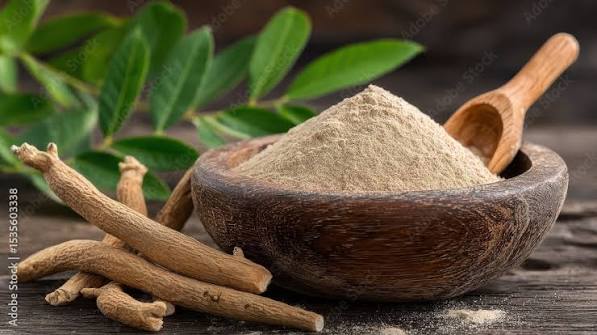
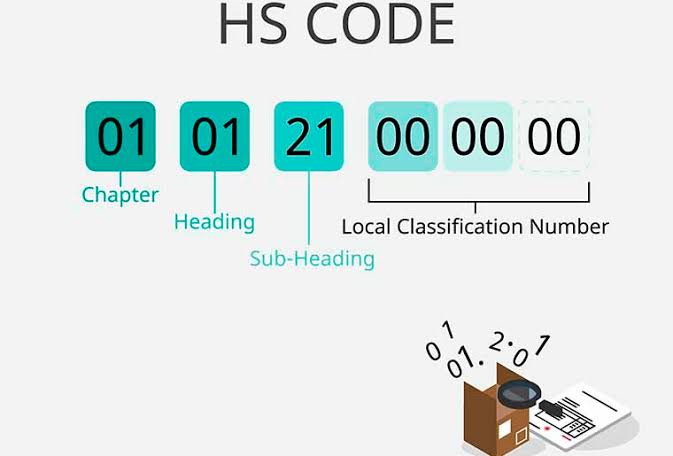
Ashwagandha extract - whether root-only powder, standardized to a stated withanolide percentage, or supplied as a liquid concentrate - is classified under HS heading 1302: vegetable saps and extracts. Within that heading, the relevant 6-digit subheading is 1302.19 (other vegetable saps and extracts, not elsewhere specified), which is the internationally harmonized code recognized by customs authorities in every WCO member country.
Beyond six digits, national tariff schedules diverge:
- India (export declaration): 8-digit code most commonly used is 1302.19.19
- United States (import, HTS): typically classified under 1302.19.90 or 1302.19.91 (vegetable saps and extracts, nesi), which currently carries a Free MFN duty rate for this line
- European Union (import, CN code): falls under the 1302.19 CN series, with the EU’s own 8-digit extension
A common classification error is treating finished dosage forms the same as bulk extract. Once ashwagandha extract is encapsulated, tableted, or blended into a finished supplement, it typically moves to a different chapter entirely - 2106.90 (food preparations not elsewhere specified) for dietary supplements, or 3004.90 for products positioned and licensed as Ayurvedic medicine. This distinction matters because duty rates, import permit requirements, and labeling rules differ sharply between “raw material extract” and “finished consumer product” classifications. Buyers importing bulk extract for their own formulation should confirm with their customs broker that the shipment is being declared under the extract heading, not accidentally reclassified as a finished good.
Our article on a US brand guide to Indian ashwagandha extract goes further.
Getting the HS code wrong has real consequences: it can trigger the wrong duty calculation, disqualify a shipment from a trade agreement’s preferential rate, and in India specifically, affect eligibility for export incentive schemes such as RoDTEP that are tied to correct tariff-line declaration.
Sourcing ashwagandha extract for export-ready supply? Ayris Global connects qualified international buyers with GMP-certified Indian producers who maintain complete HS classification, phytosanitary, and CoA documentation for EU, US, UAE/GCC, Japan, Korea, and other markets. Request samples
USP Monograph Compliance: What It Actually Requires
The USP-NF (United States Pharmacopeia - National Formulary) maintains a compendial monograph for Ashwagandha Root and Ashwagandha Root Dry Extract. This is a voluntary quality standard, not a legal export requirement - but it functions as a de facto benchmark for many US and multinational buyers, and suppliers who can substantiate compliance typically move through buyer technical review faster.
The monograph specifies two distinct analytical requirements, and buyers should understand that they test different things:
HPLC assay for potency. The monograph requires HPLC quantification of total withanolides, calculated as the sum of withanolide aglycones (measured as withanolide A) and withanolide glycosides (measured as withanoside IV). This is the number behind the commercial specification - 2.5%, 5%, 7%, and so on - and is the figure that should appear on every batch CoA.
HPTLC identification for authenticity. Separately, the USP method includes an HPTLC (High Performance Thin Layer Chromatography) identification test confirming the sample shows chromatographic peaks matching withanolide A and withanoside IV reference standards, alongside additional peaks corresponding to other characteristic withanolides. This test exists to confirm the material genuinely derives from Withania somnifera rather than a cheaper substitute or a blend that has been potency-adjusted to hit the target percentage without matching the natural compound profile.
A CoA that shows only a single HPLC percentage figure, with no identification data and no reference to withanolide A or withanoside IV specifically, is not demonstrating USP-NF compliance - it is demonstrating a potency test. Buyers requiring monograph compliance should ask suppliers explicitly whether both the assay and identification methods were performed, and against which USP reference standards.
It is also worth noting a naming distinction the monograph draws that buyers frequently miss: USP maintains separate compendial entries for standard root-derived extract and for extract derived from aerial parts (leaf and stem material), each with its own withanolide threshold. A supplier quoting “USP compliant” should specify which monograph entry applies to the material being offered.
Export Documentation: The Complete Checklist
Before any ashwagandha extract shipment can leave India, an exporter needs two categories of documentation: one-time registrations that apply to the business, and per-shipment documents prepared fresh for each export.
One-time registrations
- Import Export Code (IEC) - issued by DGFT, mandatory for any export activity, no exceptions
- APEDA Registration-cum-Membership Certificate (RCMC) - ashwagandha extract, as a processed botanical/agricultural product, falls under APEDA’s scheduled product categories; RCMC is required before first export and is also a precondition for claiming certain export incentive schemes
- AD Code registration on ICEGATE - links the exporter’s bank account to customs for payment and incentive processing, registered per port of shipment
- GST registration and LUT filing - required for zero-rated export treatment
Per-shipment documents
- Commercial invoice and packing list - values must match exactly across both documents and the eventual shipping bill; mismatches are a leading cause of customs queries and port delays
- Certificate of Analysis (CoA) - withanolide content by HPLC, identification data where a USP claim is made, heavy metals, pesticide residues, microbial limits
- Phytosanitary Certificate - issued by India’s Plant Quarantine authority (Directorate of Plant Protection, Quarantine and Storage) where the destination country requires it for botanical materials; typically valid only 14-30 days from issue, so timing against the actual shipment date matters
- Certificate of Origin (CoO) - a standard non-preferential CoO from APEDA or FIEO is sufficient for most markets; where the buyer’s country has a trade agreement with India, a specific preferential CoO form tied to that agreement can enable reduced duty - confirm the correct form with a customs broker rather than defaulting to standard CoO
- Shipping bill - filed by the exporter’s Customs House Agent (CHA) on ICEGATE; this is the core customs clearance document and the exporter, not the CHA, remains legally responsible for the accuracy of its contents
- Bill of Lading or Airway Bill - issued by the carrier
Destination-specific additions
Documentation requirements do not stop at the Indian export side. US-bound food and dietary supplement shipments require FDA Prior Notice filed before arrival, plus FDA facility registration on the exporter or importer side. EU-bound shipments involving certain food categories require TRACES NT notification and compliance with pesticide MRL limits. Buyers should confirm destination requirements with their own customs broker in parallel with the exporter’s India-side preparation - a complete India export file does not guarantee smooth clearance at the destination port if the importer-side paperwork is missing.
Common Mistakes That Delay Shipments
Applying for the Phytosanitary Certificate too late. Because the certificate has a short validity window, applying too far in advance risks expiry before shipment; applying too close to the ship date risks missing the inspection and lab-testing lead time entirely. Coordinate the application against a confirmed shipment date, not a target date.
Assuming a single CoO covers every buyer. A standard non-preferential CoO from APEDA or FIEO does not unlock preferential duty treatment under a trade agreement. If the buyer’s country has an FTA or CEPA with India and duty savings matter to the deal economics, confirm the specific preferential CoO form required before the shipping bill is filed - retroactive correction after clearance is far harder than getting it right upfront.
Treating “USP compliant” as a single checkbox. As covered above, monograph compliance involves both an HPLC potency assay and a separate HPTLC identification test, against a specific root or aerial-parts entry. A supplier who cannot specify which they performed, and against which reference standard, has not demonstrated compliance regardless of what the marketing material states.
Value mismatches across documents. Invoice value, packing list value, and shipping bill value must agree exactly. Any inconsistency triggers a customs query and holds the shipment at port.
Buyer Checklist Before Placing an Export Order
- Confirm the HS code the exporter intends to declare, and verify it matches bulk extract classification rather than a finished-goods code
- Request CoA data showing both HPLC potency and HPTLC identification if USP monograph compliance is claimed
- Confirm the exporter holds current IEC and APEDA RCMC registration
- Ask which CoO form will be used and whether it is eligible for preferential treatment under any applicable trade agreement with your country
- Align the Phytosanitary Certificate application timeline with your confirmed shipment and vessel booking date
- Confirm your own import-side requirements (FDA Prior Notice, TRACES NT, or market equivalent) are being handled in parallel, not sequentially, with the exporter’s documentation
Frequently Asked Questions
What HS code applies to ashwagandha extract exported from India?
HS heading 1302.19, with India’s national 8-digit code most commonly 1302.19.19. Finished dosage forms use different codes entirely - typically 2106.90.99 for supplements or 3004.90.11 for Ayurvedic medicine. Always confirm the destination country’s own tariff-line equivalent.
Does ashwagandha extract need to comply with a USP monograph?
Not legally, but many US and multinational buyers request it as a quality benchmark. The monograph requires HPLC assay for total withanolides and separate HPTLC identification testing.
What is the difference between HPLC and HPTLC for ashwagandha standardization?
HPLC quantifies withanolide percentage (potency). HPTLC confirms botanical identity by matching marker-compound peaks. A complete CoA shows both.
What export documents are required to ship ashwagandha extract from India?
IEC, APEDA RCMC, Certificate of Analysis, Phytosanitary Certificate where required, Certificate of Origin, plus the standard commercial invoice, packing list, and bill of lading. Destination-specific requirements apply on top.
Is ashwagandha extract eligible for preferential duty treatment under India’s trade agreements?
Depends on the specific agreement and destination - confirm current eligibility and the correct CoO form with a customs broker for each shipment rather than assuming.
Further Reading: Ashwagandha Extract: A Complete Buyer’s Guide | Your First Order from India: A Step-by-Step Guide | AYUSH Regulatory Framework for Indian Herbal Ingredient Buyers
Ayris Global sources verified ashwagandha extract with complete export documentation for qualified international buyers. To discuss your specification and compliance requirements, contact our team at sourcing@ayrisglobal.in or visit our products page.