sourcing
Sourcing Ashwagandha Extract from India for US Supplement Brands
17 September 2026
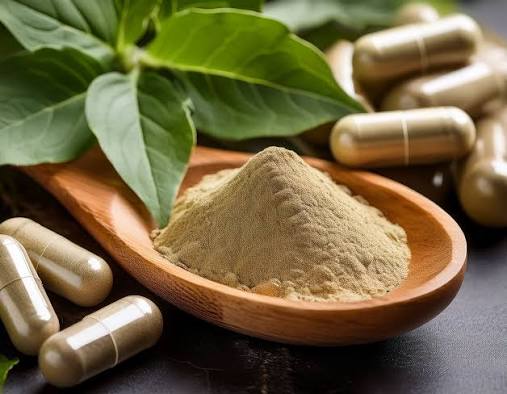
The United States is the world’s largest dietary supplement market, and ashwagandha has become one of its highest-demand adaptogenic ingredients. US supplement brands - from established nutraceutical manufacturers to emerging direct-to-consumer labels - are increasingly sourcing ashwagandha extract directly from India rather than through domestic distributors, attracted by better pricing, more transparent supply chains, and access to a wider specification range.
Sourcing ashwagandha extract from India for the US market is straightforward when you understand what US compliance actually requires. It is costly when you do not - through failed import inspections, documentation shortfalls that disqualify the supply from a co-manufacturer’s qualification process, or a first order that cannot be used because the testing package does not meet FDA expectations.
This guide covers what US supplement brands specifically need to know: the compliance framework, the documentation package, and how to specify ashwagandha extract for the US market correctly.
Direct Answer: What Makes US-Market Sourcing Different
Three US-specific requirements separate this sourcing context from the general international buyer profile:
- The supplier facility must be FDA-registered, and the registration must be current and verifiable
- The testing package must be consistent with 21 CFR Part 111 cGMP expectations, not just WHO-GMP
- The US importer has a legal obligation under FSVP (the Foreign Supplier Verification Program) to verify the supplier’s safety practices - and the supplier must be able to support that verification with documentation
Everything else - withanolide specification, certifications, pricing, lead times - applies to any qualified international buyer. These three requirements are the US-specific layer.
Is Ashwagandha a New Dietary Ingredient in the US?
No. This is one of the first questions US supplement brands should resolve for any botanical ingredient, and for ashwagandha, the answer is clear.
Ashwagandha root (Withania somnifera) has an established history of use in the US dietary supplement market predating the October 15, 1994 DSHEA cutoff date. It is not classified as a New Dietary Ingredient (NDI). This means US supplement brands can formulate with standard ashwagandha root extract without submitting an NDI safety notification to the FDA before marketing, and without the mandatory 75-day pre-market waiting period that NDI notification requires.
This is commercially significant. For genuinely novel botanical extracts, an NDI notification creates a 75-day delay before the first product containing that ingredient can be introduced into interstate commerce. Ashwagandha root extract, as an established ingredient, does not trigger this delay.
One important caveat: the NDI exemption applies to ashwagandha root extract as typically produced. If a supplier is offering a chemically modified derivative - a significantly altered form produced through a non-standard synthetic or semi-synthetic process - the NDI exemption may not apply to that specific form. Confirm with your regulatory counsel if anything other than standard root extract is being considered.
The cGMP Requirement: Part 111, Not Just WHO-GMP
Most qualified Indian ashwagandha manufacturers hold WHO-GMP certification, which is an internationally recognised manufacturing standard. For US supplement brands, WHO-GMP is a good indicator of a manufacturer’s quality management capability - but it is not the same as 21 CFR Part 111 cGMP compliance.
21 CFR Part 111 is the FDA’s Current Good Manufacturing Practice regulation specifically for dietary supplements. Key requirements that are more prescriptive under Part 111 than under WHO-GMP include:
Identity testing of all incoming dietary ingredients. Part 111 requires that the identity of every lot of dietary ingredient be confirmed before it is used in manufacturing. For ashwagandha, this means HPTLC or equivalent botanical identification testing - not just a supplier CoA.
Batch documentation. Part 111 requires complete batch production and control records for every finished supplement produced. Indian suppliers producing extract for a US-based co-manufacturer need to provide documentation that allows the co-manufacturer’s batch records to reference the ingredient accurately.
Personnel qualification and training records. Part 111 sets out personnel requirements that may go beyond what WHO-GMP requires in certain operating environments.
In practice, most Indian ashwagandha manufacturers who routinely supply the US market operate under processes consistent with Part 111 expectations, because their US customers require it as a supplier qualification condition. The practical check for a US supplement brand: ask the supplier whether they supply US-based dietary supplement manufacturers or co-manufacturers, and ask for the documentation they typically provide to those customers for supplier qualification. A supplier with an established US export track record will understand what is required without being prompted.
Sourcing ashwagandha extract for the US market? Ayris Global connects qualified US supplement brands with FDA-registered, cGMP-compliant Indian ashwagandha manufacturers. We support FSVP documentation, USP-NF testing packages, and full specification alignment from inquiry through first shipment. Request samples
FDA Facility Registration: What It Is and How to Verify It
FDA facility registration confirms that an Indian ashwagandha manufacturer has registered its facility with the US FDA as a foreign facility that manufactures, processes, packs, or holds food or dietary ingredients for the US market.
What registration is:
- A database record that makes the facility known to FDA and subject to its inspection authority
- A prerequisite for US import - unregistered facilities can have shipments detained at the port of entry regardless of product quality
- Required to be renewed during each even-numbered year (2024, 2026, 2028)
What registration is not:
- An FDA quality certification or endorsement of the facility’s products
- A guarantee that FDA has audited or approved the manufacturing process
- A permanent credential - a lapsed registration means unregistered status
How to verify: FDA facility registration can be confirmed via the FDA’s public registration database. Ask the supplier for their FDA registration number, search it in the database, confirm the registered facility address matches the actual manufacturing site, and confirm renewal status is current.
A supplier without a current FDA facility registration cannot legally supply the US market. Do not proceed on the assumption that registration will be obtained before shipment - verify it is already current before placing an order.
FSVP: The US Importer’s Legal Obligation
The Foreign Supplier Verification Program (FSVP) places the legal burden of foreign supplier verification on the US importer - the entity whose name appears on the US Customs entry as the importer of record. The US importer is legally required to verify that food and dietary ingredients imported from abroad meet US safety standards.
In practice, FSVP means the US importer or supplement brand must:
- Conduct a hazard analysis of the ashwagandha extract to identify the reasonably foreseeable hazards - for a botanical extract, this includes heavy metals, pesticide residues, microbial contamination, and botanical misidentification
- Determine what verification activities are appropriate for each identified hazard
- Conduct those verification activities - which may include supplier audits, lot-level testing, or review of the supplier’s food safety records
- Maintain FSVP records available for FDA inspection
For US supplement brands who are the importer of record, this means the Indian ashwagandha supplier must be able to provide documentation that supports the brand’s FSVP file. This typically includes: facility audit reports (third-party or self-audit, depending on the verification approach), a history of CoA data showing consistent testing results, and evidence of the supplier’s own hazard control processes.
A related question is covered in the supplier documentation FSVP expects.
Brands who import through a US ingredient distributor or broker who handles import-of-record will often have their FSVP obligation satisfied by the distributor - but should confirm this explicitly rather than assuming.
USP-NF Monograph Compliance
The US Pharmacopeia maintains a compendial monograph for Ashwagandha Root Dry Extract. Compliance with this monograph is not a legal requirement for US dietary supplement sale, but it functions as a de facto quality benchmark that many US supplement brands request from Indian suppliers.
The monograph requires two distinct analytical components:
HPLC assay for total withanolides. The monograph specifies an HPLC method for quantifying withanolide content, calculated as the sum of withanolide aglycones (measured as withanolide A) and withanolide glycosides (measured as withanoside IV). This is the number behind the commercial specification - 2.5%, 5%, 7% - and should appear on every batch CoA.
HPTLC identification. Separately, the monograph includes an HPTLC identification test confirming the sample shows chromatographic peaks matching withanolide A and withanoside IV reference standards. This test exists to confirm the material genuinely derives from Withania somnifera rather than an adulterated substitute.
A CoA showing only a single HPLC withanolide percentage figure - without identification data or reference to specific USP-NF methods - is not demonstrating monograph compliance. US brands who specify USP-NF compliance should ask suppliers to confirm which specific monograph entry applies (the monograph has separate entries for root-derived and aerial-parts-derived extract) and that both the assay and identification tests were performed.
For more on the USP monograph requirements and export documentation, see our ashwagandha extract export guide.
Heavy Metals: The Proposition 65 Consideration
Heavy metals testing is mandatory for any credible ashwagandha extract supplier. For US brands, there is an additional US-specific layer: California’s Proposition 65 limits for lead.
The FDA’s heavy metals guidance for dietary supplements references relevant pharmacopoeia standards. California’s Proposition 65, however, requires that any product sold in California that exposes consumers to listed chemicals above defined thresholds carry a warning label. The lead threshold under Proposition 65 is lower than the limits in some pharmacopoeia standards.
For US brands distributing nationally - which includes California - the practical requirement is to source ashwagandha extract with lead content low enough that the finished supplement’s lead exposure per daily serving falls below the Proposition 65 No Significant Risk Level (NSRL) of 0.5 micrograms per day. This level must be calculated based on the extract’s lead content per gram and the serving size per dose.
Ask your Indian supplier for lead test results expressed in mg/kg, and confirm with your quality team or regulatory counsel that the lead content at your planned serving size falls below the Proposition 65 threshold for your finished product. This is a US-specific compliance check that is easy to miss when evaluating a supplier whose documentation otherwise looks complete.
Branded vs. Generic Ashwagandha: A US-Market Distinction
The US supplement market has a notable presence of branded proprietary ashwagandha extracts - ingredients with patented standardisation processes, specific withanolide profiles, and supporting clinical evidence packages.
For US supplement brands formulating products where a branded ingredient is a commercial selling point - featured on front-of-pack or in marketing materials - the brand association is inseparable from the specific manufacturer, and generic equivalents are not substitutes regardless of how similar their specification appears on paper.
For US supplement brands sourcing ashwagandha extract as a generic ingredient - where specification and compliance documentation matter, not brand identity - there is no commercial requirement to pay the brand premium. A well-specified generic from a qualified, FDA-registered Indian manufacturer meets all US regulatory requirements and is appropriate for most private-label and formulation contexts.
The distinction matters for sourcing approach. Branded ingredient buyers are effectively procuring from a specific manufacturer’s proprietary output. Generic buyers are sourcing from a specification, and the qualified supplier pool is broader. Knowing which you are doing before approaching suppliers avoids wasted inquiry cycles.
How to Specify Ashwagandha Extract for a US Purchase Order
A well-specified purchase order removes ambiguity and prevents substitution with lower-specification material. The specification should include:
- Botanical name: Withania somnifera
- Plant part: Root only - confirm explicitly in writing; do not leave open to root-and-leaf
- Withanolide specification: Percent by HPLC, and specify whether USP-NF method is required
- Source material written statement: Signed confirmation from supplier that extract is derived from root only
- Organic certification: State explicitly (none, NPOP, USDA NOP, or EU organic)
- Heavy metals limits: Lead, cadmium, mercury, arsenic per USP 2232 or specify Proposition 65 lead limit equivalent
- Pesticide residue testing scope: Reference to EU MRL limits or specify the residue panel required
- Microbial limits: Reference standard (USP 61/62 or equivalent) and parameters
- Testing laboratory: Require ISO 17025-accredited or FDA-recognized third-party laboratory
- FDA facility registration number: Specify the exact manufacturing site registration number to appear on all documentation
- Certificate of Conformance: Require the supplier to issue a signed CoC confirming each lot meets all specifications before shipment
For pricing benchmarks across withanolide specifications, volume tiers, and organic premiums, see our ashwagandha extract price guide for international buyers.
Summary: The US-Market Sourcing Checklist
For a US supplement brand sourcing ashwagandha extract from India:
- Confirm FDA facility registration is current for the manufacturing site - verify in the FDA public database, not just from the supplier’s own documentation
- Confirm the supplier operates to standards consistent with 21 CFR Part 111 and can provide documentation supporting your FSVP file
- Request a CoA that includes both HPLC withanolide assay and HPTLC botanical identity confirmation, with method references to USP-NF where monograph compliance is required
- Confirm heavy metals results and calculate finished-product lead exposure against the Proposition 65 NSRL if distributing in California
- Specify root-only source material explicitly in the purchase order - do not assume
- Determine before approaching suppliers whether you are sourcing a branded proprietary ingredient or a generic specification - the supplier pool and negotiating approach differ between the two
Frequently Asked Questions
Does ashwagandha extract qualify as a New Dietary Ingredient under US law?
No. Ashwagandha root extract has an established history of use in the US dietary supplement market predating the October 1994 DSHEA cutoff. It is not classified as an NDI, and US supplement brands can formulate with it without submitting an NDI safety notification. Chemically modified or unusual derivative forms may warrant separate NDI review - confirm with regulatory counsel if anything other than standard root extract is being considered.
What does FDA-registered facility actually mean for US supplement brand buyers?
FDA facility registration means the Indian manufacturer is known to FDA and is subject to its inspection authority. It is not a quality certification or product approval. Registration must be renewed during each even-numbered year - a lapsed registration means unregistered status, which can result in shipment detention regardless of product quality. Verify the supplier’s registration number in the FDA public database before placing an order.
What testing documentation do US supplement brands typically require from Indian ashwagandha suppliers?
A CoA showing withanolide content by HPLC (ideally per USP-NF method), HPTLC botanical identity confirmation, heavy metals by ICP-MS (lead, cadmium, mercury, arsenic), full pesticide residue screening, and microbial limits. Testing should be conducted by an ISO 17025-accredited or FDA-recognized third-party laboratory. US importers must also maintain FSVP documentation, which requires facility-level audit history and safety process records from the supplier.
What is the difference between WHO-GMP and 21 CFR Part 111 cGMP for US buyers?
WHO-GMP is a broad international manufacturing standard. 21 CFR Part 111 is the FDA’s dietary supplement-specific cGMP regulation, with more prescriptive requirements for identity testing of all incoming ingredients, batch documentation, and finished product release. Indian manufacturers who regularly supply the US market typically operate to Part 111-consistent standards as a condition of their customer relationships. Confirm this by asking for the documentation they provide to US-based co-manufacturers for supplier qualification.
How should US supplement brands specify ashwagandha extract in a purchase order?
Include: botanical name (Withania somnifera), plant part (root only), withanolide specification (percent by HPLC with method reference), organic certification status, heavy metals limits (referencing USP 2232 or Proposition 65 lead threshold), pesticide residue testing scope, microbial limits per USP 61/62, testing laboratory accreditation requirement, FDA facility registration number of the manufacturing site, and a signed Certificate of Conformance for each lot.
Further Reading: Ashwagandha Extract: A Complete Buyer’s Guide - Ashwagandha Extract Export from India: HS Classification and Documentation - Entering the USA Market: A Guide for Indian Herbal Ingredient Suppliers
Ayris Global sources verified ashwagandha extract from FDA-registered, cGMP-compliant Indian manufacturers for qualified US supplement brands. We support FSVP documentation, USP-NF testing packages, and full specification alignment from inquiry through first shipment. Contact our team or visit our products page.