ingredients
Moringa Powder from India: A Complete Buyer's Guide to the World's Most Nutrient-Dense Superfood
16 May 2026
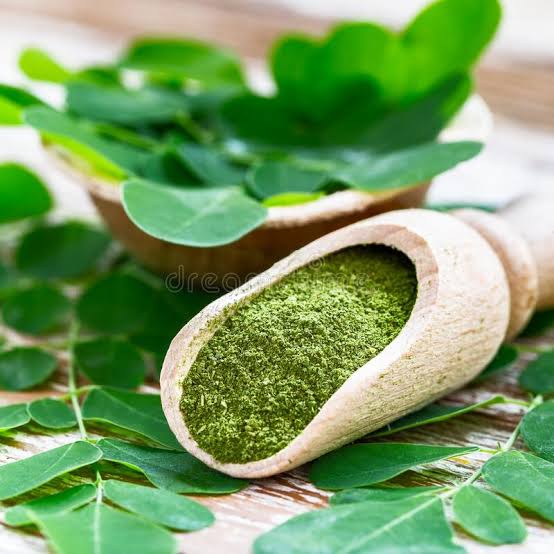
There is a reason the moringa tree has been called the miracle tree for centuries. Every part of Moringa oleifera — leaves, seeds, pods, roots, bark — has documented nutritional or functional value. But it is the leaf powder that has captured the attention of the global wellness industry: a concentrated, versatile, shelf-stable ingredient that delivers one of the most impressive micronutrient profiles of any plant known to cultivation.
Gram for gram, moringa leaf powder contains more vitamin A than carrots, more calcium than milk, more iron than spinach, more vitamin C than oranges, and a complete amino acid profile rare in plant sources. It is rich in antioxidants — flavonoids, polyphenols, and isothiocyanates — and has established anti-inflammatory properties backed by a growing body of clinical research.
The global market has recognised this. The moringa products market was valued at approximately USD 7 billion in 2020 and is projected to reach USD 14.8 billion by 2028, growing at a compound annual growth rate of nearly 10%. In the United States alone, the moringa market was estimated at USD 2.2 billion in 2024 and is forecast to reach USD 3.5 billion by 2033. EU demand is rising steadily, driven by the superfood trend and the growth of food supplements, functional foods, and plant-based nutrition.
And the overwhelming majority of that global demand is met by one country: India.
Why India Is the World’s Moringa Capital
India is not merely a significant moringa producer — it is the dominant global supplier by a wide margin, accounting for approximately 80% of total world moringa supply. India produces over 1.2 million tonnes of moringa annually, with cultivation concentrated in Tamil Nadu, Andhra Pradesh, Karnataka, Telangana, and Odisha. Tamil Nadu alone accounts for a substantial share of production, and the region around Erode — already famous as a global turmeric hub — is one of India’s most established moringa production zones.
This dominance is structural, not temporary.
Ecological fit. Moringa thrives in semi-arid tropical and subtropical conditions — precisely the climates that characterise large swathes of peninsular India. The tree is drought-resistant, grows rapidly, and can be harvested multiple times per year.
Established cultivation infrastructure. Indian moringa cultivation has been developed over generations, with established smallholder networks, processor relationships, and export supply chains that newer producing countries in West Africa and Southeast Asia cannot yet match.
Processing capability. India’s moringa processing industry has invested in low-temperature drying, micronised milling, and clean-room facilities capable of producing food-grade and export-grade powder to international specifications.
Certification infrastructure. USDA Organic and EU Organic equivalent (NPOP) certified moringa powder is available from Indian producers, along with ISO 22000, FSSAI, kosher, and halal certification. For buyers with specific market requirements, Indian producers can supply the documentation required.
The Moringa Buyer’s Market: Who Is Buying and Why
Understanding the global buyer landscape helps frame where your business fits and what sourcing requirements apply to your market.
Nutraceutical and dietary supplement manufacturers represent the largest buyer category — approximately 45% of global moringa leaf powder consumption. They require standardised specifications, rigorous heavy metal and pesticide residue testing, and GMP-compliant supplier qualification.
Functional food and beverage producers incorporate moringa into energy bars, breakfast cereals, health drinks, smoothie powders, and plant-based protein blends. These buyers need food-grade moringa with favourable organoleptic properties and FSSAI or equivalent food safety documentation.
Herbal tea producers and private label tea brands source moringa as a tea ingredient — standalone or blended with ginger, tulsi, lemon, and mint. Tea-grade moringa (cut and sifted leaf rather than fine powder) is a distinct specification that Indian producers can supply.
Cosmetic and personal care manufacturers use moringa seed oil and leaf extracts for antioxidant and emollient properties. Moringa seed oil has high oleic acid content and exceptional oxidative stability.
Private label wellness brands across the EU, USA, UK, Australia, Japan, and Southeast Asia source bulk moringa powder for repackaging under their own brand labels.
Product Formats: What You Can Source from India
Organic moringa leaf powder is the highest-demand format globally. Fine-milled from dried moringa leaves, used in supplements, functional foods, and private label packaging. Specifications: moisture below 8%, particle size 80-200 mesh depending on application, deep green colour indicating nutrient preservation.
Moringa leaf extract is a concentrated form with standardised active constituent content — typically total polyphenols, ORAC value, or isothiocyanate content. Used where dose precision and higher active concentration are required.
Tea-grade moringa leaf (cut and sifted) is dried moringa leaf processed to tea-appropriate particle size, suitable for teabag filling or loose-leaf blending.
Moringa seed oil is a cold-pressed fixed oil from moringa seeds, used primarily in cosmetic and personal care formulations. Available in cold-pressed and refined grades with cosmetic-grade documentation.
Key Certifications for International Moringa Buyers
NPOP Organic Certification (India) is the certification to look for when sourcing organic moringa. NPOP, administered by APEDA, is recognised as equivalent to EU Organic standards and accepted by the US NOP for Indian organic exports.
FSSAI Licence is the baseline food safety credential for any Indian food ingredient manufacturer. A Central FSSAI licence is required for exporters.
ISO 22000 / FSSC 22000 food safety management system certification is increasingly required by sophisticated buyers in the EU and USA, particularly in the dietary supplement and functional food sectors.
Halal Certification is required for moringa products sold into GCC, Southeast Asian Muslim-majority markets, and other markets where halal status is a retail or buyer requirement.
Heavy metal and pesticide residue testing is a critical documentation requirement across all markets. Buyers in the EU, USA, and Japan impose strict maximum residue limits. Approximately 18% of Indian moringa exports have historically been flagged for contamination issues — making supplier selection and third-party verification particularly important.
For a deeper understanding of India’s certification frameworks, our guide on GMP, ISO, FSSAI, and organic certification for Indian herbal exports provides detailed guidance.
Sourcing Documentation Checklist
Before committing to a moringa supplier, request and verify the following documents. The specific set required varies by destination market.
Core documents — required for all markets:
- FSSAI Central Manufacturing Licence (confirms the facility operates within India’s formal food safety framework)
- Batch-specific Certificate of Analysis from an accredited third-party laboratory (covering moisture, heavy metals, pesticide residues, microbial counts, and key nutrient markers)
- Phytosanitary Certificate issued by the Indian Plant Quarantine authority
- Commercial invoice and packing list with HS code declaration
- Certificate of Origin (required for preferential duty treatment under applicable FTAs)
EU buyers add:
- NPOP Organic Certificate with valid scope covering the specific product (if buying organic)
- Transaction Certificate from the certifying body for each shipment
- EU-format pesticide residue test report — EU MRLs are stricter than many other markets; confirm the CoA covers EU-specific compounds
- Importer of Record compliance documentation if you are importing under your own operator registration
USA buyers add:
- NOP equivalency documentation or USDA Organic certificate with Indian chain of custody (for organic claims)
- FDA Facility Registration number of the exporting manufacturer
- Prior Notice filing confirmation for each shipment
- Allergen declaration
UAE and GCC buyers add:
- Halal Certificate from a body recognised by the UAE Islamic Affairs authority (ESMA-approved certifiers)
- SFDA or relevant GCC health authority import permit (product-category dependent)
- Arabic-language labelling compliance for any retail-format product
Japan buyers add:
- Food Sanitation Act compliance declaration
- Pesticide residue test report conforming to Japan’s Positive List system — Japan’s MRLs differ from EU and USA and require a specific test panel
- Importer-of-record documentation under Japanese customs procedures
Korea buyers add:
- MFDS (Ministry of Food and Drug Safety) import notification documentation
- Korean language labelling requirements compliance
- Certificate of Analysis with Korea-specific contaminant limits
For documentation guidance specific to your market, see our COA, MSDS, and phytosanitary certificate guide.
MOQ and Lead Time Realities
International buyers sourcing moringa from India for the first time frequently underestimate lead times and overestimate flexibility on minimum quantities. Here is what the market actually looks like.
Minimum Order Quantities:
- Organic moringa leaf powder (standard specification): 100-500 kg first order is typical for verified exporters. Trial quantities of 25-50 kg are available from some producers at a price premium of 15-25% above commercial pricing.
- Moringa leaf extract (standardised): MOQ typically starts at 25 kg due to production batch sizing and testing cost per batch.
- Tea-grade cut and sifted moringa: MOQ typically 50-100 kg.
- Moringa seed oil: MOQ typically 5-25 kg (smaller due to high unit value).
What drives MOQ: Processing batch size, certification batch traceability requirements, and laboratory testing cost per batch. Organic-certified producers have stricter batch-segregation requirements that make very small orders economically difficult without premium pricing.
Lead Times from Order Confirmation to Port:
- Standard specification, stock available: 7-14 business days to prepare, test, and document.
- Custom specification or non-stock item: 21-35 business days.
- Add international shipping transit: 15-25 days sea freight (EU, USA); 5-10 days air freight (all markets).
Total lead time expectation: First orders typically run 4-8 weeks from order confirmation to port of destination via sea freight. Build this into your product launch timelines. Buyers who plan for 2 weeks end up in supply crises.
Factors that extend lead times:
- Organic certification batch documentation (requires certification body sign-off)
- Custom particle size or moisture specification (requires dedicated processing run)
- Peak harvest season (October-February for Tamil Nadu moringa): higher demand, longer processing queues
- New exporter relationship: first-time shipments involve additional documentation exchange that adds 5-7 business days
The Sample Request Process
Requesting and evaluating samples is the highest-leverage step in a moringa sourcing relationship. A proper sample pack tells you more than any product listing.
What to request in a sample pack:
- Product sample: 250 g to 1 kg of the exact specification you intend to order (organic grade, particle size, moisture target)
- Batch-specific Certificate of Analysis from the laboratory that tested the batch the sample was drawn from — not a generic spec sheet
- NPOP or organic certificate copy (if organic)
- FSSAI licence copy
- Completed product specification sheet with all parameters
- Photographs of the manufacturing facility (a genuine exporter will have these readily available)
Red flags in a sample response:
- CoA issued by the exporter’s own in-house laboratory with no external accreditation
- Sample sent without any CoA or with a generic CoA not batch-matched to the sample
- No NPOP certificate available for a product described as organic
- Sample colour is dull, yellowish, or grey (indicates high-temperature drying, nutrient degradation)
- Response time exceeds 5 business days for a sample request — indicates low operational capability
Sample evaluation checklist when the sample arrives:
- Colour: deep green (good) versus dull olive or yellowish-green (poor)
- Aroma: fresh, slightly grassy and earthy (good) versus flat, musty, or off-note (reject)
- Texture: fine, free-flowing powder (good) versus clumped, coarse, or gritty (investigate)
- Solubility: stir 5 g into 200 ml water; should disperse without significant settling
- CoA cross-check: verify the batch number on the CoA matches the batch number on the sample packaging
Timeline expectation: Sample preparation and dispatch typically takes 3-5 business days. International courier transit to EU, USA, UAE, or Australia is 7-14 business days. Total time from request to receipt: 10-20 business days. Expedited options can compress this to 7-10 business days.
What to Ask a Moringa Supplier Before Ordering
The quality gap between the best and worst Indian moringa producers is significant. The consequences of a substandard supplier — EU border rejections, customer complaints, failed quality audits — are costly.
Before placing a first order, verify:
Drying method. Low-temperature drying (shade drying or tunnel drying below 45 degrees C) preserves heat-sensitive nutrients and gives deep green powder. High-temperature drying reduces nutrient density. Ask for the drying temperature specification.
Organic certification documentation. Request the actual NPOP certificate, not a verbal claim. Verify the issuing certification body, the scope of certification, and the certificate validity date.
Third-party Certificate of Analysis. Request a recent batch CoA from an accredited external laboratory. A CoA issued solely by the supplier’s in-house laboratory carries substantially less evidentiary weight.
Supply chain traceability. Can the supplier identify the farm or collection zone where the moringa leaf was grown? Farm-level traceability is increasingly required by EU buyers and organic certification chains.
Packaging and shelf life. Moringa powder is sensitive to heat, moisture, and light. Confirm foil-lined bags, nitrogen-flushed, with moisture absorbers. Properly packaged moringa powder should maintain quality for 18-24 months under specified storage conditions.
For the full framework on evaluating any Indian herbal ingredient supplier, see our guide on how to evaluate an Indian herbal ingredient supplier.
Ready to Source Moringa from India?
Ayris Global connects verified buyers with India’s most capable moringa producers. Here is how to get started:
Step 1 — Share your requirement. Email sourcing@ayrisglobal.in with: target product format (leaf powder, extract, seed oil, cut-and-sifted), volume requirement, destination market, organic or conventional, and any specific certification requirements. A structured response with matched producer options typically arrives within 2 business days.
Step 2 — Request a specification sheet and sample. We coordinate samples from producers matched to your specification. Samples are accompanied by batch-specific CoA from accredited laboratories and full certification documentation. No generic brochures; only batch-verified material.
Step 3 — Place a trial order. Most first-time buyer relationships begin with a trial order of 100-250 kg. This validates supply quality, documentation chain, and logistics before you scale. We support the full documentation process for your destination market.
You can also reach us on WhatsApp at +919729256621 or explore our full product range to see the scope of Indian botanicals we source.
Sourcing Moringa from India with Ayris Global
At Ayris Global, we source moringa leaf powder, moringa extracts, and moringa seed oil from verified Indian producers with the certification credentials, quality systems, and export documentation capability that international buyers require.
We work with producers who supply NPOP organic certified moringa, batch-specific CoA from accredited laboratories, and the full documentation chain for EU, USA, GCC, Japan, Australia, Korea, and other market requirements. For buyers sourcing moringa for the first time from India, or for established buyers looking to validate a new supplier relationship, we provide the due diligence, sampling coordination, and documentation support that makes the first order — and every subsequent order — reliable.
Contact our sourcing team at sourcing@ayrisglobal.in to discuss your moringa requirements, request specifications, or arrange samples.
The Bottom Line on Moringa
India’s dominance in global moringa supply is structural, not temporary. The ecological advantage, established cultivation networks, processing infrastructure, and certification capability are durable competitive advantages that no other country comes close to matching.
For international buyers building wellness products that require a genuinely nutrient-dense, versatile, story-rich botanical ingredient, moringa from India is both the logical choice and the commercially dominant sourcing reality. The market is growing. The ingredient is validated. India has the supply.
The question is finding the right Indian producer — one with the quality systems, documentation capability, and supply reliability to deliver moringa that performs in your formulation and passes scrutiny in your market.
That is exactly what Ayris Global is built to help you do.
Ayris Global connects international buyers across the EU, UK, USA, UAE, Japan, Australia, Southeast Asia, and beyond with verified Indian producers of moringa leaf powder, botanical extracts, and Ayurvedic ingredients. Contact our sourcing team at sourcing@ayrisglobal.in to discuss your moringa requirements.