ingredients
Ashwagandha Extract: A Complete Buyer's Guide for Global Ingredient Sourcing
1 May 2026
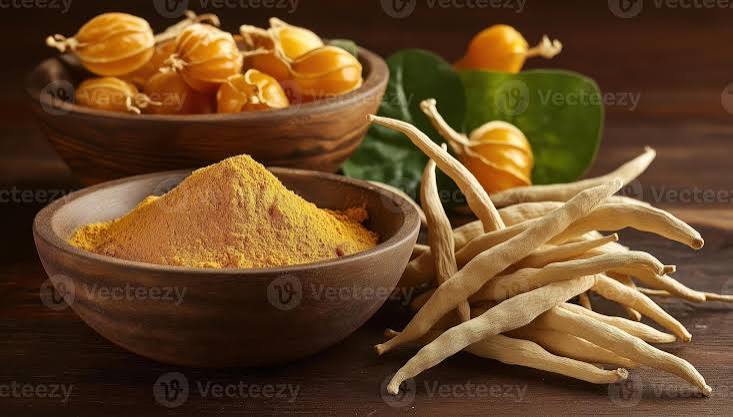
Ashwagandha - Withania somnifera - has moved from the shelves of Ayurvedic pharmacies to the ingredient lists of mainstream supplement brands, functional food manufacturers, and wellness companies across Europe, North America, the Gulf, and East Asia. Global demand for ashwagandha extract has grown at over 15% annually for the past five years, and the trajectory shows no sign of softening.
Buyers working through this point may also find ashwagandha extract sourcing for the US market useful.
For ingredient buyers, this growth creates both opportunity and complexity. The market now contains a wide range of suppliers offering products described as ashwagandha extract - but with significant variation in quality, potency, documentation standards, and supply chain integrity. Buying well in this category requires understanding what you are actually purchasing.
This guide covers everything an international buyer needs to know: what ashwagandha extract is, how to read specifications, what certifications matter, and how to evaluate Indian suppliers effectively.
What Is Ashwagandha Extract?
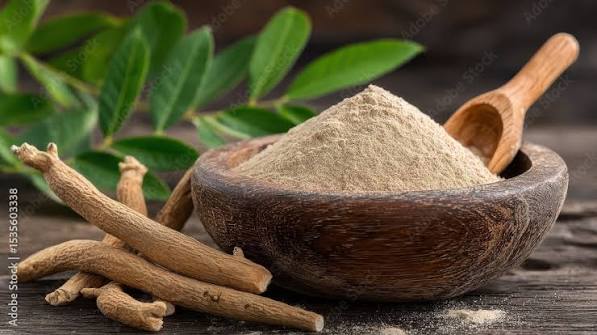
Ashwagandha extract is derived from the root - and in some formulations the root and leaf - of Withania somnifera, a shrub native to India, North Africa, and the Mediterranean. India is the world’s dominant producer, accounting for the large majority of global commercial supply.
The extract is produced by processing dried ashwagandha root through aqueous, hydroalcoholic, or alcohol-based extraction, followed by concentration and drying to produce a standardised powder. The active constituents of commercial interest are withanolides - a class of steroidal lactones responsible for the adaptogenic and stress-modulating effects for which ashwagandha is best known - and withanosides.
The most commonly traded commercial specifications are:
- 2.5% withanolides - entry-level specification, used in value supplement formulations
- 5% withanolides - the most widely traded standard, used across mainstream supplement and functional food applications
- 7% withanolides - premium specification for high-potency formulations
- 10% withanolides and above - specialist high-potency extracts, typically for concentrated capsule or sachet formats
Withanolide content is measured and verified by HPLC (High Performance Liquid Chromatography), which should be specified in the Certificate of Analysis for every batch.
Root vs. Root and Leaf: Why It Matters
A significant quality distinction in the ashwagandha extract market concerns whether the extract is derived exclusively from root material or from a blend of root and leaf.
Traditional Ayurvedic use and the clinical research base for ashwagandha is built almost entirely on root preparations. The root contains the full spectrum of withanolides and withanosides in their naturally occurring ratios. Leaf-derived extracts contain different withanolide profiles - and crucially, it is significantly easier and cheaper to achieve high withanolide percentages using leaf material than root material, because certain withanolides are more concentrated in leaves.
Some suppliers blend root and leaf to achieve a stated withanolide percentage at lower cost - without disclosing this to buyers. A product labelled “5% withanolides” may be root-only, or it may contain a substantial proportion of leaf-derived extract. The withanolide percentage is the same on the CoA; the source material differs.
For buyers formulating products where the clinical evidence base or consumer expectation is root-derived ashwagandha, this matters. Ask your supplier explicitly: is this extract derived from root only, or root and leaf? Request the manufacturing process description confirming source material.
Key Certifications to Require
The certification landscape for ashwagandha extract supplied from India has several layers, and international buyers should understand what each covers.
GMP Certification
Good Manufacturing Practice certification - whether WHO-GMP, EU-GMP, or US FDA-registered - confirms that the manufacturing facility operates to defined quality standards for process control, documentation, hygiene, and batch traceability. GMP certification is the baseline quality credential for any botanical extract supplier supplying regulated markets.
Organic Certification
Organic ashwagandha extract is available from India certified to NPOP (National Programme for Organic Production), EU organic regulations, and USDA NOP standards. Organic certification covers the agricultural practices used to grow the raw material - chemical inputs, soil management, and traceability from farm to extract. For buyers supplying European or North American markets where organic positioning carries premium value, certified organic supply is worth the price premium.
ISO Certifications
ISO 9001 (quality management system) and ISO 22000 (food safety management) are common certifications among Indian botanical extract manufacturers. These demonstrate systematic quality management but are less directly relevant to product quality than GMP certification.
FSSAI
The Food Safety and Standards Authority of India regulates food and supplement manufacturing within India. FSSAI compliance is a baseline domestic requirement; its relevance to international buyers is as a signal of regulatory standing in the home market.
Ready to source verified ashwagandha extract? Ayris Global connects qualified international buyers with GMP-certified Indian producers - with full documentation support for EU, US, UAE/GCC, Japan, Korea, and other markets. Request samples
What a Good Certificate of Analysis Contains
The Certificate of Analysis (CoA) is the primary quality document for each batch of ashwagandha extract. A CoA from a credible supplier should include:
- Product name and botanical name (Withania somnifera)
- Part used (root, or root and leaf - this should be stated)
- Batch number and manufacturing date
- Withanolide content (% by HPLC) - the primary active constituent specification
- Moisture content - typically below 5%
- Heavy metals - lead, cadmium, mercury, arsenic limits per relevant pharmacopoeia or buyer specification
- Pesticide residues - screened against EU MRL limits or equivalent
- Microbial limits - total plate count, yeast and mould, E. coli, Salmonella
- Particle size - relevant for powder flow and formulation
- Shelf life and recommended storage conditions
Be cautious of CoAs that omit heavy metal or pesticide data, or that show suspiciously round numbers for withanolide content. Reputable analytical laboratories produce results with natural variation across decimal points - a CoA showing exactly 5.00% withanolides on every batch warrants a question.
Evaluating Indian Suppliers
India has hundreds of ashwagandha extract manufacturers, ranging from large GMP-certified export-oriented facilities to small processors with limited documentation capability. The following evaluation framework helps separate credible suppliers from those who will create problems downstream.
Request the facility audit report or welcome a desk audit. Credible manufacturers are accustomed to buyer quality audits and will provide third-party audit reports or cooperate with your own audit process. Reluctance to allow audit is a significant negative signal.
Ask for reference customers in your target market. A supplier with established customers in the EU, US, or your target geography has demonstrated the ability to meet the documentation and quality requirements of those markets. Ask for references and follow up.
Test the sample before committing to volume. Always request a sample - typically 100g to 500g - and have it independently tested before placing an initial order. Test for withanolide content by HPLC, heavy metals, pesticide residues, and microbial limits. The cost of independent testing is a small fraction of the cost of receiving a non-conforming shipment.
Assess communication quality. A supplier’s responsiveness, precision in answering technical questions, and willingness to provide documentation reflects how they will perform as a long-term partner. Slow, vague, or evasive pre-sales communication predicts similar performance in the supply relationship.
Pricing and Volume Benchmarks
Ashwagandha extract pricing varies significantly based on specification, certification, and volume. As a general orientation for international buyers:
- Standard 5% withanolides, non-organic: USD 15-25/kg FOB India depending on volume and supplier
- Organic 5% withanolides: USD 30-45/kg FOB India
- High potency 7-10% withanolides: USD 35-60/kg FOB India depending on specification
Minimum order quantities from Indian manufacturers typically start at 25 kg for sample or trial orders, with commercial MOQs of 100-500 kg depending on the supplier. Pricing steps down meaningfully at 500 kg, 1 MT, and 5 MT volumes.
Summary: What to Get Right
Sourcing ashwagandha extract well comes down to four things: knowing your specification (withanolide percentage, source material, certification requirements), demanding complete documentation (CoA, GMP certificate, organic certificate where applicable), testing independently before committing to volume, and evaluating the supplier as a long-term partner rather than a one-time transaction.
India produces the world’s best ashwagandha. Sourcing it well means accessing that quality with confidence - and avoiding the significant minority of suppliers whose documentation does not reflect their product.
Frequently Asked Questions
What is the standard withanolide specification for ashwagandha extract?
The most widely traded commercial specification is 5% withanolides by HPLC. Entry-level formulations use 2.5%, premium formulations use 7%, and specialist high-potency formats use 10% and above. Withanolide content should always be verified by HPLC analysis on the Certificate of Analysis.
Should I source ashwagandha extract from root only or root and leaf?
Root-only extract is strongly preferred for most applications. The clinical evidence base and traditional Ayurvedic use are built on root preparations. Leaf-derived extracts can achieve high withanolide percentages more cheaply but with a different phytochemical profile. Always confirm source material in writing before ordering.
What certifications should I require from an Indian ashwagandha supplier?
At minimum: GMP certification (WHO-GMP, EU-GMP, or FDA-registered), a full CoA with HPLC withanolide data, heavy metals testing, and microbial limits. For EU markets, add organic certification. For UAE/GCC markets, add Halal certification from an ESMA-recognised body. For US markets, confirm FDA facility registration and cGMP compliance.
What is the typical price range for ashwagandha extract from India?
Standard 5% withanolides non-organic is typically USD 15-25/kg FOB India. Organic 5% withanolides runs USD 30-45/kg. High-potency 7-10% withanolides is USD 35-60/kg. Minimum order quantities typically start at 25 kg for samples, with commercial MOQs of 100-500 kg.
How do I verify ashwagandha extract quality before placing a commercial order?
Request a 100-500g sample and have it independently tested by an accredited laboratory. Test for withanolide content by HPLC, heavy metals, pesticide residues, and microbial limits. Independent testing costs a fraction of the cost of a non-conforming shipment - it is always worth doing.
Further Reading: India’s Natural Products Export Industry: A Global Overview · Adaptogens - Ashwagandha, Shatavari & Brahmi: Global Demand · Your First Order from India: A Step-by-Step Guide
Ayris Global sources verified ashwagandha extract and a wide range of Indian botanical ingredients for qualified international buyers. To discuss your specification requirements, contact our team at sourcing@ayrisglobal.in or visit our products page.