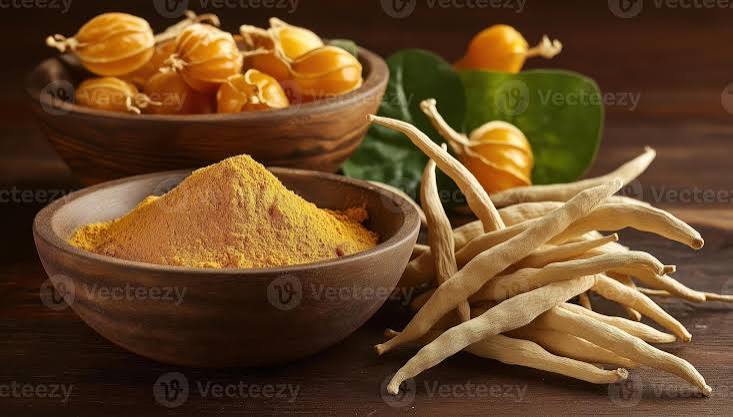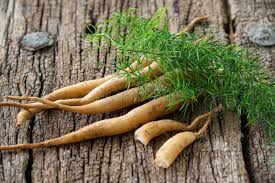
ingredients
Ashwagandha, Shatavari and Brahmi: Indian Adaptogen Sourcing Guide
22 May 2026
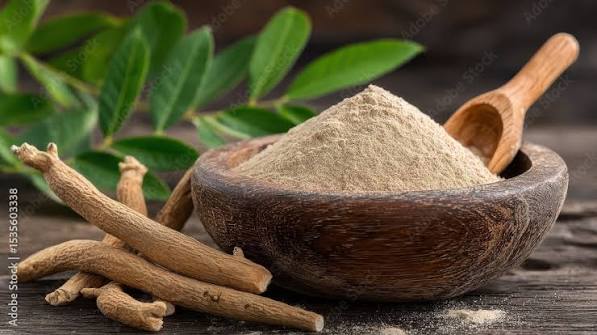
Adaptogen is no longer a niche wellness term. It has become a recognised ingredient category on supplement labels, functional food packaging, and beauty product ingredient lists across nearly every major global wellness market. For ingredient buyers, that shift matters commercially: adaptogen demand has moved from a small base of Ayurveda-literate consumers to a mainstream stress, sleep, and cognitive wellness audience numbering in the hundreds of millions.
India is the world’s primary origin for the three adaptogens driving most of this commercial activity: ashwagandha, shatavari, and brahmi. Each has a different demand profile, a different buyer base, and different sourcing considerations - but all three share the same structural advantage of coming from a single, mature, increasingly well-documented supply chain.
This article covers what adaptogens are, why these three botanicals specifically have become commercially dominant, and what international buyers need to know about sourcing each one from India.
What Is an Adaptogen, Commercially Speaking?
The term adaptogen describes a botanical traditionally believed to help the body resist and adapt to stress - physical, chemical, or psychological. The word itself has a relatively recent scientific history, coined by Soviet researchers studying plant compounds for stress resistance in the mid-20th century. But the underlying botanicals, and the traditional use case the term describes, are far older: ashwagandha, shatavari, and brahmi all appear in Ayurvedic texts that predate the modern adaptogen concept by well over a thousand years.
For commercial purposes, what matters is that “adaptogen” has become a category consumers recognise and actively search for, and that regulators in most major markets treat as a legitimate functional ingredient claim area (subject to the specific health claim regulations of each market). Brands building stress, sleep, cognitive, energy, or hormonal wellness product lines now routinely lead with adaptogen positioning, and ashwagandha, shatavari, and brahmi are the three Indian botanicals most central to that positioning.
Buyers working through this point may also find sourcing ashwagandha extract for US supplement brands useful.
Ashwagandha: The Commercial Anchor
Ashwagandha (Withania somnifera) is, by a wide margin, the most commercially significant adaptogen in global trade today. Global demand has grown at double-digit annual rates for several consecutive years, driven by its position at the center of the mainstream stress and sleep supplement category - a category that has expanded well beyond the wellness-specialist consumer into general retail, pharmacy, and grocery channels across the EU, UK, USA, and increasingly UAE/GCC and ANZ.
Why ashwagandha leads the category:
- Clinical research depth. Ashwagandha has the largest body of published clinical research among Indian adaptogens, covering cortisol modulation, sleep quality, and anxiety-related outcomes. This research base gives brands a stronger substantiation foundation for marketing claims than most competing adaptogens.
- Specification maturity. The market has converged on withanolide percentage (typically 2.5%, 5%, 7%, or 10%+ by HPLC) as a standard specification language, making it straightforward for buyers to compare suppliers on a like-for-like basis.
- Format flexibility. Ashwagandha is supplied as root powder, standardised root extract, and proprietary branded extracts (KSM-66, Sensoril, and others), giving brands options across price points and positioning.
Buyers sourcing ashwagandha should be aware of the root-versus-root-and-leaf distinction (leaf material can reach high withanolide percentages more cheaply but with a different phytochemical profile than traditional root preparations) and should always confirm source material explicitly with their supplier.
Shatavari: The Fastest-Growing of the Three
Shatavari (Asparagus racemosus) has a smaller current trade volume than ashwagandha, but its growth rate is currently outpacing it. The driver is concentrated and specific: a sustained increase in women’s wellness and hormonal health formulation activity, particularly in the EU and US, where brands are actively seeking botanical ingredients positioned around female-specific life stages - menstrual health, perimenopause, and broader hormonal balance categories.
Buyers working through this point may also find sourcing Shatavari for women’s wellness products useful.
What buyers should know about shatavari specification:
- Shatavari is typically supplied as root powder or root extract, standardised to total saponin content where a standardised extract is required, though unstandardised root powder remains common in tea, functional beverage, and traditional-format applications.
- The ingredient carries less analytical specification convention than ashwagandha - buyers should expect more variation in how suppliers describe and document potency, and should request clear methodology disclosure on any Certificate of Analysis.
- Demand growth has been concentrated enough that supply has, at points, tightened relative to ashwagandha’s much larger and more elastic supply base. Buyers planning volume commitments should discuss lead time and availability early with suppliers rather than assuming ashwagandha-level supply depth.
Brahmi: The Premium Cognitive Niche
Brahmi (Bacopa monnieri) occupies a smaller, more specialised position than ashwagandha or shatavari, concentrated almost entirely in the cognitive health and nootropic supplement category. Demand is strongest in markets with mature nootropic consumer bases - the US, UK, Japan, and South Korea in particular - where brahmi (often marketed under the Bacopa monnieri name rather than the Ayurvedic name) is formulated alongside other cognitive-support ingredients in capsule and powder nootropic stacks.
What distinguishes brahmi commercially:
- Brahmi extracts are typically standardised to bacoside content by HPLC, a more demanding and less universally available testing capability among Indian suppliers than withanolide testing for ashwagandha. Buyers should confirm a supplier’s bacoside testing capability specifically, rather than assuming general HPLC capability extends to this compound class.
- Because the addressable market is narrower and more specification-sensitive than mainstream stress and sleep categories, brahmi commands premium pricing relative to its trade volume, and buyers tend to be more technically sophisticated - typically established nootropic or cognitive health brands rather than first-time botanical buyers.
- Brahmi is grown across wetland regions of eastern and southern India, a narrower growing geography than ashwagandha’s broader semi-arid cultivation base, which buyers should factor into supply continuity planning.
Sourcing one adaptogen, or building a combined formulation? Ayris Global supplies ashwagandha, shatavari, and brahmi - individually or as part of a combined sourcing programme - from GMP-certified Indian producers, with documentation matched to your target market. Talk to our sourcing team
Why India Holds a Structural Advantage Across All Three
A buyer formulating a combined adaptogen blend - ashwagandha, shatavari, and brahmi together, a combination increasingly common in stress-and-cognition stacked formulations - benefits from a sourcing advantage that is specific to India: all three botanicals can be sourced from within a single country, under a single set of export documentation conventions, through a single logistics lane.
This matters more than it might first appear. Many botanical categories require buyers to source across multiple countries of origin - different climates produce different plants - which fragments documentation, certification, and logistics into separate supply relationships. With ashwagandha, shatavari, and brahmi, a buyer can work with a single well-documented Indian supply chain (or a single sourcing partner managing multiple Indian producers) and receive aligned GMP, organic, and Halal certification, consistent CoA formatting, and a single shipping and customs process.
India’s scale advantage compounds this further. India is the dominant global producer of ashwagandha by volume, and a leading producer of both shatavari and brahmi, meaning supply depth and price competitiveness are generally stronger than for adaptogens sourced from more fragmented or smaller-scale origins.
Certification Priorities Across the Three Botanicals
Certification requirements differ somewhat by botanical and by target market, but several patterns hold consistently:
GMP certification is the non-negotiable baseline across all three botanicals and all major markets. WHO-GMP, EU-GMP, or FDA-registered facility status should be confirmed before any commercial discussion proceeds.
Organic certification carries the most commercial weight for shatavari and brahmi, where buyers in EU and US women’s wellness and cognitive health categories frequently use organic positioning as a key marketing differentiator. Organic ashwagandha is also available and valuable, but the category’s mainstream scale means non-organic supply remains commercially significant in a way it is less so for the other two.
Halal certification is essential for any of the three botanicals destined for UAE/GCC or Southeast Asian markets, and increasingly requested by UK and EU buyers serving Muslim-minority consumer bases within those markets.
Batch-specific Certificates of Analysis with the correct active-compound testing methodology for each botanical - withanolides for ashwagandha, saponins for shatavari, bacosides for brahmi - should be requested for every shipment, regardless of which botanical is being purchased. Buyers should confirm a supplier’s testing capability for the specific compound class relevant to each botanical rather than assuming general analytical capability transfers across all three.
What This Means for Buyers Building an Adaptogen Sourcing Strategy
For brands and formulators building or expanding an adaptogen-positioned product line, the practical sourcing sequence is usually:
- Start with ashwagandha if entering the category for the first time. It has the deepest supply base, the most mature specification conventions, and the strongest substantiation research, making it the lowest-friction entry point.
- Add shatavari when targeting women’s wellness or hormonal health positioning specifically - but plan supply and lead time conversations earlier than you would for ashwagandha, given tighter relative supply.
- Add brahmi when targeting cognitive or nootropic positioning - and expect a more technical sourcing conversation, with closer attention to bacoside testing methodology and narrower grower geography.
Buyers combining two or three of these botanicals into a single formulation should consider working with a single sourcing partner who can coordinate certification, documentation, and logistics across all three from within the Indian supply chain, rather than managing three separate supplier relationships independently.
Working With Ayris Global on Adaptogen Sourcing
Ayris Global sources ashwagandha, shatavari, and brahmi from verified, GMP-certified Indian producers, individually or as a coordinated combined sourcing programme for buyers formulating multi-adaptogen products. We match certification - GMP, organic, Halal - to the specific requirements of your target market, and provide the documentation package (CoA, MSDS, phytosanitary certificates) that international procurement and regulatory teams require.
If you are building or expanding an adaptogen-positioned product line and want to discuss specification, certification, or combined sourcing across ashwagandha, shatavari, and brahmi, contact us at sourcing@ayrisglobal.in with your requirements.
Related reading: Ashwagandha Extract: A Complete Buyer’s Guide - detailed specification, certification, and pricing guidance for ashwagandha specifically How to Evaluate an Indian Herbal Ingredient Supplier - a structured due diligence framework for international buyers India-UAE CEPA and Herbal Ingredients - tariff and documentation guidance for buyers sourcing adaptogens and other herbal ingredients into the UAE and GCC