sourcing
Turmeric Product Forms by Origin: Where Oleoresin and Standardized Extract Are Actually Made vs Powder-Only Supply
16 August 2026
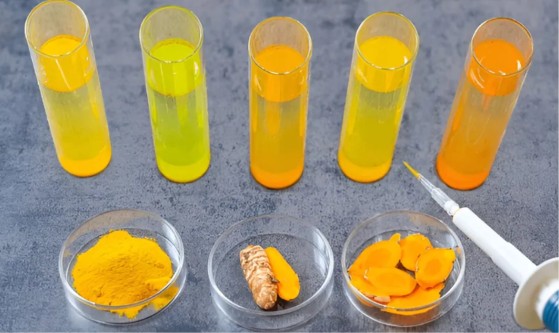
Two questions get conflated in turmeric sourcing conversations that should be kept separate: which origin has the reputation a buyer wants, and which origin can actually supply the product form the buyer needs. Whole-herb powder is available from essentially every major Indian turmeric-growing region. Oleoresin and standardized curcumin extract are not - they depend on extraction and purification infrastructure that exists in a much smaller number of locations, and assuming a high-curcumin origin automatically has local extraction capacity is a common and avoidable sourcing error.
Quick answer: Whole-herb powder can be sourced from any of India’s major turmeric origins - Erode, Salem, Nizamabad, Alleppey, Sangli, and Lakadong all grade and pack powder locally. Oleoresin and standardized extract require solvent extraction and purification equipment that is concentrated in a smaller number of established processing hubs, most heavily around Tamil Nadu’s high-volume trading centers, meaning a buyer wanting extract-tier material tied to a specific growing origin should confirm that origin’s raw material is actually routed to a capable processor, rather than assuming extraction happens locally wherever the rhizome is grown.
Why Growing Origin and Processing Capability Are Different Questions
A turmeric-growing region’s reputation - curcumin content, color, GI status - describes the raw rhizome as harvested. It says nothing about what processing infrastructure exists in that same region, and this is where buyers most often make an unstated assumption. Grading and packing whole-herb powder requires cleaning, drying, and grinding equipment that is widely established across every significant growing origin, since it is the baseline processing step every commercial turmeric shipment goes through regardless of destination form. Producing oleoresin or standardized extract is a categorically different processing step, requiring solvent extraction equipment, purification capability, and typically a larger minimum practical batch size to justify the capital investment - infrastructure that has historically concentrated in a smaller number of established industrial processing hubs rather than distributing evenly across every growing region.
Our article on how climate sets turmeric moisture levels goes further.
This means a buyer’s two sourcing questions - which origin, and which product form - do not always resolve to the same answer, and treating them as a single combined decision risks assuming availability that does not actually exist.
Powder: Available From Every Major Origin
Whole-herb powder production tracks growing origin directly. Erode, Salem, Nizamabad, Alleppey, Sangli, and Lakadong each have local infrastructure to clean, dry, grade, and pack turmeric powder from locally grown rhizome, since this is the processing step that has existed in each of these regions for as long as they have exported turmeric commercially. A buyer sourcing powder from any of these six origins is generally sourcing from material that was both grown and processed to powder form within or close to that same growing region, with grading and packing infrastructure sized to match the local production volume.
Oleoresin and Standardized Extract: Concentrated in Fewer Locations
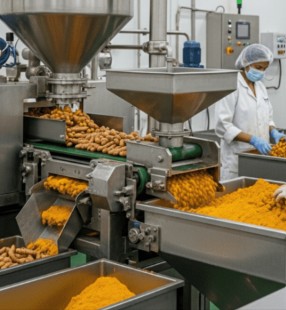
Extraction and purification infrastructure did not develop evenly alongside growing regions. Tamil Nadu’s established trading and processing hubs, closely tied to the Erode and Salem trading centers, host a meaningful concentration of India’s turmeric extraction capacity, reflecting both the scale of raw material passing through that trading corridor and the longer industrial history of processing investment in the region. Other growing origins, particularly smaller or more recently commercialized ones, frequently have strong rhizome production and grading capability but no local extraction facility at all.
This creates a specific and easy-to-miss sourcing gap: an origin can have an excellent curcumin reputation for its raw rhizome while having limited or no local capacity to turn that rhizome into oleoresin or standardized extract. Lakadong is a clear example. Its curcumin reputation is well established for whole-herb powder, but the West Jaintia Hills growing region does not have the same scale of established extraction infrastructure as the Tamil Nadu processing hubs. Extract-tier Lakadong-origin material, where it exists, typically depends on raw rhizome being transported to a processing facility elsewhere in India rather than extraction happening within the growing region itself.
What This Means for a “Lakadong Extract” (or Any Origin-Branded Extract) Claim
A supplier offering an origin-branded extract - Lakadong 95 percent extract, for example - is making two separate claims bundled into one product name: that the raw material came from that origin, and that it was processed to the stated extract specification. Because extraction capacity does not sit locally in every growing origin, the second claim frequently depends on a transport and processing step that happened somewhere other than the growing region itself, and this is exactly the point where an origin claim is easiest to lose track of or, in less scrupulous cases, substitute quietly.
A buyer should ask for documentation covering both halves of the claim separately: confirmation of the raw material’s growing-origin sourcing (which our companion guide on verifying authentic Lakadong turmeric addresses in more depth for that specific origin), and a Certificate of Analysis for the extraction and purification step itself, ideally referencing the processing facility and batch. A product name alone does not confirm this chain of custody; documentation across both processing stages does.
Lead-Time Implications of Sourcing Extract From a Less Common Origin
Powder sourcing typically draws on existing graded and packed stock, moving relatively quickly from quote to shipment. Extract sourcing tied to an origin without established local extraction capacity involves additional steps: raw material transport to a capable processing facility, scheduling an extraction run that meets the processor’s minimum practical batch size, and the purification and standardization steps that follow before the material reaches its stated curcuminoid floor. A buyer requesting Lakadong-origin (or any similarly extraction-light origin’s) standardized extract on a powder-sourcing timeline is likely to be disappointed, and should build meaningfully more lead time into a first order of this kind than into a comparable powder order.
Matching the Sourcing Approach to What’s Actually Available
Buyers whose priority is a specific origin’s curcumin reputation, in whole-herb powder form, face no availability constraint - all six major origins support this directly, and sourcing timelines are comparable across them.
Buyers whose priority is a guaranteed curcuminoid percentage floor via standardized extract, with origin as a secondary consideration, are better served identifying a processor with strong extraction and purification credentials first, and treating raw material origin as one input specification among several the processor manages, rather than starting from a growing-origin preference and assuming extraction capability follows automatically.
Buyers who want both a specific origin’s story and standardized extract form should expect the longest lead time and the most documentation-intensive sourcing path of the three, since it requires both raw material origin verification and processing chain-of-custody confirmation, and should plan a first order as a qualification exercise rather than assume repeat-order timelines from the outset.
How This Fits With Our Other Sourcing Guides
This guide addresses where a product form can actually be produced, which sits upstream of choosing a specific grading tier (see our curcumin grading tiers guide) or verifying a specific batch’s curcumin content once a supplier and form have been identified (see our pan-India adulteration and testing guide). For a deeper treatment of the four Lakadong-specific product forms and how to match one to an end use, see our Lakadong oleoresin and extract product forms guide.
How Ayris Can Support Product Form Sourcing
Ayris Global works with verified Indian producers and processors across multiple growing origins and can confirm which specific origin-and-form combination is actually achievable, including realistic lead times, before a buyer commits to a specification. We operate on a commission-only model - no retainer, no markup on goods.
For more on this, see turmeric lead times by origin.
Frequently Asked Questions
Can every Indian turmeric origin supply oleoresin or standardized extract, or only powder?
Every major origin can supply whole-herb powder, since grading and packing powder requires comparatively simple processing infrastructure. Oleoresin and standardized extract require solvent extraction and purification equipment that is concentrated in a smaller number of larger processing hubs, most established around Tamil Nadu’s high-volume trading centers, rather than being available at every growing origin. A buyer wanting extract-tier material from a specific high-curcumin origin such as Lakadong should confirm a processor actually runs extraction on that origin’s raw material rather than assuming it is automatically available.
Why is extraction processing concentrated in fewer locations than turmeric growing origins?
Solvent extraction and purification require capital equipment, technical expertise, and a minimum practical batch size that only makes economic sense at scale, which concentrates this processing capability in established industrial hubs rather than distributing it across every growing region. A smaller or newer growing origin frequently has capable rhizome production but no local extraction capacity, meaning its raw material may travel to a processing hub elsewhere in India before becoming oleoresin or extract.
If a supplier offers Lakadong-branded extract, is the raw material necessarily grown in Lakadong?
Not automatically. Because extraction capacity is concentrated away from smaller growing origins, a buyer should confirm the specific chain of custody: whether the raw rhizome was sourced from Lakadong-growing areas in West Jaintia Hills and transported to a processing facility, or whether the branding reflects a blend or a different origin’s material processed under a similar name. Requesting origin-of-raw-material documentation alongside the extraction Certificate of Analysis is the way to confirm this rather than assuming it from the product name.
Does sourcing extract from a less common origin take longer to arrange than sourcing powder?
Often yes. Sourcing powder from any established origin typically draws on existing graded and packed stock, while sourcing extract from an origin without local processing infrastructure may require coordinating raw material transport to a processing hub, scheduling an extraction run sized to a minimum practical batch, and allowing for the purification and standardization steps that follow. Buyers should build in additional lead time when requesting extract-tier material tied to a specific origin that does not have established local extraction capacity.
Should a buyer prioritize origin reputation or processing capability when sourcing a specific product form?
It depends on which is actually driving the sourcing requirement. If the application depends on a specific origin’s curcumin reputation and the required form is whole-herb powder, origin selection should lead. If the application requires a standardized extract at a guaranteed floor and the origin story is secondary, processing capability and the purification track record of a specific facility should lead, since the extract’s guaranteed percentage is a manufacturing outcome rather than an origin characteristic.
Further Reading: Turmeric Curcumin Grading Tiers Compared: Reading Percentage Claims Across Origins and Product Forms | Lakadong Turmeric Oleoresin and Extract: A Buyer’s Guide to Product Forms | Indian Turmeric Origins Compared: Erode, Salem, Nizamabad, Alleppey, Sangli and Lakadong
Ayris Global connects international buyers across the EU, UK, USA, UAE, Japan, South Korea, Australia, Southeast Asia, and Latin America with verified Indian producers of turmeric and other botanical ingredients across multiple growing origins and product forms. We operate on a commission-only model - no retainer, no markup on goods. Contact our sourcing team to confirm which origin and form combination fits your sourcing timeline.