sourcing
Export Documentation Checklist for Indian Herbal Ingredients: Registrations, Certificates and Common Rejection Causes
26 June 2026
Every delayed shipment has a paperwork story behind it - a missing certificate, a value that does not match across two documents, a Certificate of Origin filed in the wrong form for the destination country. None of these failures are exotic. They are almost always a checklist problem: a document that someone assumed was not needed, or was needed but applied for too late.
This is a reference checklist for exporters and the buyers who work with them - organized by when each document is needed (one-time registration versus per-shipment), who issues it, and what causes it to be rejected or delayed. If you have already read our step-by-step guide to placing a first order from India, this goes deeper into the documentation layer specifically: issuing authorities, processing timelines, validity windows, and the failure modes that hold shipments at port.
Direct Answer: The Documentation Structure
Export documentation for Indian herbal ingredients falls into two categories. One-time registrations - Import Export Code (IEC), APEDA Registration-cum-Membership Certificate (RCMC), AD Code, GST/LUT - are obtained once and apply to every future shipment. Per-shipment documents - commercial invoice, packing list, shipping bill, Certificate of Analysis, Phytosanitary Certificate, Certificate of Origin, and the transport document - are prepared fresh for each export and must agree with each other exactly on product description, quantity, and value. Destination countries layer their own import-side requirements on top of this India-side baseline.
Part 1: One-Time Registrations
Import Export Code (IEC)
Issued by DGFT (Directorate General of Foreign Trade). No export or import activity is legally possible without it. Application is online, requires PAN and bank details, and approval typically takes 1 to 3 working days. There is no renewal requirement, though profile details must be kept current on the DGFT portal.
APEDA Registration-cum-Membership Certificate (RCMC)
The Agricultural and Processed Food Products Export Development Authority (APEDA) requires registration for any of the 14 scheduled product categories under the APEDA Act - a list that covers most processed botanical and herbal products, including powders and extracts. RCMC is mandatory before the first export of a scheduled product and is also a precondition for accessing APEDA’s financial assistance and export promotion schemes. Since July 2023, RCMC is issued through the DGFT e-RCMC portal rather than APEDA directly, and requires a valid IEC as a prerequisite. Validity runs 5 financial years from issue and must be renewed before expiry - renewal is generally straightforward and does not require resubmitting documents already on file.
AD Code Registration
A code linked to the exporter’s bank account, requested from the bank on letterhead and then registered on ICEGATE for each specific port the exporter will ship from. Required for every export shipment and for receiving RoDTEP duty credits.
GST Registration and LUT
GST registration is required for the GST refund mechanism on zero-rated exports. A Letter of Undertaking (LUT) filed on the GST portal for the current financial year allows exports without upfront IGST payment, which is the standard approach for most exporters.
Building an export-ready supply chain from India? Ayris Global works only with GMP-certified suppliers who maintain complete, current documentation - IEC, APEDA RCMC, and destination-specific certificates - so buyers are not the ones discovering a documentation gap after the shipment has left port. Get in touch
Part 2: Per-Shipment Documents
Commercial Invoice and Packing List
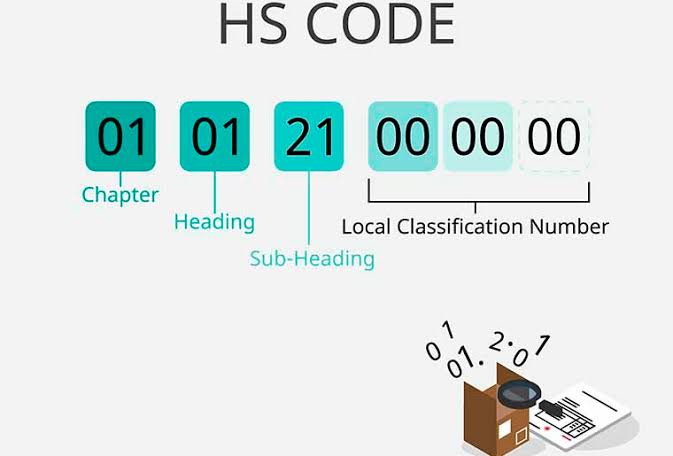
Prepared for every shipment. Must show HS code, product description, quantity, unit price, total value, Incoterms, and buyer/seller details. The single most common cause of customs holds is a value or quantity that does not match exactly between the invoice, the packing list, and the shipping bill - customs reassesses any inconsistency, which stalls clearance.
Certificate of Analysis (CoA)
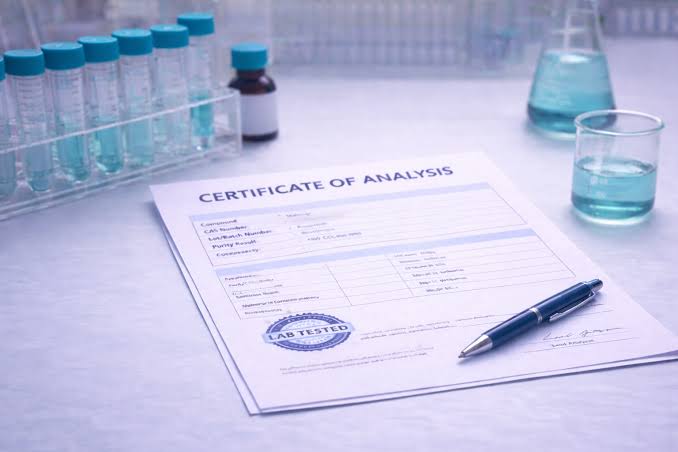
The batch-specific quality document. For herbal extracts this should show identity confirmation, the relevant active-constituent assay, heavy metals, pesticide residues, and microbial limits, issued by an accredited (ideally NABL) laboratory. This document is prepared by the exporter or their contracted lab, not by a government authority, but buyers in regulated markets increasingly expect it to be independently verifiable rather than self-certified.
Our article on pesticide residue limits for herbal ingredients in Great Britain and the EU goes further.
Phytosanitary Certificate
Issued by India’s Plant Quarantine authority - the Directorate of Plant Protection, Quarantine and Storage (PQIS) - for plant-based material where the destination country requires it. Application is made through the PQIS portal (pqis.gov.in) using the exporter’s IEC and GST details. An NPPO inspector visits the exporter’s premises or warehouse within 24-48 hours of application to inspect the consignment. Normal processing is 3 to 5 working days after inspection; add 5 to 7 working days if the destination requires laboratory testing of a sample. The certificate is typically valid only 14 to 30 days from issue - apply against a confirmed shipment date, not an estimated one, since both applying too early (certificate expires before shipment) and too late (missing the inspection window) cause delays.
Certificate of Origin (CoO)
Confirms Indian origin for customs clearance at destination. A standard non-preferential CoO issued by APEDA or FIEO is sufficient for markets with no relevant trade agreement. Where the destination country has a Free Trade Agreement or CEPA with India and the buyer wants preferential duty treatment, a specific CoO form tied to that agreement is required instead - for example, the India-UAE CEPA has its own designated CoO issuance process. Using the wrong CoO form does not just fail to secure preferential duty; it can also create a mismatch that delays clearance under the standard track. Confirm the correct form with a customs broker before the shipping bill is filed - see our guide to the India-UAE CEPA and herbal ingredient imports for a worked example of preferential CoO documentation.
Shipping Bill
Filed by the exporter’s Customs House Agent (CHA) on the ICEGATE portal before goods are loaded. This is the core customs clearance document - it triggers the Let Export Order (LEO) that physically clears the goods, and it is also where a RoDTEP incentive claim is recorded. The CHA files it, but the exporter remains legally responsible for its accuracy - an incorrect HS code or value on the shipping bill is the exporter’s liability even though the CHA typed it in.
Bill of Lading / Airway Bill
Issued by the carrier once cargo is loaded. For sea freight, the Bill of Lading also functions as the document of title, which matters directly for Letter of Credit transactions where the bank releases payment against presentation of specified documents.
Transaction Certificate (organic shipments only)
Where the shipment is certified organic, a Transaction Certificate issued by the NPOP-accredited certification body is required to maintain chain-of-custody documentation from the certified farm through to the export shipment.
Part 3: Destination-Specific Additions
An India-side documentation file that is complete does not guarantee smooth clearance at the destination port - the importing country layers its own requirements on top:
- United States: FDA Prior Notice must be filed before arrival for food and dietary supplement shipments, and the US-side facility (importer or the exporter’s registered facility) needs current FDA registration.
- European Union: Certain food categories require TRACES NT notification, and pesticide residues must comply with EU MRL limits, which are frequently stricter than Indian or Codex defaults.
- UAE/GCC: Halal certification from an ESMA-recognised body is typically expected on top of the standard document set, even where not formally mandatory for every product category.
- Japan and Korea: Import notification and, depending on the product’s functional-food classification, a separate regulatory submission may be required before the shipment can clear.
Buyers should confirm these destination-side requirements with their own customs broker in parallel with the exporter’s India-side preparation, rather than assuming they are the exporter’s responsibility to know.
Common Rejection and Delay Causes
Value or quantity mismatch across documents. The single most frequent cause of a customs query. Cross-check invoice, packing list, and shipping bill line by line before filing.
Expired or missing Phytosanitary Certificate. Given the certificate’s short validity window, this is a timing failure more often than an application failure - align the application date to the actual, confirmed shipment date.
Wrong Certificate of Origin form. Using a standard non-preferential CoO when the buyer expected preferential treatment under an FTA or CEPA does not just cost the duty saving - it can trigger a document review that delays clearance.
Incorrect HS code. Beyond the duty calculation, a wrong HS code can disqualify a shipment from scheme benefits like RoDTEP and may misrepresent the product category to destination customs, risking rejection on arrival rather than just a delay.
Missing destination-specific certificates. An exporter with a complete India-side file can still see a shipment held at the destination port if the importing country’s own requirements - Prior Notice, TRACES NT, Halal certification - were not arranged in parallel.
Documentation Checklist Summary
One-time (business-level): IEC | APEDA RCMC | AD Code on ICEGATE | GST registration and LUT
Per-shipment (standard): Commercial invoice | Packing list | Certificate of Analysis | Shipping bill | Bill of Lading / Airway Bill
Per-shipment (conditional): Phytosanitary Certificate (botanical material, most destinations) | Certificate of Origin - standard or preferential form (depending on destination trade agreement) | Transaction Certificate (organic only)
Destination-side (buyer/importer responsibility): FDA Prior Notice (USA) | TRACES NT (EU, select categories) | Halal certification (UAE/GCC) | Import notification (Japan/Korea)
Frequently Asked Questions
What is the minimum documentation required to export herbal ingredients from India?
A one-time IEC and APEDA RCMC, plus per-shipment commercial invoice, packing list, shipping bill, and bill of lading or airway bill. A Phytosanitary Certificate and Certificate of Origin are typically also required depending on destination and whether preferential duty is being claimed.
How long does it take to get a Phytosanitary Certificate in India?
3 to 5 working days after inspection normally, 5 to 7 working days if lab testing is required. Apply at least 7 days before the intended shipment date; the certificate is typically valid only 14 to 30 days from issue.
Which Certificate of Origin form should I use for preferential duty treatment?
Depends on the specific trade agreement with the destination country. A standard non-preferential CoO from APEDA or FIEO does not unlock preferential rates - confirm the correct agreement-specific form with a customs broker for each shipment.
What are the most common reasons export shipments get held at Indian customs?
Value mismatches across invoice, packing list, and shipping bill; incorrect HS code; an expired or missing Phytosanitary Certificate; and missing destination-specific certificates the exporter did not know were required.
Does APEDA registration apply to all herbal ingredient exports from India?
It’s mandatory for the 14 scheduled product groups under the APEDA Act, which covers most processed botanical and agricultural products. Verify your specific product’s schedule status rather than assuming.
Further Reading: How to Source Herbal Ingredients from India: A First-Order Guide | CoA, MSDS and Phytosanitary Certificates for Herbal Imports | Ashwagandha Extract Export from India: Withanolide Standardization, HS Classification and Documentation
Ayris Global manages export documentation compliance on behalf of qualified international buyers sourcing from India, working only with GMP-certified suppliers who maintain current registrations and certificates. Contact our team at sourcing@ayrisglobal.in or visit our products page.