certifications
GMP, ISO, FSSAI, and Organic Certification: A Buyer's Guide to Indian Herbal Ingredient Certifications
4 May 2026

When evaluating Indian herbal ingredient suppliers, international buyers encounter a range of certifications — GMP, WHO-GMP, EU-GMP, ISO 9001, ISO 22000, FSSAI, NPOP organic, USDA NOP, EU organic. Understanding what each certification actually covers — and what it does not — is essential for making informed sourcing decisions.
This guide explains the major certification types relevant to Indian herbal ingredient manufacturers, what each covers, which markets require which certifications, and how to verify that certificates presented by suppliers are genuine and current.
GMP Certification: The Quality Manufacturing Baseline
Good Manufacturing Practice (GMP) certification is the most important quality credential for any herbal ingredient manufacturer supplying regulated markets. GMP standards establish requirements for manufacturing environment, equipment, personnel, documentation, process control, and quality assurance systems.
Several GMP frameworks are relevant to Indian herbal ingredient manufacturers:
WHO-GMP
World Health Organisation GMP guidelines form the basis of GMP standards across much of the developing world, including India’s Schedule M requirements under the Drugs and Cosmetics Act. WHO-GMP certification is recognised across many Asian, African, and Middle Eastern markets, including the UAE and GCC.
For buyers in these markets, WHO-GMP certification from a credible Indian manufacturer is a meaningful quality signal. It is not, however, equivalent to EU-GMP in scope or rigour.
EU-GMP
European Union GMP requirements — administered by national competent authorities of EU member states and governed by the EU’s Good Manufacturing Practice Directive — represent the most stringent GMP standard applicable to herbal ingredient manufacturers. EU-GMP certification (or recognition of a manufacturing facility by an EU national authority) is required for ingredients entering the European pharmaceutical and certain supplement supply chains.
For Indian manufacturers, EU-GMP certification requires facility inspection by an EU regulatory authority — a significantly more demanding process than domestic GMP certification. The number of Indian herbal ingredient manufacturers holding genuine EU-GMP certification is relatively small; those who do represent a genuinely premium tier.
US FDA Registration and cGMP
Manufacturers exporting to the United States must be registered with the US Food and Drug Administration. For dietary supplement ingredients — which is where most botanical extracts sit — compliance with 21 CFR Part 111 (Current Good Manufacturing Practice for dietary supplements) is the relevant standard. FDA registration is not the same as FDA inspection or approval; it is a registration of the facility’s existence. Buyers supplying US dietary supplement manufacturers should look for suppliers who can demonstrate cGMP compliance, ideally verified by third-party audit.
NSF International and Other Third-Party GMP Certifiers
Several internationally recognised third-party organisations — including NSF International, SGS, Bureau Veritas, and Intertek — offer GMP certification or audit services for ingredient manufacturers. Certification from these bodies provides an independently verified quality signal and is often accepted as evidence of GMP compliance by buyers across multiple markets.
ISO Certifications: Systems Standards
ISO certifications are management system standards, distinct from product quality certifications. They certify that a company operates its management processes in a defined, documented, and audited manner.
ISO 9001: Quality Management System
ISO 9001 certifies that a company has implemented a quality management system meeting the ISO standard. It covers process documentation, customer focus, continual improvement, and corrective action processes. ISO 9001 is valuable as a signal of organisational maturity but does not directly address food safety or product-specific quality requirements.
ISO 22000: Food Safety Management System
ISO 22000 is more directly relevant to herbal ingredient buyers. It certifies that a company has implemented a food safety management system — covering hazard analysis, critical control points (HACCP), prerequisite programmes, and food safety risk management. For botanical ingredients used in food, beverage, or food supplement applications, ISO 22000 certification is a meaningful quality signal.
FSSC 22000
FSSC 22000 (Food Safety System Certification) is a GFSI (Global Food Safety Initiative)-recognised certification that builds on ISO 22000 with additional sector-specific requirements. It is accepted by major global food manufacturers and retailers as a supply chain entry requirement. Indian herbal ingredient suppliers with FSSC 22000 certification are equipped to supply into global food and beverage supply chains at a high level.
Need suppliers who already hold the right certifications for your market? Ayris Global works exclusively with verified, GMP-certified Indian herbal ingredient producers — pre-screened for EU, US, UAE/GCC, Japan, Korea, ANZ, and other market requirements. View our quality standards
FSSAI: India’s Food Safety Regulator
The Food Safety and Standards Authority of India (FSSAI) is the statutory body governing food safety and standards within India under the Food Safety and Standards Act, 2006. FSSAI licensing is a domestic regulatory requirement for food businesses operating in India, including herbal ingredient manufacturers.
For international buyers, FSSAI compliance is relevant in two ways:
As a baseline signal. An FSSAI-licensed manufacturer is operating within India’s domestic regulatory framework. While FSSAI standards are not equivalent to EU or US regulatory requirements, the absence of FSSAI licensing would be a significant concern.
For specific market requirements. Some importing country authorities recognise FSSAI as India’s competent food safety authority and may accept FSSAI documentation as part of import clearance. This is market-specific and should be confirmed with your import broker.
FSSAI licenses are categorised by turnover and operation type: Basic, State, and Central FSSAI licenses. For export-oriented manufacturers, a Central FSSAI license is the relevant category.
Organic Certifications: What They Cover and What They Don’t
Organic certification for herbal ingredients covers the agricultural practices used to grow the raw plant material — not the manufacturing process. An organic-certified extract means the source plants were grown without synthetic pesticides, chemical fertilisers, or GMOs, under a certification scheme recognised by the target market.
Three organic certification standards are relevant for Indian herbal ingredient suppliers:
NPOP: National Programme for Organic Production
India’s domestic organic certification standard, administered by APEDA (Agricultural and Processed Food Products Export Development Authority). NPOP certification is recognised by the EU under a bilateral equivalence agreement, meaning NPOP-certified Indian organic products can be sold as organic in the EU without separate EU organic certification. This is commercially significant — NPOP-certified Indian organic ingredients can enter the EU organic supply chain directly.
NPOP is not recognised as equivalent by the US (USDA NOP) or most other markets. For US organic claims, separate USDA NOP certification is required.
USDA NOP: National Organic Program
US Department of Agriculture organic certification required for organic claims in the US market. Indian manufacturers can obtain USDA NOP certification through USDA-accredited certifying agents operating in India. NOP certification adds cost and process complexity but is necessary for organic positioning in the US.
EU Organic Regulation
EU organic certification (under Regulation EU 2018/848) covers both production and processing of organic products. As noted above, NPOP-certified Indian products currently benefit from EU equivalence recognition. Buyers should confirm current equivalence status, as these arrangements are subject to periodic review.
Halal Certification: A Market Access Requirement for GCC and Muslim-Majority Markets
For buyers supplying the UAE, GCC, and other Muslim-majority markets, Halal certification is not optional — it is a market access requirement for most wellness, supplement, and food product categories.
Indian herbal ingredient manufacturers can obtain Halal certification from a range of certifying bodies. However, not all Halal certifiers are recognised in all markets. The UAE’s Emirates Authority for Standardisation and Metrology (ESMA) maintains a list of approved Halal certifying bodies; buyers sourcing for UAE distribution should confirm that their supplier’s Halal certification is from an ESMA-recognised body.
Halal certification for botanical ingredient manufacturing typically covers: absence of prohibited substances, manufacturing process compliance (no cross-contamination with non-Halal materials), and appropriate slaughter practices if animal-derived processing aids are used (relevant for gelatin capsules and some extraction processes).
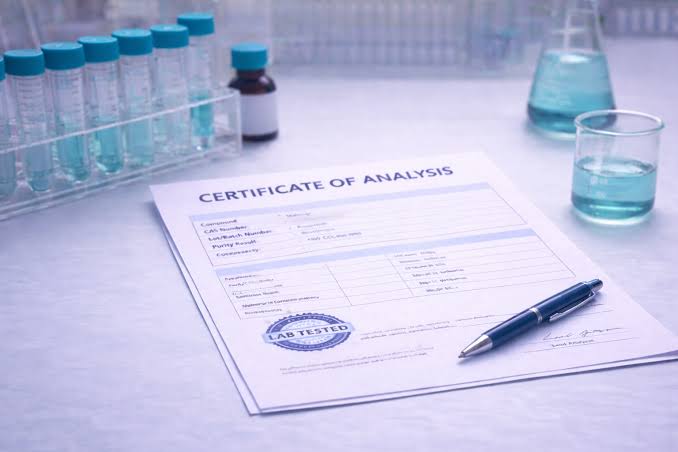
How to Verify That Certificates Are Genuine
Certificate fraud — the presentation of falsified or expired certificates — is a real risk in the global botanical ingredient supply chain. The following verification steps reduce this risk:
Check validity dates. Certificates have issue dates and expiry dates. Confirm that the certificate presented is current. GMP certificates typically require annual or biennial renewal following audit.
Verify the certifying body. Confirm that the organisation that issued the certificate is a legitimate, accredited certifying body. For GMP certificates, the issuing body should be a recognised national or international certification organisation. For organic certificates, the certifying agent should be accredited under the relevant programme (USDA, EU, NPOP).
Contact the certifying body directly. For significant supply relationships, contact the certifying body named on the certificate to confirm the certificate’s authenticity and current status. Most certification bodies maintain online registers of certified companies.
Cross-reference with public databases. FDA registration can be verified through the FDA’s public establishment inventory database. Some certification bodies publish searchable registries of certified companies.
Certification Requirements by Market: Quick Reference
| Market | Key Requirements |
|---|---|
| European Union | EU-GMP or WHO-GMP, EU Organic (or NPOP equivalent), relevant EU food safety standards |
| United States | FDA registration, cGMP compliance (21 CFR 111), USDA NOP for organic claims |
| UAE / GCC | WHO-GMP, Halal (ESMA-recognised body), CEPA Certificate of Origin |
| United Kingdom | UK-GMP (post-Brexit equivalent), UK organic certification |
| Japan | JHFA or relevant Japanese standards; J-GMP for pharmaceutical-grade |
| South Korea | MFDS compliance; Korean Health Functional Food registration requirements |
| Australia / NZ | TGA registration for therapeutic goods; FSANZ compliance for food ingredients |
Summary
Understanding the certification landscape for Indian herbal ingredient suppliers is not complexity for its own sake — it directly determines whether your ingredients can legally enter your target market, whether your finished products can make the claims you intend, and whether your supply chain will withstand regulatory scrutiny.
The strongest Indian herbal ingredient suppliers hold multiple certifications relevant to global markets — GMP, ISO 22000, organic, and Halal — and can provide current, verifiable documentation for each. These are the suppliers worth building long-term relationships with.
Frequently Asked Questions
What is the difference between WHO-GMP and EU-GMP for Indian herbal ingredient suppliers?
WHO-GMP is recognised across many Asian, African, and Middle Eastern markets including the UAE and GCC. EU-GMP is the most stringent standard, requiring facility inspection by an EU regulatory authority. It is required for ingredients entering European pharmaceutical and certain supplement supply chains. The number of Indian manufacturers holding genuine EU-GMP certification is relatively small — those who do represent a genuinely premium tier.
Is NPOP organic certification recognised in the EU?
Yes — India’s NPOP certification is recognised by the EU under a bilateral equivalence agreement. NPOP-certified Indian organic products can be sold as organic in the EU without separate EU organic certification. However, NPOP is not recognised by the US. For organic claims in the US market, separate USDA NOP certification is required.
What GMP certification do I need from Indian suppliers for the US market?
Suppliers must be registered with the US FDA and demonstrate compliance with 21 CFR Part 111 (cGMP for dietary supplements). FDA registration is a registration of the facility’s existence — not an inspection or approval. Look for suppliers who can demonstrate cGMP compliance verified by independent third-party audit from recognised bodies such as NSF International, SGS, or Bureau Veritas.
How do I verify that an Indian supplier’s GMP or organic certificate is genuine?
Check validity dates, verify the certifying body is legitimate and accredited, and contact the certifying body directly to confirm authenticity and current status. Many certification bodies maintain online registers of certified companies. FDA registration can be verified through the FDA’s public establishment inventory database. Certificate fraud is a real risk — direct verification is always worth doing for significant supply relationships.
What Halal certification is required for Indian herbal ingredients entering the UAE and GCC?
Halal certification is a market access requirement for most wellness, supplement, and food categories in the UAE and GCC. Not all Halal certifiers are recognised across all GCC markets. The UAE’s ESMA maintains a list of approved Halal certifying bodies. Always confirm that your supplier’s Halal certification is from an ESMA-recognised body before committing to supply for UAE distribution.
Further Reading: CoA, MSDS & Phytosanitary Certificates Explained · Herbal Ingredient Traceability & Supply Chain Integrity · How to Evaluate an Indian Herbal Ingredient Supplier
Ayris Global works exclusively with Indian herbal ingredient suppliers who hold the certifications relevant to your target market. To discuss supplier qualification for your specific requirements, visit our Quality page or contact us at sourcing@ayrisglobal.in.