ingredients
Boswellia Serrata Buyer's Guide: Sourcing Indian Frankincense Extract
28 May 2026
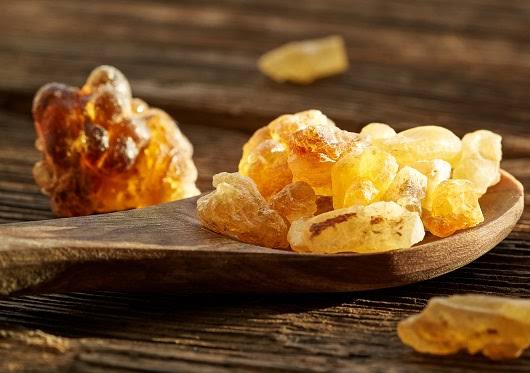
Boswellia serrata holds a curious position in the global joint-health ingredient market: a strong and growing body of clinical evidence supports its core use case, yet the underlying material is genuinely difficult to compare across suppliers. It is also frequently and incorrectly bundled into general frankincense sustainability concerns that apply to entirely different species and range states. This guide covers what the current evidence supports, why “Boswellia extract” from two different suppliers may not be the same thing even at an identical headline percentage, and the actual conservation picture for India-sourced material.
What Boswellia Serrata Is
Boswellia serrata, commonly called Indian frankincense or salai guggul, is a tree native to the dry deciduous forests of central and peninsular India. Unlike its African and Arabian relatives, which are tapped primarily for aromatic frankincense resin used in incense and fragrance, the Indian species is sourced almost entirely for its oleogum resin’s pharmacological content rather than its scent profile.
The resin is harvested by tapping the bark, a method that allows the tree to continue producing resin in subsequent seasons without being felled. The resin contains a family of pentacyclic triterpenic acids known as boswellic acids, with AKBA (3-acetyl-11-keto-beta-boswellic acid) generally regarded as the most pharmacologically active and most frequently targeted compound in standardized extracts. Boswellic acids are studied primarily for their inhibition of 5-lipoxygenase (5-LOX) and related inflammatory pathways, which is the mechanistic basis for the ingredient’s use in joint health and inflammatory-condition formulations.
What the Current Clinical Evidence Actually Shows
Boswellia has one of the more substantial clinical evidence bases among Ayurvedic botanicals, concentrated heavily on knee osteoarthritis. A 2025 systematic review and network meta-analysis covering 39 randomized controlled trials concluded that Boswellia significantly improved pain, stiffness, and function in knee osteoarthritis patients. This sits alongside a series of earlier and more recent placebo-controlled trials reporting similar directional benefit - a 2026 trial of a standardized extract reported significant reductions in WOMAC pain and function scores compared to placebo over 90 days, and earlier meta-analyses going back to 2020 reached broadly consistent conclusions about Boswellia’s effect on osteoarthritis pain and stiffness.
That overall direction is genuinely well-supported. The complication is comparability, and this is the section where buyer-facing content most often skips a detail that matters commercially.
A 2026 translational review examining Boswellia serrata preparations across the clinical literature found that studies differ substantially in resin sourcing, extraction method, standardization basis, and which specific boswellic acid analytes are measured and reported - and that these variables are frequently incompletely documented in the underlying papers. The review’s conclusion is direct: Boswellia serrata preparations sharing the same botanical label on the bottle remain analytically, pharmacokinetically, clinically, and regulatorily non-comparable to one another. In practical terms, a positive trial result for one company’s branded, AKBA-standardized extract does not automatically validate a different supplier’s total-boswellic-acid extract, even when both are correctly labeled “Boswellia serrata.”
There is also a meaningful trend toward combination formulations. Multiple recent trials pair Boswellia with turmeric/curcumin, reflecting genuine mechanistic complementarity between the two anti-inflammatory pathways, and a 2025 network meta-analysis of curcumin-Boswellia combination therapy for knee osteoarthritis found the combined approach effective, while noting that study heterogeneity and dosing variation across the underlying trials still leaves room for further standardization work.
The honest summary for buyers: Boswellia serrata has a real and reasonably mature clinical evidence base for joint health, stronger in aggregate than many other Ayurvedic botanicals. But “Boswellia works” is not the same claim as “this specific extract works,” and buyers formulating for a regulated market or referencing clinical research in marketing copy need to confirm that their sourced material’s standardization basis - total boswellic acids versus AKBA specifically, and at what percentage - actually matches the extract used in the study being cited.
Sourcing Boswellia for a joint health formulation? Ayris Global connects buyers with GMP-certified Indian suppliers offering standardized Boswellia serrata extract with documented AKBA or total boswellic acid content, plus full certificate of analysis support. Request samples
The Conservation Question: Why Boswellia Is Not One Story
General frankincense sustainability commentary, and even some formal international policy documents, often discuss “Boswellia” as a single conservation case. That framing does not hold up against species-specific data, and it matters for buyers who want an accurate sustainability position rather than a borrowed one.
The Boswellia genus spans roughly twenty species across India, the Horn of Africa, the Arabian Peninsula, and Yemen’s Socotra archipelago, and their conservation status varies enormously. Several Socotran and East African species have moved to Endangered or Critically Endangered status in recent IUCN Red List updates, driven by overgrazing, habitat loss, and in some cases unmanaged harvest pressure. Boswellia papyrifera, the primary African frankincense species, has been the subject of multiple studies projecting significant population decline. These are real and serious conservation concerns, but they describe African and Arabian range states - not the Indian species this guide, and Ayris Global’s supplier network, is concerned with.
Boswellia serrata, the species native to and sourced from India, was most recently assessed for the IUCN Red List in 2024 and is listed as Least Concern. The assessment describes the population as inferred stable, based on field observation, interviews with forest dwellers and forest officials, and herbarium and literature records confirming the species as dominant across dry deciduous forests in central and peninsular India, with more than 100 known locations, roughly half of which fall within protected areas or biosphere reserves. The assessment identifies no significant population threats beyond a few localized cases of habitat degradation from overgrazing, forest fires, or landslides, and specifically notes that the bark-tapping method used to collect the resin is sustainable and does not impact the long-term vitality of the tree.
The assessment also clears up a source of confusion in older policy documents: B. serrata was historically reported in Sri Lanka, a record the current IUCN assessment describes as lacking strong supporting evidence and now considers erroneous. Some international trade-policy documents referencing a “Critically Endangered” status for B. serrata appear to be drawing on that unresolved Sri Lankan record rather than the species’ actual, well-documented Indian population - which is the population virtually all commercial Boswellia serrata supply actually comes from.
The practical takeaway for buyers: Boswellia serrata sourced from India does not carry the conservation risk associated with African or Socotran frankincense species, and buyers can state this with reference to the current primary IUCN assessment rather than hedging the claim. That said, buyers should still confirm species and country of origin directly with any supplier, since “Boswellia” alone is not a sufficiently specific claim - the genus contains species in genuinely different conservation positions.
Sourcing Specifications: What to Request
Boswellia reaches B2B buyers in a small number of standard forms, and the standardization basis is the detail that most affects both price and comparability.
Crude oleogum resin is the least processed form, sold largely as raw tapped resin with minimal standardization. It is used in some traditional and incense-adjacent applications but rarely forms the basis of a joint-health supplement claim on its own.
Standardized extract powder is the dominant commercial form for nutraceutical use, and this is where buyers most need to slow down. Some suppliers standardize and report total boswellic acids; others standardize specifically to AKBA content, which is generally regarded as the more pharmacologically relevant single compound but is present at a much lower percentage of total resin weight than the broader boswellic acid family. A supplier quoting a total boswellic acid percentage and a supplier quoting an AKBA percentage are not directly comparable on potency without understanding which analyte each figure actually refers to - and conflating the two is a common buyer mistake.
Branded proprietary extracts exist as a distinct category, engineered for enhanced AKBA concentration or improved bioavailability relative to standard extract. These are the form used in many of the more recent and more rigorously controlled clinical trials, which is precisely the comparability issue raised above: a positive result for a named branded extract should not be assumed to transfer to a generic or differently standardized Boswellia powder.
Whatever the form, request the standard documentation baseline: current Certificate of Analysis specifying the boswellic acid or AKBA percentage and the analytical method used (typically HPLC), heavy metals, and microbial limits, plus GMP certification for the processing facility. Buyers intending to reference specific clinical research in their own marketing should request confirmation that the analyte basis and approximate percentage in their sourced material matches the extract used in the cited study - not just that both products share the species name on the label.
Summary: What to Get Right
Boswellia serrata combines a genuinely solid and improving clinical evidence base for joint health with a real standardization problem that buyer-facing content rarely addresses directly. The aggregate evidence across dozens of trials supports a real anti-inflammatory effect; what it does not support is the assumption that any product labeled “Boswellia serrata extract” delivers the same effect, since resin sourcing, extraction method, and which boswellic acid is measured and reported vary substantially across suppliers and studies.
On sourcing, the conservation picture is more favorable than general frankincense sustainability commentary suggests, but only for the Indian species specifically. Boswellia serrata’s 2024 IUCN assessment of Least Concern, with a stable population and a sustainable tapping method, is a meaningfully different position than the genuinely threatened Socotran and East African Boswellia species that some sustainability narratives conflate it with. Buyers who confirm species, country of origin, and standardization basis directly with their supplier are managing both a substantiation risk and an unnecessary reputational one.
Our article on the Shatavari buyer guide goes further.
Frequently Asked Questions
What is Boswellia serrata and what is it used for?
Boswellia serrata, also called Indian frankincense or salai guggul, is a tree native to India whose bark is tapped for an oleogum resin. The resin contains boswellic acids, most notably AKBA, studied for anti-inflammatory activity. It is most widely used in joint health and osteoarthritis-support formulations, and is also studied in combination with other anti-inflammatory botanicals such as turmeric.
Does clinical research support Boswellia for joint health?
Yes, with an important caveat. A 2025 network meta-analysis of 39 randomized controlled trials found Boswellia significantly improved pain, stiffness, and function in knee osteoarthritis patients. However, a 2026 translational review found that Boswellia preparations sharing the same botanical label are often not comparable, since studies differ in resin sourcing, extraction, standardization, and which boswellic acids are measured. Buyers should recognize that results from one branded extract do not automatically transfer to a different supplier’s material.
Is Boswellia serrata an endangered or conservation-restricted species?
The Indian source species, Boswellia serrata, was assessed by the IUCN Red List in 2024 and listed as Least Concern, with a stable population and no significant threats identified. This differs from several other Boswellia species native to Somalia, Yemen’s Socotra archipelago, and the Horn of Africa, which face genuine conservation pressure. Buyers should confirm species and country of origin, since conservation status varies sharply across the genus.
What forms does Boswellia extract come in for B2B buyers?
Indian suppliers typically offer crude oleogum resin, standardized extract powder graded by total boswellic acid or AKBA percentage, and branded proprietary extracts for enhanced AKBA concentration. Standardization basis varies between suppliers, so buyers should confirm which analyte a quoted specification refers to before comparing suppliers on price.
What certifications and documentation should a Boswellia buyer request?
Buyers should request a current Certificate of Analysis specifying the boswellic acid or AKBA percentage and analytical method, heavy metals and microbial limits, and GMP certification for the processing facility. Because standardization varies widely, buyers should also confirm the analyte basis used in any clinical study they intend to reference.
Further Reading: Turmeric & Curcumin Extract: A Complete Buyer’s Guide · GMP, ISO, FSSAI and Organic Certification for Indian Herbal Exports · Herbal Ingredient Traceability and Supply Chain · How to Evaluate an Indian Herbal Ingredient Supplier
Ayris Global connects qualified global buyers with verified, GMP-certified Indian producers of Boswellia serrata and other Ayurvedic botanicals, with full support for certificate of analysis documentation, standardization verification, and certification pathway guidance. To discuss your sourcing requirements, contact our team at sourcing@ayrisglobal.in or visit our products page.