ingredients
Turmeric & Curcumin Extract: A Complete Buyer's Guide for Global Ingredient Sourcing
24 May 2026
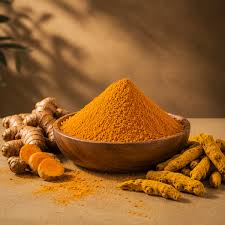
Turmeric has the rare distinction of being both a kitchen spice known to almost every household on earth and one of the most heavily researched botanical extracts in the global nutraceutical industry. Curcumin, the principal active compound class in turmeric, anchors a market spanning joint-health supplements, functional foods, cosmeceuticals, and pet nutrition - and India is the dominant global source of both the raw rhizome and the standardised extract.
For ingredient buyers, that scale is also where the complexity lives. “Curcumin extract” can mean a 20% colour-grade oleoresin or a 95% pharma-grade powder; it can be derived entirely from natural turmeric or blended with cheaper synthetic curcumin; and the bioavailability claims attached to many finished products rest on a more contested evidence base than the marketing copy usually suggests.
This guide covers what international buyers need to know: how curcumin extract is specified, what the bioavailability-enhancement landscape actually shows, the regulatory distinctions that matter most for EU and other markets, and how to evaluate Indian suppliers with confidence.
What Is Curcumin Extract?
Curcumin extract is derived from the dried rhizome of Curcuma longa (turmeric), a member of the ginger family cultivated extensively across India - particularly in Telangana, Maharashtra, Tamil Nadu, and the northeast states. The rhizome is cleaned, boiled, dried, and ground, then processed through solvent extraction and purification to concentrate the curcuminoids, the polyphenolic compounds responsible for turmeric’s colour and most of its studied bioactivity.
Curcuminoids are not a single compound. The group consists primarily of three related molecules - curcumin, demethoxycurcumin, and bisdemethoxycurcumin - present in natural turmeric extract in a fairly consistent ratio, typically with curcumin as the dominant fraction. Commercial extracts are most commonly traded at:
- 20% to 65% curcuminoids - used mainly for food colouring and lower-cost formulation
- 95% curcuminoids - the dominant commercial standard for nutraceutical and supplement applications, verified by HPLC
- Specialty bioavailability-enhanced formats - phospholipid complexes, liposomal formulations, and nanoparticle-based delivery systems, typically supplied at lower curcuminoid percentages but marketed on absorption performance rather than raw potency
Buyers should always request HPLC data showing the breakdown between the three individual curcuminoids, not just the total percentage. A natural 95% extract typically shows a consistent ratio across batches; a total percentage achieved by blending in synthetic single-peak curcumin will often show an unusual or inconsistent ratio.
The Bioavailability Question: What the Evidence Actually Shows
Curcumin’s biggest formulation challenge is also its most marketed selling point. Curcumin has very low water solubility and is rapidly metabolised after oral intake, meaning that a large proportion of standard curcumin extract is processed and eliminated before it ever reaches meaningful concentrations in the bloodstream.
This has driven a wave of “enhanced bioavailability” formulations, and buyers will encounter several distinct approaches in the market:
- Piperine co-administration - the traditional approach, pairing curcumin with black pepper extract (piperine), which research suggests can inhibit the liver enzymes that metabolise curcumin, increasing the time it circulates in the bloodstream
- Phospholipid complexes - curcumin bound to phospholipids to improve membrane permeability and absorption
- Liposomal formulations - curcumin encapsulated in lipid vesicles to protect it through digestion and improve uptake
- Nanoparticle and microemulsion systems - newer delivery technologies designed to dramatically increase the surface area and solubility of curcumin particles
Here buyers should apply some scepticism to absolute multiplier claims. Independent research on enhanced formulations has produced a wider range of findings than most marketing materials suggest. At least one rigorously controlled crossover study comparing several commercial enhanced formulations found that measured plasma curcumin levels remained very low across all of them, and that adding piperine produced no measurable additional benefit in that particular trial - a more conservative finding than some earlier pharmacokinetic work and considerably more conservative than figures sometimes quoted in industry marketing. Other formulation-specific studies have reported substantially higher relative bioavailability for certain phospholipid and liposomal products compared to standard curcumin powder.
The practical takeaway for buyers formulating finished products: ask suppliers for the specific clinical or pharmacokinetic data behind any bioavailability claim attached to a named formulation, rather than accepting a generic multiplier as an industry-wide fact. The underlying mechanism - poor native solubility, genuine room for formulation improvement - is well established. The exact size of the improvement varies by formulation and by study.
Ready to source verified curcumin extract? Ayris Global connects qualified international buyers with GMP-certified Indian producers - with full documentation support for EU, US, UAE/GCC, Japan, Korea, and other markets. Request samples
Regulatory Status: What Buyers Get Wrong Most Often
Curcumin’s regulatory position is more nuanced than most sourcing guides acknowledge, and getting it wrong creates real compliance risk for buyers placing product in regulated markets.
EU: E 100 vs. Novel Food Derivatives
Curcumin used as a colouring agent is an authorised EU food additive under the designation curcumin (E 100), produced by solvent extraction of turmeric rhizome. Standard curcumin extract supplied and used within this established specification is not classed as a Novel Food.
However, certain modified or derivative forms of curcuminoids have required separate Novel Food authorisation under Regulation (EU) 2015/2283. Tetrahydrocurcuminoids - produced by hydrogenating curcuminoids extracted from turmeric - went through a full EFSA safety assessment and were authorised with a maximum daily intake limit for the adult population, excluding pregnant and lactating women. This is a materially different regulatory pathway from standard curcumin extract, with its own authorisation conditions and labelling requirements.
The practical implication: if a supplier is offering anything beyond standard solvent-extracted curcuminoid powder - a chemically modified derivative, a proprietary complex, or a novel delivery format - buyers placing product into EU markets should confirm in writing whether that specific form has independent Novel Food clearance, rather than assuming any curcumin-derived ingredient is automatically covered by the existing food additive authorisation.
UAE/GCC, Japan, Korea, and Other Markets
Across UAE/GCC, Japan, Korea, ANZ, SEA, and LatAm markets, turmeric and curcumin extract are generally well-established as food and supplement ingredients with long histories of dietary use, and the regulatory bar is correspondingly more about documentation and certification than novel-ingredient authorisation. UAE/GCC buyers should confirm Halal certification from an ESMA-recognised body. Buyers in any market should confirm FSSAI standing for the exporting facility as a baseline signal of regulatory standing in India.
Key Certifications to Require
GMP Certification
WHO-GMP, EU-GMP, or US FDA-registered facility certification remains the baseline quality credential for any curcumin extract supplier serving regulated export markets, confirming process control, documentation discipline, and batch traceability.
Organic Certification
Organic turmeric and curcumin extract is available from India certified to NPOP, EU organic regulations, and USDA NOP standards. For buyers targeting premium positioning in EU or North American retail, certified organic supply commands a meaningful price premium and is increasingly an expected baseline rather than a differentiator.
A related question is covered in what drives curcumin 95% extract prices.
Heavy Metals Testing
Turmeric cultivation has a documented industry-wide risk of lead contamination, historically linked in some growing regions to soil contamination and to the use of lead chromate as an illegal colour-enhancing additive in raw turmeric. This makes heavy metals testing - specifically lead - a non-negotiable line item on the Certificate of Analysis for any turmeric or curcumin product, and buyers should treat a CoA that omits explicit heavy metals data as a serious red flag rather than a minor documentation gap.
What a Good Certificate of Analysis Contains
A credible Certificate of Analysis for curcumin extract should include:
- Product name and botanical name (Curcuma longa)
- Batch number and manufacturing date
- Total curcuminoid content (% by HPLC) and the individual ratio of curcumin, demethoxycurcumin, and bisdemethoxycurcumin
- Confirmation of natural vs. synthetic source - explicitly stated, not inferred
- Heavy metals - lead, cadmium, mercury, arsenic, with lead given particular attention given turmeric’s known contamination risk
- Pesticide residues screened against EU MRL limits or equivalent
- Microbial limits - total plate count, yeast and mould, E. coli, Salmonella
- Particle size and solubility characteristics where relevant to the buyer’s formulation
- Shelf life and recommended storage conditions
Evaluating Indian Suppliers
The same evaluation discipline that applies across botanical extract sourcing applies with particular force to curcumin, given the adulteration risk in this specific category.
Request the individual curcuminoid ratio, not just the headline percentage. This is the single most useful technical question for screening out blended or partially synthetic product before it reaches a formal sample stage.
Ask directly whether the product is natural, synthetic, or blended. A credible supplier will answer this question plainly and provide supporting documentation. Evasiveness or a refusal to confirm source composition in writing is a significant negative signal.
Request the facility’s heavy metals testing protocol specifically for lead. Given turmeric’s documented contamination history, a supplier with a robust, routinely applied lead-testing protocol is demonstrating category-specific quality discipline, not just generic compliance.
Test the sample independently before committing to volume. Request a 100g to 500g sample and have it tested by an accredited laboratory for curcuminoid ratio, heavy metals, pesticide residues, and microbial limits before placing a commercial order.
Summary: What to Get Right
Sourcing curcumin extract well comes down to four things: confirming the curcuminoid ratio rather than trusting a headline percentage, understanding which regulatory pathway applies to the specific form being supplied (particularly for EU buyers evaluating anything beyond standard extract), treating bioavailability claims with appropriate scepticism until backed by formulation-specific data, and testing independently for heavy metals given the category’s known contamination risk.
India remains the world’s largest source of turmeric and curcumin extract. Sourcing it well means engaging with that scale and complexity directly, rather than treating curcumin as a commoditised, interchangeable ingredient.
Frequently Asked Questions
What is the standard curcuminoid specification for curcumin extract?
The most widely traded commercial specification is 95% curcuminoids by HPLC, sometimes broken into a named ratio of curcumin, demethoxycurcumin, and bisdemethoxycurcumin. Lower-grade extracts at 20% to 65% are also traded, mainly for food colour use. Always confirm both the total percentage and the analytical method on the CoA.
Is curcumin extract a Novel Food in the EU?
Standard curcumin extract used as the authorised EU food additive curcumin (E 100) is not classed as a Novel Food. Certain modified derivatives, such as tetrahydrocurcuminoids, have required separate Novel Food authorisation with EFSA-assessed maximum daily intake limits. Confirm with your supplier exactly which form is being supplied.
Does adding piperine actually improve curcumin absorption?
The evidence is mixed. Some pharmacokinetic research shows a meaningful increase in blood curcumin levels with piperine; at least one independent crossover study found no measurable benefit. Treat piperine as one of several bioavailability options rather than a guaranteed multiplier, and ask for formulation-specific data behind any claim.
What certifications should I require from an Indian curcumin extract supplier?
At minimum: GMP certification, a full CoA with HPLC curcuminoid ratio data, heavy metals testing (with particular attention to lead), and microbial limits. EU buyers should confirm whether the product requires separate Novel Food clearance. UAE/GCC buyers should add Halal certification from an ESMA-recognised body.
How do I check for curcumin adulteration before placing an order?
Request the individual curcuminoid ratio rather than just a total percentage, ask directly whether the product contains synthetic curcumin, and test independently before committing to volume - particularly for any quote significantly below the prevailing market range.
Further Reading: Ashwagandha Extract: A Complete Buyer’s Guide · Herbal Extract vs. Botanical Powder: What Buyers Need to Know · Your First Order from India: A Step-by-Step Guide
Ayris Global sources verified curcumin extract and a wide range of Indian botanical ingredients for qualified international buyers. To discuss your specification requirements, contact our team at sourcing@ayrisglobal.in or visit our products page.