sourcing
How Herbal Ingredient Prices Are Determined: A Buyer's Guide to Cost Drivers in Indian Botanical Sourcing
14 June 2026

When international buyers compare quotes for Indian herbal ingredients, price variation between suppliers is almost always the first question that arises. The same ingredient - ashwagandha root extract, turmeric curcumin, moringa leaf powder, boswellia resin extract - can carry prices that differ substantially across suppliers responding to the same enquiry. Understanding why requires understanding the cost structure of Indian herbal ingredient manufacturing, not just the market price.
A related question is covered in what ashwagandha extract costs from India.
This guide explains the primary cost drivers that determine the price of a botanical ingredient sourced from India, the factors that cause prices to vary between suppliers and over time, and what buyers should look for when evaluating a quote to assess whether a price difference reflects genuine value or undisclosed quality trade-offs.
The Cost Stack: What Goes Into an Indian Herbal Ingredient Price
The price of an Indian botanical extract or herbal powder reflects a stack of costs, each of which varies by ingredient, specification, supplier, and market conditions. The relative weight of each cost component shifts between ingredients, but the structure is consistent.
Raw Material Cost
For most herbal extracts, raw material is the dominant cost component. The dried plant material - root, leaf, bark, resin, seed, or rhizome - must be sourced, cleaned, dried, and tested before entering the manufacturing process. The cost of raw material is affected by:
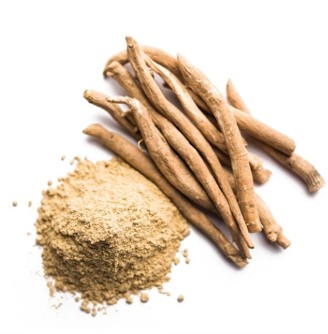
Cultivation and harvest geography. Many Ayurvedic ingredients are cultivated in specific regions of India where soil, altitude, and climate produce the phytochemical profile required for quality extract production. Ashwagandha root is predominantly sourced from Rajasthan and Madhya Pradesh. Boswellia resin comes primarily from the Chhattisgarh and Madhya Pradesh forests. Shatavari root is concentrated in specific forest and cultivated zones. Supply from the authentic growing region carries a premium over material sourced from alternative geographies, where phytochemical yield may be lower.
Seasonal availability. Most Ayurvedic herbs have defined harvest seasons. When supply is tight - due to weather events, poor harvest years, or high demand from multiple industries simultaneously - raw material prices rise, and those increases flow through to finished ingredient prices. A quote received during or immediately after a poor harvest season will reflect a different raw material cost structure than one received six months later.
Wild-harvested versus cultivated material. Some high-value Ayurvedic ingredients are still predominantly wild-harvested from natural forest areas rather than cultivated at scale. Wild-harvested material is subject to more variable supply and may carry a premium, but is also subject to concerns about sustainability and traceability.
Organic versus conventional. Certified organic cultivation prohibits synthetic pesticide and fertiliser inputs, typically reducing yields and increasing labour cost per unit of output. Organic-certified raw material carries a higher cost per kilogram than conventional equivalents.
Extraction Ratio and Processing Complexity
For extracts (as distinct from whole-herb powders), the extraction ratio - the weight of dried plant material required to produce a unit of finished extract - is a primary cost multiplier. A 10:1 extraction ratio means ten kilograms of dried raw material are required to produce one kilogram of finished extract. A 20:1 ratio doubles that raw material input requirement.
Beyond the ratio, the extraction process itself carries costs: solvents or water used in extraction, energy for heating and evaporation, spray-drying or freeze-drying of the concentrated extract, and waste management for spent plant material and process effluents. More complex extraction processes - for example, those required to isolate or concentrate specific active constituents - add further cost at the processing stage.
Standardisation and Quality Control
Standardised extracts - those guaranteed to contain a minimum level of a defined active constituent - carry a premium over non-standardised or whole-herb material. Producing a standardised extract requires:
- Testing the raw material batch before processing begins, to determine the active constituent content of the incoming material
- Controlling extraction and concentration parameters to achieve the target specification
- Blending batches where needed to reach a consistent specification across production runs
- Release testing of each finished batch against the declared standard using validated analytical methods
Each of these steps adds laboratory cost and manufacturing complexity. The higher the standardisation level and the tighter the specification tolerance, the greater the cost. A commodity-grade turmeric powder and a high-specification curcumin extract standardised to a defined curcuminoid percentage are categorically different products with categorically different cost structures - even if both begin with the same raw material.
Laboratory Testing and Certification
A meaningful quality control program adds material cost to every batch produced. Batch-specific testing against parameters covering botanical identity, active constituent assay, moisture, heavy metals, pesticide residues, and microbial limits requires either an in-house laboratory of significant capability or third-party testing at NABL-accredited external laboratories. Either route has real cost.
Third-party certification programs - GMP certification audited by SGS, Bureau Veritas, NSF, or equivalent; organic certification under NPOP, USDA NOP, or EU organic; Halal or Kosher certification; ISO 22000 or FSSC 22000 food safety management certification - all carry annual audit fees and maintenance costs that flow through to ingredient prices. A supplier maintaining multiple certification credentials for multiple target markets carries a higher overhead than one operating without third-party certification.
The cost of testing and certification is fixed overhead that is spread across production volume. For smaller production runs or specialty ingredients produced in lower volumes, the per-unit certification cost is proportionally higher.
Packaging and Export Logistics
Export-grade packaging - double-lined HDPE drums or aluminium foil bags with heat sealing, silica gel desiccation, and tamper-evident closure - adds cost over bulk domestic packaging. Labeling requirements for export (including lot number, manufacture and best-before dates, country of origin, ingredient specification, and any market-specific labeling requirements) add further overhead.
Export logistics from India - freight forwarding, customs clearance and phytosanitary inspection, air freight or sea freight costs depending on order size and urgency, and insurance - are typically priced separately but affect the landed cost calculation that determines actual procurement economics.
Supplier Overheads and Compliance Infrastructure
A supplier maintaining a qualified regulatory affairs team, an export compliance function, documented supplier contracts with farmers, farm-level traceability records, and the administrative infrastructure to produce complete export documentation packages carries higher fixed overheads than a trading company without these capabilities. These overheads are real costs that are reflected in quoted prices.
Why Prices Vary Between Suppliers
When two Indian suppliers quote different prices for the same ingredient description, the variation almost always reflects one or more of the following:
Specification differences. The quotes are not for equivalent products. One may be for a higher extraction ratio, higher standardisation level, or tighter purity specification than the other. Confirm the extraction ratio, standardisation level, moisture specification, and testing scope before treating quotes as comparable.
Testing scope differences. One supplier tests every batch for heavy metals, pesticide residues, and microbial parameters using validated methods. Another tests identity and assay only, or uses in-house methods without external accreditation. The difference in testing overhead is real and is reflected in price.
Raw material sourcing differences. One supplier sources directly from contracted farmers in the authentic growing region with farm-level documentation. Another buys from spot markets or intermediary traders, accepting variable raw material quality and limited traceability. Direct farm sourcing is more expensive but produces more consistent and traceable material.
Certification overhead differences. A supplier maintaining GMP certification, organic certification, and multiple market-specific compliance credentials carries overhead costs that a non-certified supplier does not.
Batch size and production run economics. Smaller production runs and specialty ingredients carry higher per-unit costs. A supplier producing a high-volume commodity ingredient at scale can offer different economics than one producing specialty Ayurvedic actives in smaller batches.
Trading company versus manufacturer pricing. Some suppliers are trading companies - intermediaries who source from manufacturers and add a margin. Others are vertically integrated manufacturers with direct control from raw material through finished extract. Both models exist legitimately, but their cost structures and the accountability they can provide differ.
Price Variation Over Time: Market Dynamics
Indian herbal ingredient prices are not stable year-round. Several factors drive price movement over time:
Harvest outcomes. Annual harvest quality and quantity for perennial crops, or planting area decisions for annual crops, affect raw material supply across an entire season. A drought year in Rajasthan affects ashwagandha raw material supply across the industry.
Domestic demand competition. Indian AYUSH manufacturing is a large and growing domestic industry. When domestic demand for certain raw materials increases, it competes with export-oriented supply and can tighten availability and push prices upward.
Currency movements. The USD-INR and EUR-INR exchange rates affect the effective price of Indian ingredients for international buyers. Buyers pricing in currencies that have strengthened against the Indian rupee benefit from improved economics; those in currencies that have weakened face higher effective costs.
Global ingredient demand cycles. When a specific ingredient gains significant commercial attention in international wellness markets, global demand can move faster than Indian cultivation can scale, creating temporary supply tightness and price spikes.
Regulatory changes. Changes in Indian export regulations, phytosanitary requirements from import countries, or new certification requirements from target markets can create compliance-driven cost increases that flow through supply chains.
What Buyers Should Do With This Information
Understanding cost drivers changes how you evaluate supplier quotes and make sourcing decisions.
Compare equivalent specifications. Before comparing prices, confirm that the specifications are identical: extraction ratio, standardisation level, moisture content, testing parameters, and packaging format. A lower quote for a materially different specification is not a better price for the same product.
Request documentation alongside quotations. A GMP audit certificate, a sample Certificate of Analysis from a recent batch, and an organic certification document (if applicable) confirm the compliance infrastructure behind the quoted price. A supplier unable to provide these documents at quotation stage is offering a price without a documentable quality basis.
Treat unusually low quotes as a flag, not a bargain. When a quote is substantially below the range of other suppliers for an equivalent specification, the most likely explanation is a lower-cost quality structure: less testing, weaker documentation, spot-market raw material, or no third-party certification. These trade-offs may be invisible in the first shipment and surface as a quality non-conformance, a failed import inspection, or a customer complaint further down the supply chain.
Account for total landed cost. The quoted price per kilogram is not the procurement cost. Add freight, insurance, import duties in your market, customs clearance fees, and any third-party testing you conduct on receipt. A supplier with a slightly higher quoted price but more reliable documentation and consistent quality may carry lower total procurement cost when failures, retesting, and supply disruptions are included.
Build supplier relationships that allow price transparency. A qualified, long-term Indian supplier relationship allows for more transparent pricing discussions - understanding which cost components are driving a price increase in a given season, whether substituting a specification adjustment can manage cost without quality compromise, and whether longer-term supply commitments can secure better economics than spot purchasing.
The Quality-Price Relationship in Practice
For international buyers operating in regulated markets - the EU, USA, UK, Japan, Korea, ANZ, and GCC - the cost of a quality non-conformance or a compliance failure is substantially higher than the price premium for a properly certified and tested ingredient. An import refusal, a batch recall, a regulatory warning letter, or a customer quality complaint does not have a convenient financial comparison to the price differential between a compliant and a non-compliant supplier.
The buyers who build durable, low-friction India supply chains are typically those who start from a quality and compliance baseline and then work with qualified suppliers to optimise cost - not those who start from a target price and work backward to find a supplier willing to meet it. The Indian ingredient supply base has a wide range of quality tiers, and the price signal is generally an accurate guide to where on that range a given supplier sits.
Sourcing herbal ingredients from India? Ayris Global works with verified Indian producers who provide complete quality documentation and consistent supply. Contact our sourcing team to discuss your ingredient requirements, or visit our For Buyers page for more detail on how we qualify suppliers.
Frequently Asked Questions
Why do herbal ingredient prices vary so much between Indian suppliers?
Price variation between Indian herbal ingredient suppliers reflects genuine differences in quality investment. Suppliers with third-party GMP certification, NABL-accredited laboratory testing, organic certification, and traceability systems carry higher fixed costs. Raw material sourcing practices also differ: suppliers who contract directly with farmers and control the supply chain from cultivation through processing offer consistency and documentation that spot-market sourcing cannot. A significant price gap between suppliers almost always reflects a quality and compliance gap.
What is the biggest cost driver in Indian herbal extract manufacturing?
For most herbal extracts, raw material is the largest cost component. The extraction ratio - the weight of raw plant material required per kilogram of finished extract - determines how much raw material input is required. A 10:1 extract requires ten kilograms of dried plant material per kilogram of finished extract. When raw materials are seasonal, weather-affected, or in high demand from multiple industries, this multiplier makes cost highly sensitive to supply conditions. After raw material, solvent costs, energy, laboratory testing, packaging, and certification maintenance are the next largest components.
Does organic certification make Indian herbal ingredients significantly more expensive?
Yes, typically. Certified organic herbal ingredients carry a meaningful premium over conventional equivalents. Organic cultivation prohibits synthetic pesticides and fertilisers, which generally reduces yields and increases labour input per unit of output. Organic certification requires annual audits, separate storage and handling, and additional documentation at every supply chain stage. For export markets, USDA NOP or EU organic certification adds further cost relative to Indian NPOP-only certification. Any quote for certified organic material that closely matches conventional pricing should be treated as a documentation risk flag.
How does standardisation affect the price of a herbal extract?
Standardised herbal extracts - those guaranteed to contain a minimum percentage of a defined active constituent - command a premium over non-standardised extracts. The premium reflects additional manufacturing complexity: testing raw material before processing, controlling extraction parameters, blending batches to achieve consistent specification, and lot-level release testing against the declared standard. Higher standardisation levels require more raw material input and more rigorous quality control. A 95 percent curcuminoid extract carries a substantially higher cost per kilogram than a 10:1 non-standardised turmeric extract.
What documentation should I request to understand why a supplier quote is priced the way it is?
Request the following alongside any quotation: a current third-party GMP audit certificate with scope and validity date; a sample Certificate of Analysis from a recent batch showing testing methods, parameters, and the accreditation status of the testing laboratory; organic certification documents if organic pricing is quoted; and the grade specification sheet confirming the extraction ratio, standardisation level, and moisture specification. If a supplier cannot provide these documents at quotation stage, the pricing structure is not transparent and the compliance risk is unquantified. Price comparisons between suppliers are only meaningful when specifications, testing scope, and compliance credentials are confirmed as equivalent.
Related Reading: How to Qualify and Audit an Indian Ayurvedic Ingredient Supplier - CoA, MSDS and Phytosanitary Certificates: The Complete Import Documentation Guide - How to Evaluate an Indian Herbal Ingredient Supplier
Ayris Global connects international buyers with verified Indian producers of botanical extracts, Ayurvedic actives, herbal powders, and nutraceutical ingredients. To discuss your sourcing requirements, contact us at sourcing@ayrisglobal.in or visit our For Buyers page.