market-intelligence
South Korea Botanical Extracts Market: Indian Supplier Guide
20 May 2026
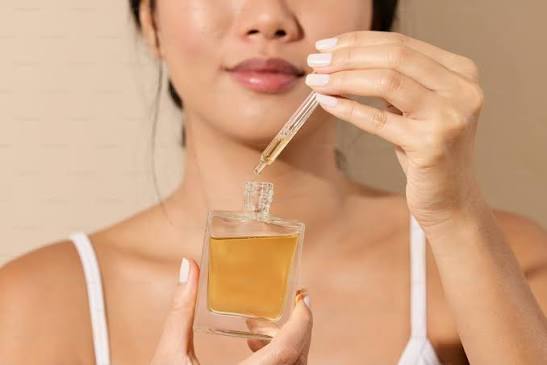
South Korea occupies a distinctive position in the global wellness economy. It is simultaneously a major consumer of health and wellness products, a sophisticated originator of wellness trends that propagate globally through K-beauty and K-wellness culture, and a technically demanding buyer market where quality standards and regulatory compliance expectations are among the most exacting in the world.
For Indian botanical extract suppliers, South Korea represents a high-effort, high-reward market. The barriers to entry are real, and they are procedural rather than commercial: Korea is not short of buyer demand, it is short of suppliers who can navigate its ingredient-approval system correctly on the first attempt. For suppliers who clear that bar, the commercial relationship tends to be durable, professionally managed, and capable of generating consistent long-term volume.
Buyers working through this point may also find Japan and South Korea requirements for Lakadong turmeric useful.
This guide covers what Korean buyers need to know about sourcing Indian botanical extracts: the regulatory pathway, the documentation a supplier must provide, realistic MOQ and lead time expectations, and how to initiate a sourcing conversation that moves efficiently from sample to commercial order.
Market Size and What’s Actually Driving It
South Korea’s population of roughly 52 million sustains one of the highest per-capita health product expenditure rates in Asia. According to Ministry of Food and Drug Safety data, domestic sales of health functional foods reached approximately KRW 3.77 trillion in 2023, with a further KRW 1.4 trillion in imports, and total market demand grew at a compound annual growth rate of approximately 8.5% between 2019 and 2023. Industry trade data places the broader supplement segment at roughly USD 4.7 billion in 2023, with growth projected to continue through the rest of the decade as e-commerce penetration deepens.
That growth concentrates around structural drivers that matter directly to ingredient buyers:
A health-literate consumer base with high clinical expectations. Korean consumers treat standardised, clinically substantiated ingredients as a baseline requirement, not a premium differentiator. Standardised extracts with defined active constituent content are close to a market access requirement for finished-product manufacturers competing on quality positioning.
An active individually-approved-ingredient pipeline. Korea does not operate a closed approved-ingredient list. It runs an active regulatory pathway through which new ingredients — including botanical extracts with no prior Korean market history — can earn formal recognition. This means an Indian extract with strong analytical documentation has a real route to market.
E-commerce as the dominant channel. A majority of health product purchases in Korea now happen online, compressing the time between a formulator deciding they want an ingredient and that ingredient needing to be sourced, qualified, and shipped. Suppliers who respond quickly on samples and documentation have a real competitive advantage.
The Regulatory Pathway: What an Indian Extract Must Clear
South Korea’s Ministry of Food and Drug Safety (MFDS) regulates health functional foods under the Health Functional Food Act. There are two categories relevant to Indian botanical extract buyers:
Already-recognised functional ingredients. As of mid-2025, Korea recognised 28 approved nutrients and 69 functional ingredients with established health-claim wording. If an Indian extract’s active constituent matches one of these recognised ingredients at the required specification, the regulatory path for the buyer’s finished product is comparatively straightforward.
Individually Recognised Functional Ingredients. As of mid-2025, there were 444 individually approved functional ingredients in the Korean market. Individual Recognition requires the applicant — typically the Korean importer or finished-product manufacturer — to submit clinical trial data, safety data, and detailed specification data to MFDS. Once granted, the recognition applies exclusively to the applicant, creating a genuine competitive moat against other Korean brands attempting to use the same ingredient with the same claim.
For Korean buyers sourcing Indian extracts, the practical implication is this: an Indian supplier who can provide the underlying analytical and stability data that supports an Individual Recognition submission — not just a COA for a single batch — is materially more valuable than one who cannot. Ayris Global treats this documentation preparation as a shared workstream with serious buyers, not a problem we leave buyers to solve alone.
Documentation Checklist for Korean Import and MFDS Compliance
This is the document set a Korean buyer will require from an Indian botanical extract supplier. Gaps in this list are the most common reason sourcing discussions stall.
Standard import documentation (required for every shipment):
- Certificate of Analysis (COA), batch-specific and signed
- Material Safety Data Sheet (MSDS)
- Phytosanitary Certificate issued by NPPO India
- Form IK Certificate of Origin (for CEPA preferential duty)
- Commercial invoice and packing list with HS code
- Product specification sheet with active constituent ranges, appearance, solubility, and shelf life
Quality and compliance documentation (required for MFDS qualification):
- Heavy metal test results (lead, cadmium, arsenic, mercury)
- Pesticide residue test results
- Microbial load test results
- GMP certificate for the manufacturing facility
- FSSAI licence for the Indian producer
For MFDS Individual Recognition submissions (provided on request):
- Stability data (minimum 6-month accelerated stability preferred)
- Batch-to-batch specification consistency data
- Safety documentation and any available clinical or toxicological references
- Technical data sheet in a format compatible with MFDS submission requirements
Ayris Global maintains this full document set for all verified Indian producers on the platform and supplies it as standard to qualified buyers initiating a sourcing relationship. If you are comparing suppliers and one cannot provide the complete set above, that gap is a supply risk, not a paperwork technicality.
MOQ and Lead Times: What to Expect
Korean buyers qualifying a new ingredient typically run two distinct phases: a sample qualification phase and a commercial order phase. The documentation, MOQ, and timeline expectations differ meaningfully between them.
Sample phase:
- Typical sample quantities: 100 g to 500 g per ingredient
- Sample dispatch: airfreight, 3 to 5 business days transit to Korea
- Sample preparation and dispatch lead time: 7 to 10 business days from confirmed sample request
- Sample documentation: full COA, MSDS, and specification sheet supplied as standard — not on request
Commercial orders:
- Minimum commercial quantities for standardised extracts: typically from 25 kg
- Production and dispatch lead time: 3 to 5 weeks from confirmed purchase order, depending on extract type and current production cycle
- Shipping mode: sea freight for established repeat orders; airfreight available for urgent requirements or partial shipments
- Lead time for Form IK Certificate of Origin: factor in 5 to 10 business days for issuing authority processing when planning your first CEPA-rate shipment
One lead time factor Korean buyers frequently underestimate: the Form IK certification process requires pre-export application to an authorised Indian Issuing Authority. This is not a document that can be generated post-shipment. Build it into your procurement timeline from the first order.
How to Request Samples and Initiate a Sourcing Conversation
A structured sample request accelerates the qualification timeline and prevents the back-and-forth that delays first-order placement. Here is the process Ayris Global follows:
Step 1 — Send a sourcing inquiry. Email sourcing@ayrisglobal.in with:
- Ingredient name and the standardisation or specification you require (e.g., ashwagandha root extract, 5% withanolides by HPLC)
- Intended application (health functional food, cosmetic ingredient, functional beverage, other)
- Target commercial quantity and expected order frequency
- Any specific MFDS requirements or documentation constraints relevant to your product category
Step 2 — Receive a qualification package. Ayris Global will confirm availability and pricing, share the full specification sheet and available documentation for your review, and confirm the sample dispatch timeline.
Step 3 — Evaluate the sample. Conduct your internal analysis. Ayris Global will follow up within 10 business days to address any specification questions or request additional documentation.
Step 4 — Move to commercial terms. Once the sample meets specification, Ayris Global will issue a commercial offer with full pricing, MOQ, lead time, and payment terms. The documentation set for the first commercial shipment, including Form IK preparation, is coordinated from this point.
Contact us at sourcing@ayrisglobal.in or visit the For Buyers page to start this process.
The India-Korea CEPA: Duty Advantage and What’s Changing
India and South Korea operate under the India-Korea Comprehensive Economic Partnership Agreement (CEPA), in force since January 2010, which provides preferential tariff treatment for many botanical and herbal ingredient categories versus the standard MFN duty rate.
To claim CEPA preferential duty, the shipment must be accompanied by a Form IK Certificate of Origin. The IK-CEPA operates as a government-certification system: the Indian exporter applies to an authorised Issuing Authority for pre-export verification of origin, and that authority examines the application before issuing the certificate. Without a valid Form IK, customs assesses the shipment at the standard MFN rate.
Two developments are making this a more active compliance area:
India has tightened its origin-verification regime. Notifications issued in 2025 replaced the older certificate-of-origin model with a more comprehensive proof-of-origin standard, giving Indian Customs expanded authority for post-clearance verification. Treat the Form IK as a substantive compliance document, not a formality.
A CEPA upgrade is under active discussion. Indian and Korean trade officials have engaged on enhancing CEPA and addressing non-tariff barriers. The direction of travel is toward demonstrable economic substance behind origin claims. For Indian botanical exporters, this reinforces the same conclusion as the MFDS pathway: documentation depth and traceability are the real competitive differentiator.
What Korean Buyers Are Sourcing
Skin Health and Nutricosmetics
Nutricosmetics targeting skin radiance, anti-ageing, hydration, and clarity are a significant and growing product category. Indian botanical extracts including turmeric, curcumin, amla, manjistha, and shatavari have credible functional positioning here. Korean beauty-supplement formulators are actively scouting for differentiated Ayurvedic actives to set their products apart from saturated collagen and hyaluronic acid categories.
Adaptogenic Supplements
Ashwagandha has achieved meaningful awareness in the Korean supplement market. Adaptogenic positioning resonates naturally with Korean wellness culture’s own traditional adaptogen, ginseng — the cultural frame of reference already exists among consumers, which lowers the education burden relative to markets where adaptogens are a newer concept.
Functional Food and Beverage
Korean food culture has a sophisticated tradition of functional ingredients integrated into everyday foods and beverages. This creates entry points for Indian botanical powders and extracts in formats beyond capsules and tablets: functional teas, beverage powders, and food-integrated formats all have real traction.
A related question is covered in LATAM market entry for Indian herbal suppliers.
Key Buyer Categories in the Korean Market
Health Functional Food Manufacturers formulating dietary supplements and HFF products under MFDS registration. Qualification timelines are long, but resulting relationships are stable and resistant to opportunistic switching. Korean manufacturers do not want to repeat a regulatory submission with a new supplier without strong reason.
K-Beauty Ingredient Buyers sourcing botanical extracts for topical and ingestible-beauty formulations. Indian botanicals including turmeric, neem, amla, and hibiscus are appearing with increasing frequency in K-beauty formulations as Korean brands look for ingredient stories that differentiate from competitors.
Trading Companies and Specialist Importers can provide market access, regulatory guidance, and local-language support through the MFDS submission process. For Indian suppliers entering Korea for the first time, a relationship with a reputable Korean trading company is often the most efficient initial channel.
Start a Sourcing Conversation
If you are a Korean health functional food manufacturer, supplement brand, K-beauty formulator, or trading company sourcing Indian botanical extracts, Ayris Global works with verified Indian producers across all major botanical extract categories.
What we provide:
- Standardised extracts with GMP-compliant documentation and FSSAI-certified supply chains
- Full documentation package for MFDS compliance and CEPA duty qualification
- Sample dispatch with complete documentation within 7 to 10 business days
- Technical support for MFDS Individual Recognition documentation preparation
- Traceability to Indian producer level
To begin: Email sourcing@ayrisglobal.in with your ingredient, specification, and application details. Or visit our For Buyers page for an overview of how Ayris Global works with international buyers. See the full products range for available ingredients.
We respond to all qualified sourcing inquiries within one business day.
Frequently Asked Questions
What is the minimum order quantity for Indian botanical extracts shipped to South Korea?
For standardised extracts such as ashwagandha or curcumin, commercial orders typically begin at 25 kg, with sample quantities of 100 g to 500 g available for qualification and MFDS documentation purposes. Lead times for samples are generally 7 to 10 business days from order confirmation, with commercial orders shipping within 3 to 5 weeks. Samples include full COA, MSDS, and specification sheet as standard.
What documents does an Indian botanical extract supplier need to provide for Korean import clearance?
A Korean importer will typically require: batch-specific Certificate of Analysis (COA), Material Safety Data Sheet (MSDS), Phytosanitary Certificate from NPPO India, Form IK Certificate of Origin for CEPA preferential duty, product specification sheet, and heavy metal and pesticide residue test results. For MFDS Individual Recognition submissions, stability data and safety documentation are also required. Ayris Global provides all of these as standard documentation for qualified buyers.
How do I request a sample of Indian botanical extracts from Ayris Global for Korean market qualification?
Send a sourcing inquiry to sourcing@ayrisglobal.in with the ingredient name, specification level, intended application, and target commercial quantity. Ayris Global will confirm availability, dispatch a sample with full documentation, and follow up with a commercial offer once you have evaluated the material.
Can Ayris Global support the MFDS Individual Recognition documentation process?
Yes. For Korean buyers pursuing MFDS Individual Recognition for an ingredient not on the recognised list, Ayris Global provides the underlying documentation including batch COAs, specification validation data, stability studies where available, and technical data sheets. The formal MFDS submission is the responsibility of the Korean applicant; Ayris Global treats the documentation preparation as a collaborative process.
What Indian botanical extracts are available for immediate supply to Korean buyers?
Ayris Global supplies standardised botanical extracts including ashwagandha, turmeric and curcumin, amla, shatavari, manjistha, tulsi, moringa, and boswellia, among others. All extracts are available with GMP-compliant documentation, FSSAI-certified supply chain, and full traceability. Contact sourcing@ayrisglobal.in for the current product list, specifications, and availability.
Further Reading: India-UAE CEPA and Herbal Ingredient Buyers | Adaptogens: Ashwagandha, Shatavari, Brahmi and Global Demand | GMP, ISO, FSSAI and Organic Certification for Indian Herbal Exports
Ayris Global works with verified Indian producers of herbal extracts, Ayurvedic ingredients, and botanical powders to connect them with qualified buyers across South Korea and globally. To discuss your sourcing requirements or supplier partnerships, contact us at sourcing@ayrisglobal.in.