market-intelligence
India's Natural Products Export Industry: A Complete Overview for International Buyers
14 May 2026
India has been a source of medicinal plants, spices, and botanical knowledge for more than five thousand years. What has changed in the past decade is the scale, sophistication, and global reach of the industry built around that heritage. Today, India exports nearly USD 700 million in herbal and Ayurvedic products every year to over 100 countries â and the trajectory is firmly upward.
For international buyers sourcing botanical extracts, herbal powders, Ayurvedic actives, nutraceutical ingredients, and essential oils, India represents one of the most strategically important sourcing destinations in the world. Understanding the structure of the Indian natural products export industry â what it produces, how it is regulated, which markets it serves, and how to navigate it as a buyer â is foundational intelligence for anyone operating in the global wellness supply chain.
A related question is covered in GCC regulators and import routes for herbal products.
This overview provides exactly that: a structured briefing on the Indian natural products export industry, written for international procurement teams, product developers, brand founders, and sourcing managers who want to make informed, confident decisions about India as a supplier country.
The Scale of India’s Natural Products Export Industry
India’s herbal and AYUSH product exports have grown consistently over the past decade, reflecting rising global demand for plant-based health, wellness, and nutrition products. According to the Indian Ministry of Commerce and the AYUSH Export Promotion Council (AYUSHEXCIL), India exported approximately USD 689 million in AYUSH and herbal products in fiscal year 2024â25 â a 5.86% increase in value and a 21.46% increase in volume compared to the previous year, with total export volume reaching 128,738 metric tonnes.
The botanical extracts segment within this broader industry is growing faster still. Market research firm Market Research Future estimates that India’s botanical extracts market was valued at approximately USD 447 million in 2024 and is projected to reach over USD 1 billion by 2035, representing a compound annual growth rate of around 7.6%. The nutraceutical ingredient sector â where Indian herbal actives are increasingly used as standardised functional components â is growing at an even faster 15â18% annually.
These are not niche numbers. India’s natural products export industry is a large, institutionally supported, globally integrated commercial sector with sophisticated manufacturing infrastructure, established regulatory frameworks, and a diversified buyer base spanning North America, Europe, the Middle East, East Asia, Southeast Asia, and beyond.
For international buyers, the headline implication is straightforward: India is not an emerging sourcing option. It is an established global supplier whose scale, diversity, and institutional foundations give buyers access to an ingredient range that no other single country can match.
Why India Occupies a Unique Position in Global Herbal Supply
Several structural factors explain why India has become the world’s preferred sourcing destination for botanical ingredients, Ayurvedic actives, and herbal extracts. Understanding these factors helps buyers assess the durability and reliability of India as a supply base â not just its current price competitiveness.
Biodiversity Unmatched Anywhere
India is one of twelve mega-biodiverse nations on earth. According to the National Medicinal Plants Board, more than 7,000 of India’s estimated 17,000 to 18,000 species of flowering plants have documented medicinal usage across Ayurveda, Siddha, Unani, and folk medicine systems â despite India occupying just 2.4% of global land area. This biodiversity spans dramatically different ecological zones: the Himalayas, the Western Ghats, the Thar Desert, the Deccan Plateau, the Eastern coastal plains, and the rainforests of the Northeast. Different plant species thrive in each zone, which is why India can supply ingredients as climatically distinct as cold-climate adaptogens (brahmi from the Himalayas), semi-arid medicinal roots (shatavari and ashwagandha from Rajasthan and Madhya Pradesh), tropical botanical extracts (neem, tulsi from peninsular India), and subtropical spice-derived actives (turmeric, ginger, black pepper from Kerala and coastal states).
No other country offers this ecological breadth within a single, unified trade, regulatory, and logistics system. For buyers seeking to consolidate their Indian botanical sourcing â using one supplier network rather than multiple countries â this diversity is a significant operational advantage.
Five Thousand Years of Validated Traditional Knowledge
India’s Ayurvedic system of medicine represents one of humanity’s oldest continuously documented knowledge systems for plant-based health. The classical Ayurvedic texts â Charaka Samhita, Sushruta Samhita, Ashtanga Hridayam â describe hundreds of plant ingredients, their therapeutic applications, preparation methods, and quality indicators. This is not merely historical heritage: it is the knowledge foundation that modern Indian herbal manufacturers draw on when developing standardised extracts, validating traditional use claims, and designing formulations for global markets.
Increasingly, global buyers â particularly in markets where health claims must be grounded in evidence â value the combination of traditional use documentation and modern clinical research that Indian botanical ingredients offer. Ashwagandha, for example, is backed by both an unbroken five-thousand-year tradition of Ayurvedic use and a growing body of peer-reviewed clinical trials on stress adaptation, cortisol regulation, and physical performance. This dual evidence base gives formulators confidence and supports regulatory filings in multiple market frameworks.
Government Support and Institutional Infrastructure
The Indian government has invested significantly in building the institutional infrastructure to support herbal export growth. The Ministry of AYUSH (Ayurveda, Yoga and Naturopathy, Unani, Siddha, and Homeopathy) provides licensing, quality standards, and export promotion for Ayurvedic and herbal products. APEDA (Agricultural and Processed Food Products Export Development Authority) supports herbal and medicinal plant exports through financial assistance, trade fair participation, and market development programmes.
Export Promotion Councils, including the Pharmaceuticals Export Promotion Council (Pharmexcil), provide buyer-seller matchmaking and facilitate international market access. The government has actively encouraged medicinal plant cultivation through schemes that subsidise cultivation of priority species, which supports supply reliability and traceability from farm to export.
What India Exports: The Core Product Categories
International buyers sourcing from India access a product range that spans multiple industry sectors and formulation types. Understanding these categories clearly helps buyers identify where India fits in their specific supply chain.
Raw and Dried Herbs and Botanical Materials
The foundational layer of Indian herbal exports. Whole dried plant materials, herb cuts, and dried botanical powders â classified primarily under HS code 1211 â represent the largest segment by volume, accounting for approximately USD 533 million of India’s annual herbal exports.
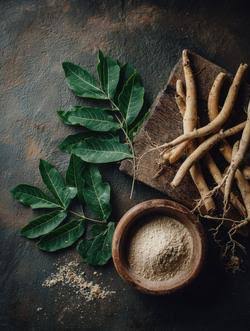
Key ingredients in this category include ashwagandha root (Withania somnifera), tulsi (Ocimum sanctum), neem (Azadirachta indica), brahmi (Bacopa monnieri), shatavari root (Asparagus racemosus), triphala (the three-fruit blend of amla, haritaki, and bibhitaki), moringa leaf powder, ginger root, turmeric rhizome, and a wide range of Ayurvedic classical herbs. These are used by buyers as raw material inputs for extraction, as encapsulation or blending ingredients, and as functional food and tea ingredients.
Standardised Botanical Extracts
The fastest-growing segment of Indian herbal exports, standardised botanical extracts command premium pricing and serve sophisticated B2B buyers in the nutraceutical, pharmaceutical, cosmetic, and functional food industries globally.
Standardised extracts are produced by extracting specific active constituents from plant material and then adjusting the extract to a defined potency â for example, ashwagandha extract standardised to 5% withanolides, curcumin extract standardised to 95% curcuminoids, or boswellia extract standardised to 65% boswellic acids. This standardisation ensures batch-to-batch consistency of bioactive content, which is essential for formulators making efficacy claims and for manufacturers managing quality control across production runs.
India’s extraction industry has invested heavily in manufacturing infrastructure over the past two decades. GMP-certified extraction facilities with HPLC and GC analytical capability, cleanroom manufacturing environments, and validated extraction processes are widely available from established Indian manufacturers. This infrastructure gives Indian standardised extracts genuine competitive credibility in sophisticated global markets.
Herbal Medicaments and Formulated Ayurvedic Products
Formulated Ayurvedic products â churnas (herbal powders), kwaths (decoctions), arishtas (fermented herbal preparations), and capsule or tablet formulations â are classified under HS code 3003 and represent approximately USD 325 million of annual Indian herbal exports. These are finished or semi-finished products rather than raw ingredients, and they serve both consumer markets and industrial buyers requiring pre-formulated blends.
Essential Oils and Aromatic Extracts
India is a significant global producer of essential oils derived from botanical sources. Sandalwood oil (from Karnataka and Tamil Nadu), lemongrass oil (from Kerala and Uttar Pradesh), eucalyptus oil, peppermint oil, and rose essential oil from Rajasthan are among India’s most commercially significant essential oil exports. These serve cosmetic, fragrance, aromatherapy, and food flavouring applications globally.
Nutraceutical Actives and Functional Ingredients
An increasingly important export category, Indian nutraceutical actives include standardised plant-derived functional ingredients used by global supplement manufacturers. Piperine (from black pepper, used as a bioavailability enhancer), curcumin phospholipid complexes, ashwagandha KSM-66 and Sensoril branded extracts, bacopa monnieri standardised extracts, and a range of other scientifically validated Indian botanical actives are supplied by Indian manufacturers to global brands in the USA, Europe, and East Asia.
Key Export Destinations: Who Buys from India
Understanding which global markets are the most significant buyers of Indian natural products helps international buyers contextualise India’s position in the global supply chain and understand the regulatory and quality standards Indian exporters are already meeting.
United States: The largest single market for Indian herbal and botanical exports. American demand for dietary supplements, nutraceutical ingredients, and natural wellness products drives substantial and growing import volumes. Ashwagandha, turmeric/curcumin, brahmi, and other Ayurvedic standardised extracts have entered mainstream US supplement formulations. US buyers typically require NSF, cGMP, and heavy metal compliance aligned with FDA regulations.
Germany and the European Union: Germany is the leading European importer of Indian herbal products, driven by a sophisticated natural pharmacy (Apotheke) tradition and strong consumer demand for herbal medicines and food supplements. EU buyers require compliance with the EU Traditional Herbal Medicinal Products Directive (THMPD) for medicinal claims, and EFSA Novel Food regulations for certain ingredients not historically used in Europe before 1997.
United Arab Emirates and the GCC: A rapidly growing market for Indian herbal ingredients, driven by the large South Asian diaspora, rising Gulf wellness consumer demand, and the India-UAE Comprehensive Economic Partnership Agreement (CEPA) signed in 2022, which has eliminated or substantially reduced import duties on most Indian herbal and agricultural product categories. The GCC represents one of the most commercially accessible international markets for Indian suppliers given the CEPA advantage, halal certification alignment, and cultural familiarity with Ayurvedic wellness traditions.
Japan: A technically demanding market with high quality expectations. Japan’s Shokuhin (food product) and regulatory framework for health claims is complex, but the market pays premium prices for rigorously documented, high-purity botanical ingredients. Japanese buyers tend to invest in long-term supplier relationships once quality standards are confirmed.
South Korea: K-beauty and K-wellness trends have driven growing Korean buyer interest in Indian botanical actives â particularly skin-health ingredients such as turmeric, amla, manjistha, and neem, as well as adaptogenic extracts. Korea’s Health Functional Food Act provides a structured regulatory pathway for botanical health claims.
Southeast Asia: Markets including Singapore, Malaysia, Indonesia, Thailand, and the Philippines are all active importers of Indian herbal ingredients, particularly for traditional medicine applications, halal-certified wellness products, and functional food ingredients.
United Kingdom and Australia: Both markets have established natural health product regulatory frameworks and growing consumer demand for Ayurvedic and botanical wellness products. Post-Brexit UK regulatory alignment with TGA (Australia) and MHRA (UK) frameworks is creating new pathways for Indian herbal ingredient exports.
The Indian Regulatory Framework: What Buyers Need to Understand
One of the most common areas of confusion for international buyers sourcing from India is the regulatory framework governing Indian herbal production and export. Understanding this framework gives buyers confidence that their Indian suppliers are operating within a structured, government-supervised compliance environment.
Ministry of AYUSH and Licensing
The Ministry of AYUSH is the primary regulatory body for Ayurvedic, Unani, Siddha, and other traditional medicine manufacturing in India. Manufacturers of Ayurvedic products must hold a manufacturing licence issued by the State Licensing Authority, based on compliance with Schedule T of the Drugs and Cosmetics Rules, 1945, which sets out GMP requirements for Ayurvedic manufacturing.
FSSAI for Food-Category Products
Products positioned as health supplements, nutraceuticals, or functional food ingredients fall under FSSAI (Food Safety and Standards Authority of India) regulation. Exporters require a Central FSSAI licence. FSSAI compliance gives international food and supplement buyers confidence that their Indian ingredient suppliers operate under a formal food safety management system.
A related question is covered in SFDA requirements for herbal ingredients.
WHO-GMP and cGMP Certification
WHO-GMP certification, issued by the AYUSH Ministry or CDSCO (Central Drugs Standard Control Organisation), is the Indian equivalent of international Good Manufacturing Practice standards. For buyers in markets that require supplier GMP compliance â which includes the USA, EU, UK, Japan, South Korea, and Australia â a WHO-GMP or cGMP certificate from an Indian manufacturer is an important qualification marker.
Organic Certification
NPOP (National Programme for Organic Production) certification, administered by APEDA and implemented by accredited certification bodies, is recognised by the EU (equivalent to EU Organic) and the USA (NOP equivalent). For buyers requiring organic-certified botanical ingredients, NPOP-certified Indian suppliers can provide the documentation required for importing organic claims into these markets.
For a deeper look at how these certification frameworks interact and what international buyers should verify, see our detailed guide to GMP, ISO, FSSAI, and organic certification for Indian herbal exports.
What International Buyers Should Verify Before Sourcing
The scale and diversity of India’s herbal export industry means it spans a wide quality spectrum â from sophisticated, internationally certified manufacturers with validated analytical laboratories and full traceability systems, to smaller operators with variable quality controls. Navigating this spectrum is the central challenge for international buyers.
Buyers evaluating Indian herbal ingredient suppliers should verify the following as a baseline:
Manufacturing certification. Confirm that the supplier holds WHO-GMP, FSSAI, and any market-specific certifications relevant to your destination country. Request the actual certificate, not just a claim, and verify the issuing body and expiry date.
Analytical capability. A credible Indian herbal supplier should be able to provide Certificate of Analysis (CoA) data for each batch covering identity testing (botanical authentication), active constituent content by HPLC or validated analytical method, heavy metals (lead, arsenic, mercury, cadmium), pesticide residue screening, microbial limits, and moisture content. The CoA should reference the specific batch being supplied, not a generic product specification.
Traceability. Can the supplier trace the botanical raw material to the farm or collection zone of origin? Supply chain traceability is increasingly a regulatory requirement in the EU and a procurement expectation in most sophisticated buyer markets. It also provides buyers with confidence about ingredient authenticity and adulteration risk.
Export documentation competence. A serious Indian herbal exporter should be proficient with phytosanitary certificates (issued by NPPO India), certificates of origin for preferential trade agreements, commercial invoices with correct HS code classification, and market-specific labelling requirements. Documentation gaps are a common source of customs delays and buyer-supplier friction.
For a comprehensive framework for evaluating Indian herbal ingredient suppliers, see our detailed guide on how to evaluate an Indian herbal ingredient supplier.
The Role of a Sourcing Partner
For many international buyers â particularly those sourcing from India for the first time, or those managing multiple ingredient categories â working directly with individual Indian manufacturers involves significant due diligence effort, communication overhead, and risk management complexity.
A specialist sourcing partner bridges this gap. Rather than building direct relationships with multiple Indian manufacturers across different product categories, buyers can work with a partner that has already verified supplier credentials, quality systems, and operational reliability â and that manages the coordination, documentation, and logistics on the buyer’s behalf.
Ayris Global operates precisely as this kind of specialist. We connect international buyers with verified Indian producers across botanical extracts, herbal powders, Ayurvedic actives, essential oils, and nutraceutical ingredients. Every supplier in our network is vetted for quality systems, certification credentials, and export capability. We manage the documentation chain, coordinate sample evaluation, and support buyers through the compliance requirements of their specific destination market.
Explore our product range or contact our sourcing team to discuss your specific ingredient requirements.
The Opportunity for International Buyers
India’s natural products export industry is in a structural growth phase. Global consumer demand for plant-based health and wellness products is rising across every major market. India’s manufacturing infrastructure is improving. The regulatory framework is maturing. And a series of bilateral trade agreements â most importantly the India-UAE CEPA, with further agreements under negotiation â are reducing the cost barriers to Indian ingredient access in key buyer markets.
For international buyers, the strategic implication is clear: building a reliable, well-qualified Indian sourcing relationship now â while the market is growing but before competitive pressure on supply intensifies â creates durable procurement advantage.
The ingredients are here. The infrastructure exists. The regulatory framework is established. The question for international buyers is not whether to source from India, but how to do it with the right partners, the right documentation, and the right quality assurance to build a supply chain that delivers on its promise every time.
To start that conversation, contact us at sourcing@ayrisglobal.in or visit our For Buyers page for sourcing enquiry details.
Ayris Global connects international buyers across the EU, UK, USA, UAE, Japan, South Korea, Southeast Asia, and beyond with verified Indian producers of botanical extracts, Ayurvedic actives, herbal powders, and nutraceutical ingredients. Contact our sourcing team to discuss your requirements.