market-intelligence
Entering the EU Market: A Guide for Indian Herbal Ingredient Suppliers
25 May 2026
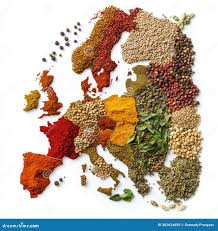
The European Union is the world’s largest single regulatory market for food and food supplements, and one of the most demanding. For Indian herbal ingredient suppliers, it sits alongside the United States as a top-tier destination by volume and value - but it is also the market where assuming “herbal” means “automatically allowed” causes the most expensive mistakes.
This guide covers the three things that actually determine whether an Indian botanical ingredient can be sold in the EU and on what terms: Novel Food status, organic certification equivalence, and the current state of EU customs duties, including what the newly concluded India-EU trade agreement does and does not change today. It closes with a practical compliance checklist for first-time EU buyers and suppliers.
Novel Food: The Question That Comes Before Everything Else
Before any commercial conversation about price, volume, or packaging, an EU buyer needs one question answered: is this ingredient, in this specific extract or processed form, legally allowed to be sold as food in the EU at all?
Novel Food is defined as any food that had not been consumed to a significant degree by humans in the EU before 15 May 1997. If an ingredient or a particular preparation of it falls under that definition, it cannot be placed on the EU market as a food or food supplement until it has completed a full safety assessment by the European Food Safety Authority (EFSA) and been added to the EU Union List of Novel Foods.
This catches suppliers off guard for a specific reason: an ingredient can have centuries of traditional use in India and still be classed as Novel Food in the EU, because the legal test is about documented consumption history inside the EU specifically, not global or historical use anywhere else. Botanical extracts in particular face a more demanding version of this assessment than most other food categories, since EFSA applies dedicated scientific guidance for evaluating plant extract safety, and approval timelines for botanicals often run longer than the roughly two and a half years that is already typical for a standard Novel Food application.
The practical implication for Indian suppliers: before quoting an EU buyer, confirm whether your specific ingredient and extract form already appears on the Novel Food Catalogue as not novel, or whether it has an existing Union List authorisation. If it does not, the buyer either needs to source an already-authorised alternative form, or the supplier and buyer need to have an honest conversation about the cost and timeline of a Novel Food application before any commercial commitment is made. Quoting a price and delivery timeline without first checking Novel Food status is one of the most common and most costly errors in EU-bound botanical sourcing.
Health Claims: What the EU Actually Allows
A second area where expectations frequently run ahead of reality is health claims. Many suppliers and even some buyers assume that if an ingredient is legally saleable, it can also carry a functional health claim on packaging or marketing material, similar to how structure-function claims work in the United States.
This is generally not the case in the EU. No health claims for botanicals and herbal ingredients as a category have been authorised by EFSA; submitted claims have either been formally rejected or remain in unresolved “pending” status, in some cases for years. In practice, most EU food supplement brands using botanical ingredients either make no specific health claim, or rely on separately authorised vitamin and mineral claims where the formulation includes those nutrients alongside the botanical.
For Indian suppliers, this matters commercially as well as legally. A buyer who has been told by a different supplier that an ingredient “is approved for joint health” or “carries an EU-recognised immune claim” has likely been given inaccurate information, and Ayris Global suppliers should never make that representation. The safer and more credible position is to discuss the ingredient’s traditional use and compositional data honestly, and let the buyer’s own regulatory team determine what, if any, claim language their finished product can legally carry.
Sourcing for the EU market? Ayris Global connects qualified EU buyers with GMP-certified Indian producers and supports Novel Food status checks, NPOP/EU organic documentation, and full compliance paperwork. Request samples
Organic Certification: India’s Real Advantage in the EU
This is the part of EU market entry that works more in India’s favour than most buyers realise, and that Indian suppliers sometimes under-sell.
Our article on the Latin America market entry guide goes further.
India’s National Programme for Organic Production (NPOP), administered by APEDA, has held equivalence recognition from the European Union since 2008. In practice, this means organic plant products certified under NPOP by an EU-recognised certification body can generally be sold as organic within the EU without a separate, additional EU organic certificate. This is a meaningful structural advantage versus suppliers from countries without an equivalence agreement, who must obtain full EU Organic certification (under EU Regulation 2018/848) directly and independently.
Three boundaries on this equivalence matter for buyers and suppliers alike:
Scope. The equivalence covers unprocessed plant products and processed plant-based food products. It does not extend to livestock or animal-derived products, and it does not cover products still in their organic conversion period.
Certifying body matters. The NPOP certificate must come from a certification body that is itself accepted under the EU framework. Not every APEDA-accredited certifier automatically satisfies every EU importer’s documentation requirements, so buyers should confirm the specific certifying body’s standing rather than assuming all NPOP certificates are interchangeable for EU purposes.
The United Kingdom is a separate question. The UK left the EU in 2020 and no longer recognises EU equivalence agreements, including the EU-NPOP arrangement. There is currently no standalone UK-India organic equivalence agreement, which means Indian exporters targeting the UK organic market specifically need certification from a UK-approved organic control body in addition to, not instead of, NPOP. Suppliers and buyers who treat “EU” and “UK” as interchangeable for organic compliance purposes will run into this gap.
Even where equivalence applies cleanly, documentation discipline still matters at the border. Shipments without correctly completed TRACES documentation can be held or rejected at the EU port of entry, regardless of the underlying certification being valid. Organic status is also more commercially valuable in the food supplement category than in the herbal medicinal product category - herbal medicinal products authorised under an EU herbal monograph cannot carry an organic label at all, even when made from certified organic raw material, which is a distinction worth raising directly with buyers who are deciding which regulatory pathway to pursue.
The India-EU Free Trade Agreement: What It Changes and When
This is a genuinely new development, and it is easy to describe inaccurately in either direction - either overstating that duties have already changed, or dismissing it as irrelevant because it has not yet taken effect. Neither is correct.
On 27 January 2026, India and the European Union concluded negotiations on a comprehensive free trade agreement after talks that began in 2007, were suspended in 2013, and resumed in 2022. Public reporting on the agreement’s contents indicates it would eventually eliminate or substantially reduce import duties on the large majority of goods traded between the two economies by value, alongside commitments covering services, digital trade, and regulatory cooperation.
What has not happened yet, as of this writing: the agreement is not in force, and it does not currently create any binding rights or obligations for importers or exporters. Before it can take effect, the negotiated text must complete legal review and translation, receive formal approval from the Council of the European Union, gain the consent of the European Parliament, and be ratified through India’s own domestic approval process. Industry and diplomatic commentary points to provisional application beginning around the final quarter of 2026 at the earliest, with full entry into force expected in early 2027.
Until that process completes, Indian herbal ingredient shipments to the EU continue to be assessed under the existing standard EU customs tariff and the normal border procedures, with no change yet in duty rates or documentation requirements. Suppliers and buyers should treat the agreement as an important development to plan around for 2027 sourcing strategy, not as something that changes a quotation or a shipment today.
One further point worth flagging now for buyers thinking ahead: EU officials have been explicit that the trade agreement, once in force, will not relax existing EU regulatory requirements for product safety, labelling, or market authorisation. The agreement addresses tariffs and market access; it does not touch Novel Food status, organic certification rules, or any of the compliance requirements covered elsewhere in this guide. Lower duties, when they arrive, will not substitute for correct regulatory paperwork.
HS Classification and Customs Basics
Correct customs classification affects which duty rate and which border procedures apply, and herbal ingredients can fall into several different chapters of the EU’s tariff nomenclature depending on form and intended use:
- Chapter 12 generally covers raw and dried medicinal plants and seeds in their unprocessed or minimally processed form
- Chapter 13 generally covers vegetable saps, gums, resins, and extracts
- Chapter 21 generally covers food preparations such as herbal teas and finished dietary supplement formats
- Chapter 29 generally covers isolated organic compounds such as specific vitamins where an ingredient has been purified to that level
- Chapter 30 applies to herbal medicinal preparations specifically, as distinct from food-category botanicals
The correct chapter depends on the ingredient’s processing level, composition, and declared end use, not simply on the fact that it originated from a plant. Buyers and suppliers should confirm the specific tariff classification with their customs broker or through the EU’s own classification guidance rather than assuming based on a similar product’s historical classification, since misclassification creates both duty and compliance risk independent of anything covered above.
A Practical First-Order Checklist for EU Buyers
For Indian suppliers preparing a first serious EU quotation, and for EU buyers evaluating a new Indian supplier, the following sequence avoids the most common and most expensive mistakes:
- Confirm Novel Food status for the exact ingredient and extract form being quoted, not just the general botanical category
- Confirm the intended regulatory category - food supplement versus herbal medicinal product - since this changes labelling, claims, and organic-eligibility rules
- Verify organic certification chain if organic positioning matters: confirm NPOP certifying body standing, and separately confirm UK requirements if the UK is part of the buyer’s target market
- Request the full Certificate of Analysis including heavy metals, pesticide residue screening against EU MRL limits, and microbial limits
- Confirm GMP certification appropriate to the product category
- Classify the shipment under the correct HS/CN code with the buyer’s customs broker before the first commercial shipment
- Treat current customs duty rates as unchanged until the India-EU trade agreement formally enters into force, and do not factor anticipated future duty reductions into a current-year quotation
Summary: What to Get Right
EU market entry for Indian herbal ingredients comes down to sequencing the right questions before price becomes the conversation. Confirm Novel Food status first, because it determines whether a sale is even legally possible. Understand that India’s NPOP-EU organic equivalence is a real commercial advantage, with the UK as a clear exception to flag early. Treat the India-EU trade agreement as a real but not-yet-operative development - genuinely worth planning around for 2027, but not yet a reason to change today’s duty assumptions. And remember that EU health claim rules are stricter for botanicals than many buyers expect, which makes honest positioning a competitive advantage rather than a limitation.
For more on this, see selling herbal ingredients into Southeast Asia.
India’s depth of cultivation, extraction capacity, and certification infrastructure is a genuine strength in the EU market. Suppliers who pair that strength with precise regulatory honesty are the ones who convert a first EU enquiry into a repeat account.
Frequently Asked Questions
What is Novel Food and why does it matter for Indian herbal ingredients entering the EU?
Novel Food is any food or ingredient not consumed to a significant degree by humans in the EU before 15 May 1997. If an ingredient or specific extract form falls under this definition, it cannot be sold as food or a food supplement in the EU until it completes a full EFSA safety assessment and is added to the Union List of Novel Foods, a process that commonly takes two and a half years or longer for botanicals. Never assume traditional use in India means automatic EU clearance.
Does NPOP organic certification work in the EU without a separate EU certificate?
Yes, for most plant-based products. India’s NPOP has held EU equivalence since 2008, so NPOP-certified plant products can generally be sold as organic in the EU without a separate EU organic certificate. This covers unprocessed and processed plant-based products, not livestock or in-conversion products, and does not currently extend to the United Kingdom.
Has the new India-EU free trade agreement removed import duties on Indian herbal ingredients?
Not yet. The agreement was concluded on 27 January 2026 and would eventually remove duties on most traded goods by value, but it still requires legal review, EU Parliament consent, Council approval, and Indian ratification before taking effect. Provisional application is expected around late 2026 at the earliest, full entry into force in early 2027. Until then, current EU tariff and customs rules apply unchanged.
Can Indian suppliers make health claims on herbal ingredients sold in the EU?
Generally no. The EU has not authorised health claims for botanicals as a category; submitted claims have been rejected or remain pending with EFSA. Most EU supplement brands using botanicals make no specific health claim or rely on separately authorised vitamin and mineral claims instead.
What is the difference between selling a botanical as a food supplement versus a herbal medicinal product in the EU?
Herbal medicinal products must follow an EU herbal monograph from the European Medicines Agency and cannot carry an organic label, even from certified organic raw material. Food supplements offer more flexibility for new and less-established ingredients, and organic certification is both more common and more commercially valuable in this category.
Further Reading: Turmeric & Curcumin Extract: A Complete Buyer’s Guide · GMP, ISO, FSSAI and Organic Certification for Indian Herbal Exports · Your First Order from India: A Step-by-Step Guide
Ayris Global connects qualified EU buyers with verified, GMP-certified Indian producers of herbal extracts, Ayurvedic ingredients, and botanical powders, with full support for Novel Food checks, organic certification documentation, and regulatory paperwork. To discuss your sourcing requirements, contact our team at sourcing@ayrisglobal.in or visit our products page.