sourcing
Manufacturer vs Trader: How to Tell Who You're Actually Buying From in India
17 September 2026
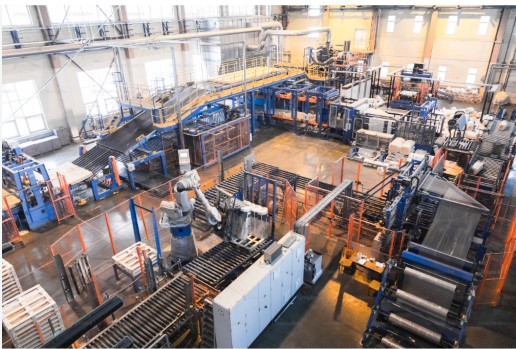
When an international buyer sends an inquiry to an Indian herbal ingredient supplier, they typically assume they are dealing with someone who makes the product. This assumption is wrong more often than most buyers expect.
India’s herbal ingredient export sector contains a large number of intermediaries who present as manufacturers: trading companies, brokers, commission agents, and multi-product aggregators who source from actual producers and resell to international buyers. None of this is illegal. But it creates practical problems when buyers from regulated markets — the EU, UK, USA, Japan, Australia — require documentation that can only originate from the manufacturing facility, not from an intermediary.
This guide is not about which sourcing model to use — that question is covered separately in our guide to India sourcing channels. This guide addresses a more immediate problem: you are already talking to someone, and you need to know whether they are the manufacturer or not.
Why the Distinction Matters
The difference between a manufacturer and a trader is not only about price. It runs through the entire supply chain.
Documentation. A GMP certificate covers the manufacturing facility. When a trading company holds a GMP certificate, it covers their trading operations — not any production site. For buyers who need the manufacturing facility to be GMP-certified — for EU food supplement compliance, US FDA dietary supplement cGMP, or Australian TGA purposes — the trader’s own certificate does not satisfy the requirement. The certificate that is actually needed is held by the manufacturer the trader buys from, and the trader may be unable or unwilling to share it.
Traceability. Batch manufacturing records, in-process quality checks, and production logs exist only at the manufacturing facility. A trader can pass through a Certificate of Analysis generated by the manufacturer, but they cannot generate their own from first-hand production data. If a destination-market authority requests batch-level traceability documentation, the trading company is not the source and cannot produce it.
Audit. EU, UK, US, and Japanese buyers increasingly conduct supplier audits as part of their quality management obligations. An audit of a trading company’s office tells you very little about where the product was made or under what conditions.
Price. Trading companies add a margin between the manufacturer’s exit price and your purchase price. This margin is not necessarily unreasonable — it represents real services including aggregation, relationship management, and documentation handling. But if you are paying trading company prices while believing you are buying direct from a manufacturer, you are overpaying relative to what direct access to the same manufacturer would cost.
How Traders Describe Themselves
The most common misrepresentation in this market is not outright fraud — it is the careful use of language that implies manufacturing without stating it directly.
Watch for the following patterns:
“We produce” or “We manufacture” without specifics. A genuine manufacturer can immediately tell you the location of their facility, their production capacity per month, their shift schedule, and the capital equipment they operate. A trader will often say “we produce” but become vague when asked which city their plant is in, what extraction equipment they use, or what their monthly output is.
A catalogue too wide to be plausible. A manufacturing facility has a defined capability: particular extraction methods, drying technologies, and ingredient categories it can handle. A supplier who offers 200 ingredients across botanical powders, essential oils, standardised extracts, and spice oleoresins with equal confidence is almost certainly aggregating from multiple manufacturers, not producing everything in-house.
“Our factory” applied to a third-party facility. Some trading companies legitimately manage third-party manufacturing relationships and can provide good-quality product with reasonable documentation. But when they say “our factory” and mean a contract manufacturer they have a purchase relationship with, the documentation chain — and the buyer’s leverage within it — is different from what that phrase implies.
Reluctance to name the production city or region. Ask specifically: “Which city and state is your manufacturing facility located in?” A genuine manufacturer answers immediately. A trader who sources from multiple factories may deflect, give a vague answer, or give an answer that does not match any of the addresses on their documentation.
Document-Based Verification
Beyond language signals, document checks are the most reliable way to confirm whether you are dealing with a manufacturer.
Factory License or MSME Udyam Registration
A factory operating under the Factories Act 1948 requires a state-issued factory license tied to the specific premises. This document shows the registered address of the production facility. Request it and confirm:
- The address matches what the supplier has given you as their production site
- The license is current and not expired
- The nature of operations described in the license is consistent with what the supplier claims to produce
MSME (Micro, Small, and Medium Enterprises) Udyam registration is an alternative indicator. It is self-declared, so it carries less verification weight than a factory license, but it is registered against a specific enterprise and premises. A trading company will hold GST registration and import-export documentation but typically will not hold a factory license or manufacturing-specific Udyam registration covering a production facility.
GSTIN and HSN Code Profile
Every Indian business holds a GSTIN (Goods and Services Tax Identification Number), searchable on the GST portal at services.gst.gov.in. The registration record shows the nature of business: manufacturing entities register under manufacturing and trading categories, while pure trading companies register under trading only.
Additionally, Indian businesses declare the HSN (Harmonised System of Nomenclature) codes relevant to their supplies in GST filings. Manufacturers selling goods they produce themselves will show HSN codes corresponding to manufactured products. Companies that only trade will show only trading-category codes. This is a proxy indicator, not definitive, but it adds a data point.
GMP Certificate Scope Page
When a supplier provides a GMP certificate, request the full document including the scope page — not just the front page with the certificate number. The scope page specifies:
- The precise address of the facility the certificate covers
- The categories of products within scope (for example: “herbal botanical extracts, dried herb powders”)
- The manufacturing activities in scope (for example: “extraction, concentration, drying, packaging”)
A manufacturer’s GMP certificate will show these details tied to a physical production facility. A trading company’s GMP certificate — where it exists — covers their trading operations, not a production site. For a detailed guide on how to read and verify a GMP certificate, see our GMP certificate verification guide.
FSSAI License Category
For food-ingredient suppliers (botanical powders, herbal extracts used in food and supplement applications), FSSAI (Food Safety and Standards Authority of India) licenses are issued in distinct categories. A manufacturing license covers production operations. A trading license or distributor license covers buying and selling only. Request the FSSAI license and confirm which category it covers.
Questions That Reveal the Truth
The following questions, asked directly, quickly reveal whether a supplier is a manufacturer or a trader:
“Can you share the address of your manufacturing facility, including the state and city?” Manufacturers answer immediately and specifically. Traders may give a head-office address that does not match any production facility.
“What extraction or processing equipment do you operate at the facility?” A genuine ashwagandha or turmeric extract manufacturer knows their equipment: rotary evaporators, spray dryers, fluid bed processors, the extraction tank capacity. A trader will not know this or will give vague answers.
“Can you provide the GMP certificate scope page, not just the front page?” As described above, the scope page confirms whether the certificate covers a production facility or a trading entity.
“What is your monthly production capacity for this ingredient?” Manufacturers can answer this specifically. Traders may give a range so wide as to be meaningless, or confuse purchasing capacity with production capacity.
“Are you willing to accommodate a virtual facility tour or a third-party audit at your production site?” Genuine manufacturers answer yes. Traders either cannot arrange this or redirect to a contract manufacturer’s facility they have a limited commercial relationship with.
Price Behaviour as a Signal
Pricing patterns also reveal trading-vs-manufacturing structure.
Manufacturers have a defined cost base: raw material cost, processing cost, packaging, and margin. Their pricing on a given specification is relatively stable and moves with raw material markets. Asked for a quote on 500 kg of ashwagandha 5% withanolides, a manufacturer will quote based on their production cost and current raw material price.
Traders have a different pricing dynamic. They source at a market price from manufacturers and add a margin. Their pricing may be:
- Slightly higher than direct manufacturer pricing for the same specification
- More variable across multiple inquiries, because their cost depends on which manufacturer they buy from each time
- Very fast to provide, because they are calling manufacturers for quotes and passing them through with a markup rather than working from their own cost structure
If a supplier quotes you exactly within the hour for 2 MT of a specialised extract — a quantity that would require a manufacturer to check their production schedule and raw material stock — that response speed is itself a signal worth noting.
What to Do When You Suspect a Trader
If the signals above suggest you are dealing with a trading company rather than a manufacturer, you have several options:
Request clarity directly. Ask: “Can you confirm whether your company manufactures this ingredient at your own facility, or whether you source it from a third-party manufacturer?” Most suppliers — including trading companies — will answer honestly when asked directly, because misrepresentation creates legal exposure in a documented commercial exchange.
Ask for the manufacturer’s name or facility details. A legitimate trading company working with a GMP-certified manufacturer can often provide the manufacturer’s GMP certificate and facility details to satisfy your documentation requirements. This does not change the supply structure, but it may meet your documentation needs if the underlying manufacturer’s credentials are adequate.
Work through a qualified sourcing partner. A specialist India sourcing intermediary operating on a commission model maintains direct relationships with verified manufacturers and can confirm whether your contact is the producer or an aggregator, without requiring you to run the verification process yourself.
Recalibrate your purchase terms. If a trading company is the practical supply option for your volume and ingredient requirements, ensure your quality agreements reflect what a trader can actually deliver: the pass-through documentation from the manufacturer, not facility-level documentation from their own entity.
Working with Ayris Global
Ayris Global connects international buyers with verified Indian herbal ingredient manufacturers — not traders, brokers, or aggregators. Every supplier in our network is qualified against the verification framework described in this guide: factory license or Udyam registration, GMP certificate scope review, FSSAI license category, and direct confirmation of production capability.
Buyers who want access to verified manufacturers without running this verification process themselves can contact our team or visit our For Buyers page.
Frequently Asked Questions
What is the difference between an Indian herbal ingredient manufacturer and a trading company?
A manufacturer operates a physical production facility where raw botanical materials are processed, extracted, dried, and standardised. A trading company purchases finished or semi-finished product from manufacturers and resells it to international buyers, without any production capability of their own. The distinction matters for documentation, traceability, and supply chain reliability — a trader cannot provide a manufacturer-level facility audit, and their certifications cover their own trading entity, not the production site where the goods were made.
How can I verify that an Indian herbal ingredient supplier is the actual manufacturer?
The most reliable verification steps are: request the factory license or MSME Udyam registration certificate and confirm the registered address matches the production address; search the supplier’s GSTIN on the GST portal and confirm HSN codes for manufactured goods appear in their filings; confirm the GMP certificate scope page covers the specific production facility; and ask whether an on-site audit or virtual facility tour is possible. Genuine manufacturers can accommodate these requests; trading companies typically cannot.
Why do trading companies present themselves as manufacturers in India?
In India’s herbal ingredient export market, buyers from regulated markets such as the EU, USA, and Japan prefer direct manufacturer relationships for documentation traceability and price competitiveness. Some trading companies adopt manufacturer language because it increases their chance of winning inquiries. This does not always indicate deliberate fraud, but it creates problems when buyers later require facility-level documentation, independent audits, or batch traceability that a trading company cannot generate.
Does it matter if I buy from a trader instead of a manufacturer for Indian herbal ingredients?
It depends on your destination market. For buyers supplying the EU, USA, UK, Japan, Australia, or South Korea, facility-level documentation — factory GMP certificates tied to the production site, facility registration numbers, batch manufacturing records — is typically required. A trader cannot generate these from their own entity. For less-regulated markets or commodity food ingredients, a reputable trading company may be a practical supply option, as long as the buyer accepts the reduced traceability. The risk is discovering the documentation gap at the import clearance stage.
What documents prove that an Indian supplier is a genuine manufacturer?
A factory license issued under the Factories Act 1948 or MSME Udyam Registration confirming the production premises; a GMP certificate with the scope page showing the specific facility address and manufacturing activities in scope; an FSSAI manufacturing license for food-ingredient suppliers; and, for pharmaceutical-grade operations, a CDSCO drug manufacturing license. Request each document and confirm the facility address matches the address the supplier has given as their production site.
Ayris Global sources verified herbal ingredients from audited Indian manufacturers for buyers across the EU, UK, USA, UAE, Japan, South Korea, Australia, Southeast Asia, and Latin America. We operate on a commission-only model — no retainer, no markup on goods. Visit our For Buyers page or contact our team to discuss your requirements.