
sourcing
Incoterms, Shipping Logistics, and Lead Times for Indian Herbal Ingredient Buyers
8 June 2026
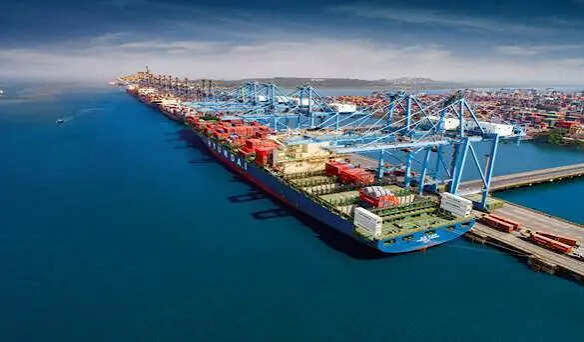
The price your Indian herbal ingredient supplier quotes you is not your landed cost. Between the supplier’s gate and your warehouse, there are freight charges, insurance premiums, origin and destination port handling fees, import duties, customs broker fees, and potentially demurrage if your documentation is late. The Incoterm you agree on determines who pays for each of these, and where the risk of loss or damage sits at every stage of the journey.
For most international buyers sourcing herbal ingredients from India for the first time, Incoterms are underspecified in the purchase order and misunderstood in practice. This creates cost surprises, insurance gaps, and disputed liability when something goes wrong in transit.
This guide explains the four Incoterms most relevant to Indian herbal ingredient trade, how to choose between them, which Indian ports to use for which destination markets, how freight mode selection affects cost and lead time, what marine insurance you actually need, and exactly what to put in a purchase order to keep landed cost predictable.
This post is part of the complete guide to sourcing herbal ingredients from India and a companion to the supplier qualification and audit guide and the quality testing guide.
Understanding Incoterms 2020: What They Do and Do Not Cover
Incoterms (International Commercial Terms) are a set of 11 standardised three-letter rules published by the International Chamber of Commerce (ICC). They define, for any given sale, three things: who is responsible for arranging each stage of transport; who bears the cost of each stage; and where risk transfers from seller to buyer.
Incoterms 2020 is the current version, in effect from 1 January 2020. When specifying an Incoterm in a purchase order, always include the year — for example, FOB Nhava Sheva Incoterms 2020 — to avoid ambiguity with earlier versions.
Incoterms do not determine payment terms, currency, or which law governs the contract. They do not specify documentation requirements beyond what is necessary to effect delivery under the chosen rule. They do not require either party to insure the goods unless the rule specifically mandates it (which only CIF and CIP do, and only to a minimum standard). Everything else must be specified separately.
For herbal ingredient trade from India, four Incoterms dominate in practice: EXW, FOB, CIF, and DAP.
EXW — Ex Works: Maximum Buyer Responsibility
Under EXW, the seller makes the goods available at a named location — typically their factory, processing facility, or warehouse — and that is where their obligation ends. The buyer is responsible for everything that follows: loading the goods onto the collecting vehicle, inland haulage from the supplier’s premises to the export port, export customs clearance, loading onto the vessel, main ocean freight, marine insurance, import customs clearance at destination, and final delivery.
When EXW is used: Occasionally for very large buyers who have established freight forwarding and customs clearing operations in India and want to control the entire supply chain. Also used as the basis for a price quotation when a supplier wants to quote the lowest possible number with no logistics cost included.
Why EXW is problematic for most herbal ingredient buyers: Export customs clearance from India requires an Indian Importer-Exporter Code (IEC), an Indian customs house agent (CHA), and presence at the port. Buyers without Indian operations or a trusted Indian freight agent cannot practically manage this. Beyond the operational difficulty, EXW places all risk on the buyer from the moment the goods are ready at the supplier’s premises — including any damage during loading, inland transit to port, and export port handling. If something is damaged before it reaches the vessel, the buyer bears that loss.
Bottom line: EXW is rarely the right choice for a buyer sourcing from India without an established Indian logistics partner. It creates more operational complexity than it saves in cost.
FOB — Free on Board: The Standard Starting Point
Under FOB (Free on Board) named port of shipment, the seller handles inland haulage from their facility to the port, export customs clearance, and loading of the goods onto the nominated vessel. Risk transfers to the buyer once the goods are on board the vessel at the port of origin.
From that point, the buyer is responsible for the main ocean freight, marine insurance, import customs clearance at destination, and final delivery.
Why FOB is the most common Incoterm for Indian herbal ingredient trade: It gives the buyer control over the main freight leg — the part that has the most cost variability and where rate shopping matters most. The buyer selects their own freight forwarder, compares ocean freight rates across carriers, and maintains direct visibility over the shipment from the moment it is on the water. The supplier handles what they know: getting the goods to the port in India and clearing export.
What FOB does not include: Origin Terminal Handling Charges (THC) are the port’s charges for handling the container at the origin terminal. Under Incoterms 2020, these are explicitly listed as the buyer’s cost under FOB — but in practice, many freight forwarders include them in the ocean freight quote, while others charge them separately. Confirm with your forwarder whether your rate is all-in to the vessel or port-to-port excluding THC.
Specifying FOB correctly: Always name the specific port — FOB Nhava Sheva Incoterms 2020, FOB Mundra Incoterms 2020, or FOB Chennai Incoterms 2020. Do not write FOB India. The named port determines which port’s charges are included and where the loading obligation applies.
CIF — Cost, Insurance, and Freight: Seller-Arranged Logistics
Under CIF (Cost, Insurance, and Freight) named port of destination, the seller arranges and pays for ocean freight and minimum insurance to the named destination port. Risk transfers to the buyer earlier than the cost obligation — specifically, risk passes when the goods are on board the vessel at the origin port (same as FOB), but the seller continues to pay for freight and insurance to destination.
Under Incoterms 2020, CIF requires the seller to obtain insurance to the Institute Cargo Clause C minimum. Clause C is a named-perils policy that covers a limited set of major events — fire, explosion, sinking, stranding, collision, jettison — but does not cover theft, contamination, moisture damage, or physical damage from handling. For botanical ingredients, which are sensitive to moisture and can be damaged by rough handling at transshipment ports, Clause C insurance is typically insufficient.
When CIF is appropriate: When the buyer lacks an established freight forwarding relationship and needs the supplier to handle the logistics complexity. Useful for initial small orders where the freight cost difference is immaterial compared to the operational simplicity.
The hidden cost of CIF: You cannot control the freight rate or carrier the supplier chooses. Some Indian suppliers bundle a margin into the freight cost under CIF. The insurance they provide is the minimum required, not what you need to adequately protect your shipment. For ongoing supply, switching to FOB and arranging your own freight and insurance typically reduces total landed cost and gives you more control.
Note on CIF for containerised goods: Incoterms 2020 guidance is clear that for containerised cargo — which includes most herbal extract and powder shipments in bags, drums, or flexi-bags — FCA (Free Carrier) is technically more appropriate than FOB, and CPT or CIP (Carriage and Insurance Paid To) are more appropriate than CIF. This is because with containerised cargo, the practical risk transfer point is when the container is handed to the carrier at the container freight station or port terminal, not when it is on board the vessel. In practice, however, FOB and CIF remain the most commonly used terms for this trade, and both parties should be aware that the risk transfer timing is slightly different for containerised versus bulk cargo.
DAP — Delivered at Place: Seller Delivers to Your Warehouse
Under DAP (Delivered at Place), the seller is responsible for arranging and paying for all transport from their facility in India to the named place of destination — which can be the buyer’s warehouse, a named port, or any agreed location. The seller bears all costs and risk until the goods arrive at the destination, ready for unloading. The buyer handles import customs clearance and any import duties.
When DAP is used: When the buyer wants the simplest possible commercial arrangement and is willing to pay a premium for it. Also common in initial trial relationships where the buyer wants to reduce their operational involvement before committing to a larger supply arrangement.
DAP for herbal ingredient trade: Some Indian suppliers offer DAP to buyers in the UAE or GCC, where transit times are short (4 to 7 days from Nhava Sheva) and the logistics arrangement is straightforward. For Europe or the USA, DAP quotes from Indian suppliers are less common because the logistics complexity and cost are higher, and most suppliers prefer the buyer to manage the main freight leg.
DDP (Delivered Duty Paid) is the maximum obligation term, where the seller handles everything including import duties. Indian herbal ingredient suppliers very rarely offer DDP because managing import duty liability and customs compliance in foreign markets is operationally complex and exposes the seller to significant risk.
Indian Port Selection: Where Your Shipment Originates Matters
The three ports that handle the substantial majority of Indian herbal ingredient exports are Nhava Sheva (JNPT), Mundra, and Chennai. Which port to specify depends on where your supplier is located and where your goods are going.
Nhava Sheva (Jawaharlal Nehru Port — JNPT), near Mumbai. India’s largest container port and the most frequently used for herbal ingredient exports. It handles more than half of India’s containerised cargo and has the densest sailing schedules to European, US, and Middle Eastern ports. Direct sailings to Rotterdam take approximately 18 to 22 days. Direct sailings to US East Coast ports (New York, Savannah) take approximately 28 to 32 days. Direct sailings to Jebel Ali (Dubai) take approximately 5 to 7 days. Most suppliers in Maharashtra, Madhya Pradesh, Rajasthan, and parts of Uttar Pradesh route through Nhava Sheva by default.
Mundra Port, Gujarat. India’s largest private port and one of the fastest-growing container terminals in Asia. Mundra handles over 7 million TEUs annually and offers competitive sailing frequency on most major trade lanes. It is often the better choice for suppliers in Gujarat, Rajasthan, and northern India, as the inland haulage cost to Mundra is lower than to Nhava Sheva for facilities in those states. Sailing times and frequencies to Europe and the Middle East are comparable to Nhava Sheva. Mundra also handles bulk and break-bulk cargo, which is relevant for very large shipments of raw dried botanical material.
Chennai Port, Tamil Nadu. Chennai is the primary port for suppliers in Tamil Nadu, Karnataka, Andhra Pradesh, and Kerala. It has stronger connectivity to Southeast Asian ports and to Japan and Korea via Singapore as a transshipment hub. For Japan-bound herbal ingredient shipments originating from South India, Chennai is often more efficient than routing through a west coast port. Transit time from Chennai to Singapore is approximately 5 to 7 days; Singapore to Yokohama is approximately 5 to 7 additional days.
Port selection in your purchase order: Specify the port explicitly if you have a preference or if your supplier has facilities near a specific port. If you leave it unspecified, the supplier will typically choose the port closest to their facility, which is usually correct — but confirm it matches your freight forwarder’s service coverage.
FCL vs LCL: Choosing Between Full Container and Consolidated Shipments
FCL (Full Container Load) means you book and pay for an entire container — typically a 20-foot (approximately 25 to 28 metric tonnes payload) or 40-foot container (approximately 26 to 28 metric tonnes payload for standard, or 28 to 30 for high-cube). Your goods are the only cargo in the container from origin to destination.
FCL is the right choice when your volume justifies it — typically from around 10 metric tonnes upward, though the economics depend on route and rate. Advantages: faster handling at origin and destination ports, lower risk of contamination from other cargo, no deconsolidation delay at destination, and simpler documentation. For herbal ingredient shipments, the absence of co-mingling with other cargo is particularly relevant — in LCL, your bags of ashwagandha powder share a container with other importers’ goods, which introduces a small but real contamination risk from cross-contact or odour transfer.
LCL (Less than Container Load) means your cargo is consolidated with other shipments in a shared container by a freight forwarder or consolidator. You pay by volume (cubic metres) or weight, whichever is greater. LCL is appropriate for smaller orders — typically under 5 to 8 metric tonnes — where paying for a full container is not justified.
The practical disadvantages of LCL for herbal ingredient buyers: consolidation adds 2 to 5 days at origin (your goods wait for other cargo to fill the container) and deconsolidation adds 2 to 5 days at destination. Documentation must be precisely correct because any error affects not just your shipment but the entire container. Insurance must specifically cover the consolidation and deconsolidation stages. Customs inspection at destination may open the entire container if any co-loaded cargo is flagged, potentially delaying your goods even if your documentation is clean.
For most herbal ingredient buyers, the transition from LCL to FCL as volumes grow is a significant operational improvement, not just a cost optimisation.
Air Freight: When It Makes Sense
Air freight for herbal ingredients costs approximately 8 to 15 times more than ocean freight per kilogram, depending on route and market conditions. It is rarely the right choice for bulk ingredient shipments.
The cases where air freight makes commercial sense: samples for regulatory submission or supplier qualification (where lead time matters and weight is small); urgent trial orders to meet a product launch deadline where the cost differential is recoverable from the commercial margin; high-value, low-weight extracts (such as highly standardised specialty extracts worth several hundred dollars per kilogram) where the freight cost as a percentage of cargo value is manageable; and corrective shipments to address a stockout where ocean freight lead time would cause production disruption.
A related question is covered in the trial shipment process for herbal ingredients.
For air freight from India, Mumbai (Chhatrapati Shivaji Maharaj International Airport) and Delhi (Indira Gandhi International Airport) are the primary cargo hubs. Transit time to major European airports is 3 to 5 days; to US East Coast airports, 5 to 7 days; to Dubai, 1 to 3 days; to Singapore, 2 to 4 days. These are airport-to-airport times — customs clearance at destination adds 1 to 3 days for herbal botanicals subject to inspection.
Marine Insurance: What You Actually Need
The Institute Cargo Clauses (ICC) define three levels of marine cargo insurance coverage.
Clause C covers only a defined list of major events: fire, explosion, stranding, grounding, sinking or capsizing, collision, and jettison. It does not cover damage from rough handling, moisture ingress, contamination, or theft. This is the minimum insurance level required under CIF. For herbal ingredients, Clause C is inadequate — botanical powders and extracts are susceptible to moisture damage, and theft of high-value extracts occurs at transshipment ports.
Clause B adds coverage for earthquake, volcanic activity, lightning, and physical loss from washing overboard, but still does not cover theft or contamination.
Clause A (All Risks) covers all physical loss or damage to the cargo from any external cause except specifically named exclusions (inherent vice, delay, war, and nuclear risks are the main ones). For herbal ingredient shipments, Clause A is the appropriate minimum.
What to insure and for how much: Standard practice is to insure for the invoice value of the goods plus the cost of freight, plus 10 percent as a margin for additional costs if you need to re-source the goods in a loss scenario. This is written as CIF + 10% in most trade finance documentation. If you are importing on FOB terms, the invoice value is the goods value; add your freight cost to arrive at the full insured amount before adding 10 percent.
Arranging insurance: For regular importers, an open cargo policy with a marine insurer — which automatically covers all shipments declared under the policy — is more efficient and usually cheaper than buying individual voyage policies. Your freight forwarder can often arrange marine insurance as part of their service, but confirm that they are arranging Clause A coverage and that the insured value reflects your actual cargo value, not a default low-value assumption.
Realistic Lead Times by Destination Market
Planning production schedules and inventory against supplier lead time estimates that turn out to be optimistic is one of the most common operational problems for new herbal ingredient buyers. The following figures reflect realistic total lead times from purchase order confirmation to goods received at your warehouse, assuming no major disruptions.
UAE and GCC: Ocean transit from Nhava Sheva to Jebel Ali runs 5 to 7 days on direct services. Total lead time including production, documentation, and import clearance: 7 to 11 weeks for a standard FCL order.
EU (Rotterdam, Hamburg, Felixstowe): Ocean transit from Nhava Sheva is 18 to 25 days on direct services, longer on services with transshipment at Colombo or Port Said. Total lead time: 10 to 16 weeks for a standard FCL order. EU customs examination of botanical shipments can add 3 to 7 days if your shipment is selected for physical inspection.
UK (Felixstowe, Southampton): Similar ocean transit to EU, plus UK customs processing post-Brexit. Total lead time: 11 to 17 weeks.
USA (East Coast — New York, Savannah, Charleston): Ocean transit from Nhava Sheva approximately 28 to 32 days. Total lead time: 12 to 17 weeks. FDA Import Alert 54-15 automatic detention risk for botanicals from certain facilities adds unpredictability — if your supplier is not on the Red List, a clean prior import record significantly reduces inspection risk.
USA (West Coast — Los Angeles, Long Beach): Ocean transit via Suez route approximately 24 to 28 days, or via Cape of Good Hope (longer but sometimes used during Suez congestion periods). Total lead time: 11 to 16 weeks.
Japan (Yokohama, Osaka): Via Singapore transshipment from Chennai, total ocean transit approximately 18 to 22 days. Total lead time: 10 to 15 weeks. Japan’s import inspection regime for botanicals is rigorous — plan for potential additional inspection time of 5 to 10 days if your ingredient is subject to sampling by the Ministry of Health, Labour and Welfare.
Korea (Busan): Similar routing to Japan via Singapore. Total lead time: 10 to 15 weeks.
ANZ (Sydney, Melbourne, Auckland): Ocean transit approximately 18 to 25 days from Nhava Sheva via direct or transhipment services. Total lead time: 11 to 16 weeks. Australia’s biosecurity inspection regime (DAFF) is thorough — phytosanitary certification must be complete and correct, and biosecurity declaration at destination is required.
SEA (Singapore, Port Klang, Bangkok): Short ocean transit of 7 to 14 days from Nhava Sheva or Chennai. Total lead time: 8 to 13 weeks.
LatAm (Santos, Callao, Buenos Aires): Long routing, often via Europe or transshipment at Colombo and then Panama. Ocean transit 30 to 45 days depending on port. Total lead time: 14 to 20 weeks.
Documentation Required for Every Shipment
The documents required for export from India and import clearance at destination fall into two categories: standard commercial documents that accompany every shipment, and regulatory documents that depend on the ingredient and destination market.
Standard commercial documents (every shipment):
Commercial Invoice — seller’s formal document stating buyer and seller details, product description, HS code, quantity, unit price, total value, and Incoterm. The HS code must be consistent across all documents.
Packing List — itemising each package by weight (net and gross), dimensions, and contents. For herbal ingredient shipments, this must match the commercial invoice exactly.
Bill of Lading (for sea freight) or Air Waybill (for air) — the carrier’s receipt for the goods and the document of title for sea shipments. For FOB and CIF, the supplier handles the booking and obtains the Bill of Lading; the buyer is named as notify party and consignee.
Regulatory documents:
Certificate of Analysis (COA) — issued by the supplier or their third-party NABL-accredited laboratory, covering the specific batch being shipped. Must reference the batch number stated on the commercial invoice and packing list. See the quality testing guide for what the COA must contain.
Phytosanitary Certificate — issued by India’s Plant Quarantine and Inspection Services (PQIS) under the Ministry of Agriculture and Farmers Welfare, through the NPPO. Required for most plant and plant product exports including dried botanicals, herbal powders, and extracts. The certificate is issued per consignment and must be applied for 2 to 3 days before the vessel cut-off date. The phytosanitary certificate declares the consignment free from regulated pests and diseases and is a mandatory import document in most markets.
Fumigation Certificate — required when wooden packaging materials are used (pallets, crates), to confirm compliance with ISPM 15 (International Standards for Phytosanitary Measures No. 15). For herbal ingredient shipments in HDPE drums or multi-wall bags on treated pallets, confirm with your supplier whether their packaging is ISPM 15 certified or whether a separate fumigation certificate is needed. Many Middle Eastern buyers require both a phytosanitary certificate and a fumigation certificate regardless of packaging type.
Certificate of Origin — certifying that the goods were produced in India. Required in markets where import duty is calculated based on country of origin (all markets), and essential in markets where preferential duty rates apply under a bilateral trade agreement. For buyers in markets covered by India’s active FTAs (UAE under the India-UAE CEPA, for example), a Certificate of Origin in the correct format is required to access the preferential duty rate.
Destination-specific documents:
Health Certificate — Japan and Korea typically require a health certificate for herbal food supplement ingredients, issued or endorsed by an Indian government authority. Confirm the specific format requirement with your Japanese or Korean customs broker before placing an order.
FDA Prior Notice — for USA-bound food and dietary supplement ingredient shipments, FDA Prior Notice must be submitted electronically before the shipment arrives in the USA.
What to Specify in a Purchase Order
A purchase order that controls landed cost and minimises documentation surprises should include all of the following elements explicitly. Leaving any of these unspecified means the supplier will default to their standard practice, which may not align with your requirements.
Incoterm and named place: State in full — for example, FOB Nhava Sheva Incoterms 2020. Not simply FOB.
HS code: Specify the HS code you are importing under in your destination country. Botanical extracts typically fall under HS 1302 (vegetable saps and extracts), dried plant material under HS 1211 (plants and parts of plants used in pharmacy), and essential oils under HS 3301. Confirm with your destination market customs broker before placing the order, as HS code classification affects import duty rate and documentation requirements.
Packaging specification: Net weight per unit, gross weight per unit, number of units, type of packaging (food-grade HDPE drums with food-grade liner, or multi-wall kraft bags with inner poly liner), and whether pallets are ISPM 15 certified. For powders and extracts sensitive to moisture, specify nitrogen flushing or desiccant pouches if required.
Quality specification reference: State the specification document (your approved spec, or the relevant pharmacopoeia monograph) that the COA must be tested against. Do not accept a COA that references the supplier’s internal generic standard without knowing what that standard contains.
Documentation list: List every document required by name, specifying the issuing authority where relevant. At minimum: commercial invoice, packing list, Bill of Lading, COA (NABL-accredited laboratory, batch-specific), phytosanitary certificate (PQIS-issued), and any destination-specific documents. Specify the number of originals required for each document.
Documentation deadline: State that all original documents must be couriered (or transmitted electronically where originals are not required) no later than a specified number of days before the vessel’s estimated time of arrival (ETA) at the destination port. Five working days is a reasonable minimum for most destinations; 7 to 10 days for Japan and Korea where document review time is longer.
Shelf life at time of shipment: Specify the minimum percentage of shelf life that must remain at the date of shipment. For ingredients with a 24-month shelf life, specifying a minimum of 75 percent remaining (18 months) at shipment date ensures adequate shelf life at your destination after transit.
Latest acceptable shipment date: Protects you against late shipments that miss your production schedule.
Payment terms: T/T (telegraphic transfer), letter of credit, or other agreed terms, with payment trigger event specified (on presentation of shipping documents, or on receipt of goods). For new supplier relationships, a 30 percent advance with 70 percent against shipping documents is common.
Working with Ayris Global
Ayris Global manages the documentation and logistics coordination for every supplier introduction, including confirming phytosanitary certification requirements for your destination market, reviewing supplier COAs against your quality specification, and advising on Incoterm selection based on your freight forwarding arrangements.
For buyers who need guidance on shipping logistics, documentation requirements, or supplier selection for a specific ingredient and destination market, contact our sourcing team at sourcing@ayrisglobal.in or on WhatsApp at +91 97292 56621.